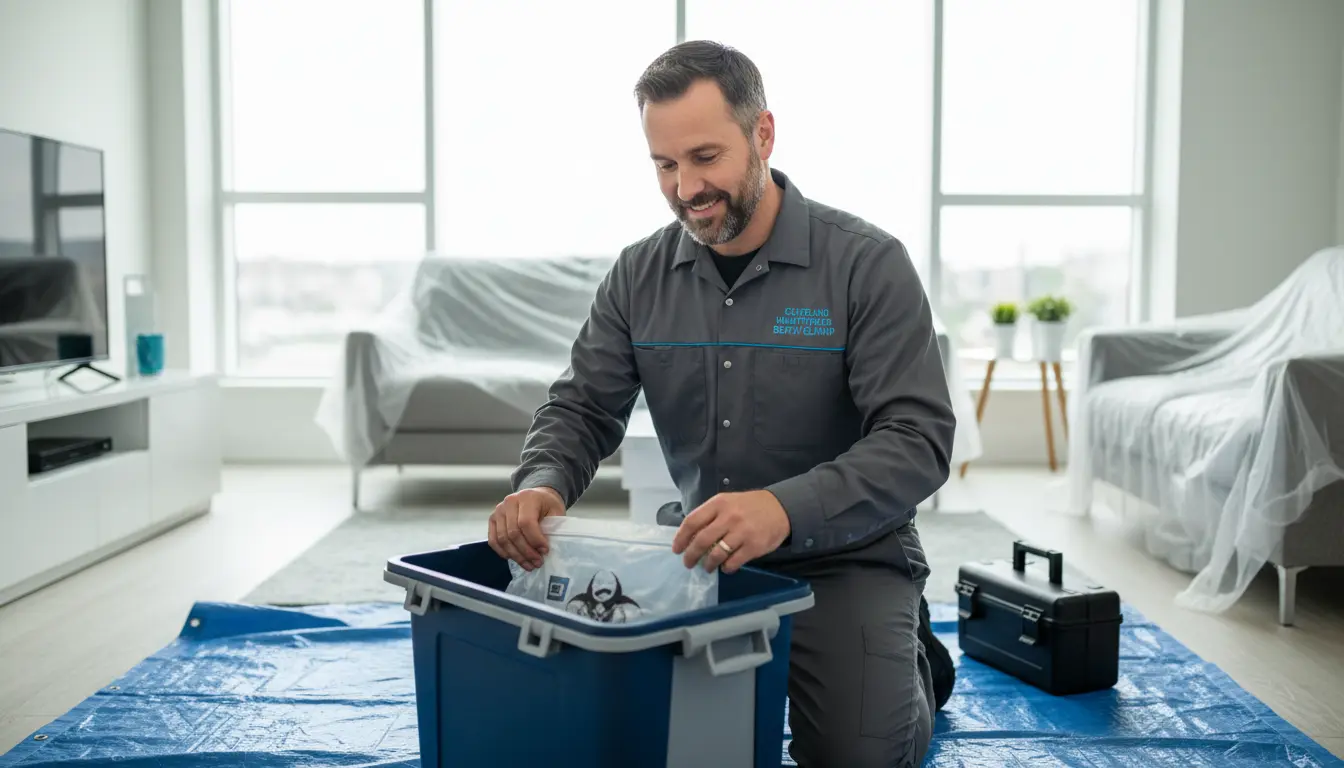
Professional biohazard remediation is not a standard cleaning service. It is a specialized, regulated, and scientifically rigorous process designed to eliminate health risks, restore structural integrity, and allow families to grieve without the added burden of unsafe conditions. In Cleveland, where historic homes and changing seasons create unique challenges, hiring trained specialists is the only safe path forward.
The Technical Process of Professional Remediation
When a team arrives at a site, the first step is establishing a containment zone. This involves setting up negative air pressure using industrial-grade negative air machines with HEPA filtration to prevent airborne contaminants from spreading to unaffected areas. Technicians don full personal protective equipment (PPE) including Tyvek suits, N95 or P100 respirators, face shields, and chemical-resistant gloves. Every motion is deliberate to avoid cross-contamination.
Next comes the systematic removal of all biohazardous materials. This includes not only visible blood and tissue but also porous materials like carpet, drywall, and insulation that may have absorbed fluids. In Cleveland’s older homes with plaster and lath walls, technicians must carefully assess whether the biological material has seeped into the wood framing. The removal phase is followed by a thorough cleaning with EPA-registered hospital-grade disinfectants that have proven efficacy against bloodborne pathogens such as HIV, Hepatitis B, and Hepatitis C. After cleaning, an adenosine triphosphate (ATP) fluorescence test is performed to verify that all organic matter has been neutralized. If the ATP reading is above acceptable levels, the area is re-cleaned and retested until it passes.
Finally, structures may require encapsulation or restoration. In cases where wooden subfloors or studs have been deeply contaminated, they must be sealed with a specialized antimicrobial coating to prevent future microbial growth. Cleveland’s humidity swings, from humid summers to dry winter months, can cause residual moisture to promote mold, making this step essential for long-term safety. Throughout the process, technicians document each phase with photographs and written reports to provide proof of compliance with IICRC S540 standards.
Data Comparison: Professional Remediation vs. Standard Cleanup
The following table highlights the critical differences between professional biohazard remediation and a typical janitorial or DIY approach.
| Feature/Metric | Professional Biohazard Remediation | Standard Residential Cleaning |
|---|---|---|
| Regulatory Compliance | Follows OSHA Bloodborne Pathogens Standard 29 CFR 1910.1030, EPA waste disposal regulations, and state guidelines | No adherence to biohazard regulations; may improperly dispose of waste |
| Pathogen Elimination | Uses EPA-registered hospital-grade disinfectants verified by ATP testing to ensure 99.99% kill rate | Household bleach or all-purpose cleaners, which do not reliably inactivate all bloodborne pathogens |
| Structural Assessment | Trains technicians to detect hidden seepage and determine porous material replacement needs | Cleans only visible surfaces; leaves contamination in subflooring, insulation, and wall cavities |
| Odor Removal | Employs hydroxyl generators, ozone machines, and enzymatic treatments to eliminate odor at the molecular level | Air fresheners mask odors temporarily; decomposition gases remain |
| Cross-Contamination Prevention | Establishes negative pressure zones and decontamination chambers for tools and personnel | No containment; pathogens can spread via cleaning tools and air currents |
Expert Insights: What Remediation Specialists Know
One of the most common hidden dangers is biological seepage into subflooring and concrete slabs. In Cleveland’s many older homes, a simple vinyl floor can disguise a saturated wood subfloor. Professionals use moisture meters and thermal imaging to detect fluid migration that is invisible to the naked eye. If the area is not abated, the organic material will continue to decompose, producing volatile organic compounds that can cause respiratory issues for months.
Another critical insight: porous materials such as untreated wood, carpet padding, and upholstery cannot be effectively sanitized. The IICRC S540 standard requires removal and replacement of these materials when they have been in contact with blood or other bodily fluids. Trying to salvage them by scrubbing only pushes contaminants deeper and creates a long-term biohazard reservoir.
Many property owners make the mistake of using household bleach. Bleach is quickly inactivated by organic matter and does not kill all viruses or bacterial spores. Furthermore, its fumes can react with decomposition chemicals to create toxic chloramines. Professional-grade disinfectants like accelerated hydrogen peroxide formulations are safer and more effective.
Another common error is waiting for the odor to dissipate. Odor is caused by volatile organic compounds that can harm human health even after the smell fades. Professional remediation includes air scrubbing and ozone treatment to neutralize these compounds, restoring indoor air quality to safe levels.
Pricing for Professional Remediation
- Standard site mobilization fees range from $300 to $700, covering the transport of equipment and the initial assessment. This fee is necessary because each job requires specialized tools that must be decontaminated after use.
- Hourly labor rates for certified technicians typically fall between $125 and $250 per hour. The duration of the job depends on the size of the affected area and the extent of contamination. A single-room cleanup may take 4-6 hours, while a whole-house remediation can take several days.
- Disposal of biohazardous waste adds significant cost. Waste is placed in compliant, red bags and transported to a licensed incineration facility. Disposal fees are based on weight, ranging from $50 to $200 per container.
- Factors that increase the final price include the need for structural material replacement (e.g., replacing a section of subfloor). If the HVAC system has been contaminated, cleaning the ductwork and replacing filters may add $1,000-$2,500.
- Additional costs may arise from specialized treatments such as antimicrobial coatings on porous surfaces or the use of gas-phase air purification systems for severe odor penetration. In Cleveland’s winter, ice management for site access can also add a small fee if the team needs to clear walkways or driveways.
Safety and Standards
Professional remediation companies in Cleveland adhere to strict safety standards set by the Occupational Safety and Health Administration (OSHA). The Bloodborne Pathogens Standard mandates that all technicians receive annual training, have access to hepatitis B vaccination, and use proper PPE. Companies must also maintain an exposure control plan and conduct regular audits. Compliance is not optional: an improperly handled biohazard site can lead to fines and liability if an untrained person or future occupant contracts an infection.
The Institute of Inspection, Cleaning and Restoration Certification (IICRC) provides the S540 standard specifically for trauma and crime scene cleanup. This standard dictates everything from the order of cleaning steps to acceptable ATP levels for clearance. Certified firms, like Cleveland Unattended Death Cleanup, follow these protocols to ensure thorough decontamination. Additionally, waste disposal must comply with Ohio EPA regulations, which require manifesting and tracking biohazard waste from pick-up to incineration. A reputable company obtains the necessary permits and documents disposal properly, protecting the property owner from liability.
Frequently Asked Questions
What is the most important reason to hire a professional for unattended death cleanup?
The primary reason is safety. Decomposing bodies release a cocktail of pathogens, including bacteria from the gut such as E. coli and Clostridium, as well as viruses that can be transmitted through blood. The risk of infection is high for anyone without proper training and equipment. Professionals follow OSHA-mandated protocols to contain these hazards and eliminate them using hospital-grade disinfectants, ensuring the site is safe for family members and future occupants.
How long does professional remediation take and what is included?
The timeline varies based on the extent of contamination and property size. A typical single-room job can take 4-8 hours for a complete remediation process, while an entire home may require two to three days. The process includes a detailed inspection, containment setup, removal of all biohazardous materials, cleaning and disinfection of every affected surface, ATP testing for verification, odor removal using ozone or hydroxyl generators, and structural repairs such as sealing or replacement of porous materials. A final walk-through and detailed report are provided.
Can I just paint over walls after cleaning to save money?
No. Painting over walls that have been contaminated with biological material does not eliminate the health risk. The organic matter continues to decompose beneath the paint, causing ongoing odor and potential microbial growth. Professional remediation ensures that porous materials like drywall are removed and replaced, and that non-porous surfaces are thoroughly disinfected before any exterior treatment. Painting over a contaminated surface is a temporary fix that can lead to long-term health problems and reduce property value.
Why is it important to use a company experienced with Cleveland’s climate and older homes?
Cleveland’s high humidity and variable temperatures accelerate decomposition and cause odor to penetrate deeply into porous building materials. Many homes in Cuyahoga County have historic construction with materials like plaster and lath, which require careful handling to avoid structural damage. Local experts understand how to manage winter ice for access, how to use ventilation strategies that account for seasonal moisture, and how to navigate local waste disposal regulations. A company like Cleveland Unattended Death Cleanup specifically serves the Cleveland area, bringing knowledge of local homes and conditions that national chains may lack.
Is there a risk of the property becoming infested with pests after an unattended death?
Yes. Decomposition attracts insects such as flies and beetles, and sometimes rodents. Professional remediation includes a thorough cleaning that eliminates the organic matter that attracts pests. In addition, technicians seal entry points where insects may have entered the building. If an infestation has already occurred, the remediation team can coordinate with pest control specialists to ensure the property is fully cleared. Waiting or attempting a DIY cleanup increases the likelihood of a secondary infestation that can cause further damage.
Professional Biohazard Remediation in Cleveland
When a death occurs unattended, the home becomes a complex biohazard site that threatens both health and property integrity. Professional remediation is the only way to restore safety and preserve the home’s value. For families coping with loss, handing over this burden to trained, compassionate experts allows them to focus on grieving and healing. Cleveland Unattended Death Cleanup provides the technical rigor of IICRC-certified practices combined with a deep understanding of local conditions, from the humidity off Lake Erie to the unique architecture of homes in neighborhoods like Slavic Village, Little Italy, and Detroit Shoreway. Our team is available around the clock, discreet, and dedicated to making the property safe once more. Trust the specialists who know how professional remediation protects families and property owners in every phase of the process.