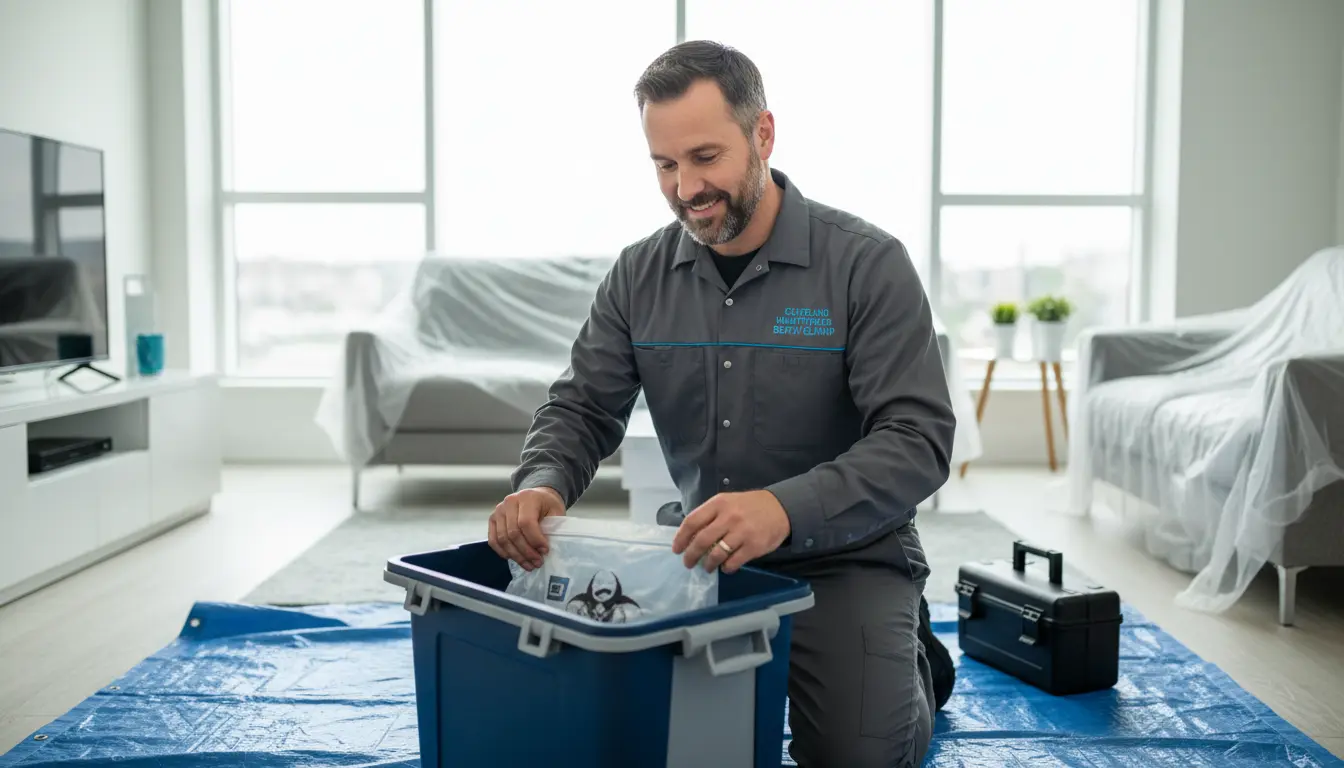
Unattended death cleanup is not a matter of scrubbing floors and opening windows. It is a forensic remediation process governed by strict OSHA bloodborne pathogen standards, EPA disinfectant protocols, and the IICRC S540 standard for trauma scene cleanup. In Cleveland, where the Cuyahoga County Health Department mandates specific waste disposal procedures and where historic homes like those in Slavic Village, Detroit Shoreway, and Little Italy present unique structural challenges, professional intervention is the only safe path. This step-by-step guide to professional unattended death cleanup in Cleveland walks you through each phase of the process, from the initial risk assessment to the final structural certification, so you understand exactly what happens when experts take over.
Initial Assessment and Site Containment
The first step is a thorough risk assessment conducted by a certified biohazard remediation specialist. This is not a walkthrough with a clipboard. The specialist evaluates the scene for all potential hazards—biological fluids, bloodborne pathogens, sharp objects, compromised flooring, and possible airborne contaminants. In Cleveland, the assessment also considers local factors like the age of the building. Many homes in areas such as Hough, Garfield Heights, and Bedford were built before the 1950s, meaning they often contain asbestos in flooring or insulation, which must be handled separately. The specialist notes the extent of the biological saturation, the condition of porous materials (carpet, drywall, wood subfloors), and the presence of any insect or rodent activity that may have accelerated decomposition.
Once the assessment is complete, the team establishes containment zones. The affected area is isolated from the rest of the property using heavy-gauge plastic sheeting and negative air pressure units. These machines create a vacuum effect that prevents airborne pathogens and odor particles from escaping into clean areas. In Cleveland’s humid summer months, extended decomposition can produce a heavier-than-normal bioload, so the team may deploy multiple air scrubbers with HEPA and carbon filters. This step is critical not only for safety but also for cross-contamination prevention. The containment barrier remains in place until the final clearance test confirms that the space is safe for reoccupancy.
Personal Protective Equipment and Biohazard Disposal Protocols
Every technician entering the containment zone wears full personal protective equipment: Tyvek suits, double-gloved with nitrile, full-face respirators with P100 filters, and chemical-resistant boot covers. This is not optional. The OSHA Bloodborne Pathogens Standard (29 CFR 1910.1030) requires that all employees who may be exposed to blood or other potentially infectious materials use appropriate PPE. In unattended death scenarios, the risk of exposure to Hepatitis B, Hepatitis C, HIV, and other bloodborne pathogens is real and significant. The team also follows stringent donning and doffing procedures to avoid contaminating themselves or the environment during removal.
All biohazardous waste—including soiled materials, body fluids, saturated personal belongings, and PPE—is double-bagged in red biohazard bags and placed in rigid, leak-proof containers. These containers are labeled with the universal biohazard symbol and stored in a secured area on site. A licensed medical waste transporter, registered with the Ohio EPA, then picks up the waste for incineration at a permitted facility. Never attempt to dispose of biohazardous waste through regular trash or municipal systems. Doing so violates Ohio hazardous waste regulations and poses a public health risk. The entire disposal chain is documented with chain-of-custody forms, which are kept on file for the property owner and any relevant authorities.
The Technical Remediation Workflow
With containment and PPE in place, the actual remediation begins. The process is systematic and mirrors the step-by-step unattended death cleanup process outlined in industry standards. First, the team removes all visible biological matter using specialized tools: absorbent pads, enzymatic cleaners, and hospital-grade disinfectants. Enzymatic cleaners break down organic proteins at a molecular level, which is far more effective than bleach. Bleach can actually fix proteins to surfaces, making them harder to remove and potentially leaving behind non-viable but still reactive biological material.
After gross removal, the team performs a detailed cleaning of every surface within the containment zone. This includes walls, ceilings, floors, baseboards, window frames, and any fixtures. The cleaning solution is an EPA-registered disinfectant with a verified kill time for bloodborne pathogens. The team applies the disinfectant with sprayers, wipes, or fogging equipment, depending on the surface. The disinfectant must remain wet for a specific contact time, typically 10 to 15 minutes, to ensure complete pathogen inactivation. In Cleveland’s older homes, technicians pay special attention to porous surfaces like plaster and lath, which can absorb biological fluids deep into the material. These areas often require removal and replacement rather than simply cleaning.
ATP Fluorescence Testing for Verification
Once the cleaning is complete, the team uses adenosine triphosphate (ATP) bioluminescence testing to verify the efficacy of the decontamination. ATP is a molecule found in all living cells, including bacteria, mold, and human biological material. A handheld luminometer measures the ATP level on a swabbed surface. If the reading exceeds the industry threshold (typically below 10 relative light units for a clean surface), the area is re-cleaned and re-tested. This objective, scientific verification ensures that the space is not just visually clean but biologically safe. It is a standard that separates professional remediation from janitorial cleaning.
Structural Decontamination and Odor Neutralization
After pathogen elimination, the focus shifts to structural decontamination and odor removal. Decomposition odor is caused by volatile organic compounds (VOCs) that penetrate porous materials. Simply masking the smell with air fresheners is ineffective and potentially dangerous. The team uses a combination of methods: ozone treatment, hydroxyl generators, and thermal fogging with odor-neutralizing agents. Ozone can be effective in empty rooms, but it must be applied with caution because ozone is a respiratory irritant. Hydroxyl generators are safer for occupied spaces and work by breaking down odor molecules at the chemical level. In extreme cases, the team may need to remove and replace affected subflooring, drywall, or insulation. The local tips for death cleanup in Cuyahoga County homes emphasize that thorough odor removal is essential to prevent long-term property devaluation and health concerns.
Data Comparison: Professional Remediation vs. Standard Cleaning
To illustrate the critical differences, consider the following comparison between professional biohazard remediation and a standard residential cleaning service. The data is drawn from the IICRC S540 Trauma and Crime Scene Cleanup Standard.
| Feature/Metric | Professional Biohazard Remediation | Standard Residential Cleaning |
|---|---|---|
| Regulatory Compliance | OSHA 29 CFR 1910.1030, EPA FIFRA, DOT/PHMSA transport rules | None or limited |
| Pathogen Elimination | EPA-registered disinfectants with verified contact time, ATP testing | Household cleaners, no verification |
| Structural Assessment | Evaluates saturation, porosity, moisture, and integrity | Visual only, no material testing |
| Waste Disposal | Licensed medical waste transporter, incineration | Standard trash (illegal) |
| Odor Removal | Ozone, hydroxyl, thermal fogging, material removal | Air fresheners or open windows |
| Liability Coverage | Full insurance, workers’ compensation, bonds | Often none or insufficient |
Source: IICRC S540 Trauma and Crime Scene Cleanup Standard
Expert Insights: Advanced Diagnostic Tips and Common Mistakes
Experienced remediation specialists know that the visible mess is only part of the problem. Here are three advanced diagnostic tips that professionals use to ensure a complete restoration.
1. Detecting Hidden Biological Seepage. Biological fluids can migrate through cracks in concrete slabs, along baseboard gaps, and into the seams of hardwood floors. A moisture meter with a deep-scanning probe can detect moisture levels in subfloors that indicate hidden saturation. If the moisture reading is elevated in a pattern consistent with the body’s location, the team must remove the flooring to inspect and treat the subfloor. Ignoring hidden seepage can lead to mold growth, structural decay, and persistent odor.
2. Understanding Why Porous Materials Require Replacement. Porous materials like drywall, carpet padding, and upholstered furniture absorb biological fluids and cannot be fully decontaminated. Even after cleaning, microscopic organic matter remains embedded, and moisture can reactivate bacteria and mold. The IICRC S540 standard recommends removal of all porous materials that have been saturated beyond a certain threshold. In a Slavic Village row home, for example, the team may need to remove drywall up to four feet above the affected area to ensure no fluid wicking has occurred.
3. The Importance of Negative Pressure for Cross-Contamination Prevention. Negative air machines are not just for odor control. They create a pressure differential that draws airborne contaminants into the containment zone rather than allowing them to escape into the rest of the property. This is especially important in multi-unit buildings common in Cleveland neighborhoods like Detroit Shoreway and Little Italy. Without negative pressure, airborne pathogens can travel through HVAC systems, shared wall cavities, and hallways, posing a risk to neighboring residents.
Common mistakes property owners make often stem from good intentions but lack of expertise. Using household bleach on biological matter is a frequent error. Bleach loses efficacy in the presence of organic material and can emit toxic fumes that damage the respiratory system. Waiting for odor to dissipate naturally is another mistake. Decomposition odor does not disappear; it embeds into materials and can persist for months, affecting property value and tenant health. Allowing untrained personnel into the site before cleanup begins can spread contamination, compromise evidence, and create liability for the property owner. The top dangers of unattended deaths in Cleveland OH include not only pathogen exposure but also the risk of structural damage from missed cleanup.
Pricing Considerations for Unattended Death Cleanup
- Standard site mobilization fees in Cleveland typically range from $200 to $500, covering the initial assessment, containment setup, and equipment deployment.
- Hourly remediation rates for certified technicians vary between $150 and $300 per hour, depending on the complexity of the scene and the number of personnel required.
- Specialized disposal of biohazardous waste is charged per pound or per container, with costs averaging $50 to $150 per container, plus transport fees from the licensed medical waste hauler.
Three key factors that influence the total cost are: the extent of structural material replacement required (e.g., removing drywall, subflooring, or insulation adds significant labor and disposal expenses); the total volume of biohazardous waste (a larger body or longer decomposition period increases waste volume); and the necessity for specialized HVAC decontamination (if the HVAC system has been contaminated, duct cleaning and duct sealing may be needed, which can add $500 to $2,000). For a typical Cleveland home with a moderate decomposition period, total costs often range from $2,000 to $5,000, but severe cases can exceed $10,000. Property owners should always request a detailed written estimate before work begins. The best unattended death cleanup services in Cleveland provide transparent pricing and work with insurance companies to facilitate claims.
Safety and Standards: Certifications and Protocols
Professional unattended death cleanup is governed by a framework of safety standards that ensure both worker safety and public health. The IICRC S540 standard is the industry benchmark for trauma and crime scene cleanup. It defines the procedures for cleaning, sanitizing, and restoring affected areas. Additionally, the OSHA Bloodborne Pathogens Standard (29 CFR 1910.1030) mandates that all employees undergo annual training, receive hepatitis B vaccinations, and follow strict PPE and disposal protocols. The Ohio EPA regulates the transport and disposal of biohazardous waste, requiring that it be incinerated at a licensed facility.
These certifications are not just paper credentials. They translate into real-world safety: proper containment prevents cross-contamination, correct disinfectant use ensures pathogen kill, and secure disposal averts environmental harm. Property owners who hire non-certified cleaners risk legal liability, health violations, and incomplete remediation that can lead to future problems. The why Cleveland trusts experts for death scene cleanup is rooted in the proven track record of certified professionals who consistently deliver thorough, safe, and compassionate service.
Frequently Asked Questions About Unattended Death Cleanup
How long does the unattended death cleanup process take?
The duration depends on the extent of the scene. A small room with limited saturation may be completed in one day, while a full-house scenario involving multiple rooms, significant decomposition, and structural repair can take several days. The team works efficiently but never compromises on thoroughness. Cleveland’s humid conditions can slow drying times, which may extend the timeline for odor control and material replacement. The step-by-step unattended death cleanup process explained on our site provides a more detailed timeline.
Is it safe to stay in the home during the cleanup?
During active remediation, the affected area is sealed off with containment barriers and negative air pressure. The rest of the home may be safe to occupy, but it is generally recommended that residents remain away until the entire process is complete, especially if the HVAC system is involved. The risk of airborne pathogen migration is low when containment is properly established, but the strong odor from decomposition chemicals can be unpleasant and potentially irritating. Many clients choose to stay with family or in a hotel for the duration of the work.
Will my homeowner’s insurance cover unattended death cleanup?
Most standard homeowner’s insurance policies include coverage for biohazard cleanup as part of the dwelling coverage, especially if the death is considered accidental or unattended. However, policies vary, and some may have exclusions for deaths that occur due to illness or natural causes. It is essential to contact your insurance provider as soon as possible and provide them with the details of the incident. The cleanup company can often assist with documentation and direct billing. The guide to biohazard cleanup after death includes tips for navigating insurance claims.
What should I do immediately after discovering an unattended death?
First, do not enter the area if you are not trained. Call 911 to report the death and leave the scene to law enforcement. Once the authorities have completed their investigation and released the scene, contact a professional biohazard remediation company. Do not attempt to clean anything yourself, and do not allow family members or friends to enter the area. The what to do after discovering an unattended death page offers a step-by-step checklist for property owners, including securing the property and contacting a certified cleanup service.
Can you clean up a scene that has been sitting for weeks?
Yes, but the longer the decomposition period, the more extensive the remediation will be. Advanced decomposition can cause fluids to seep deep into porous materials, and the odor can become pervasive. The cleaning process remains the same—containment, removal, disinfection, and verification—but may require more material replacement and more aggressive odor control measures. In Cleveland, summer heat accelerates decomposition, so prompt action is recommended. Even after weeks, professional remediation can restore the property to a safe and habitable condition.
Professional Biohazard Remediation in Cleveland: Restoration with Compassion
Unattended death cleanup is a delicate balance of technical rigor and human empathy. The team at Cleveland Unattended Death Cleanup approaches every scene with the same commitment: to restore the property to a safe, habitable condition while respecting the privacy and emotional needs of the family. Every step of the process, from the initial containment to the final ATP test, is designed to eliminate health risks and return the space to a state of normalcy. Cleveland’s unique housing stock, climate, and regulatory environment demand a specialized approach that only experienced local professionals can provide.
If you are facing the aftermath of an unattended death in Cleveland or any of the surrounding communities, including Bay Village, Little Italy, Slavic Village, Detroit Shoreway, Hough, Brooklyn, Garfield Heights, Maple Heights, or Bedford, do not hesitate to reach out to a certified remediation team. Acting quickly not only reduces health risks but also minimizes structural damage and cleanup costs. The ultimate guide to biohazard cleanup after death offers additional resources, and our contact us page is available for immediate assistance. Cleveland Unattended Death Cleanup is here to help you navigate this difficult time with professionalism, discretion, and proven expertise.