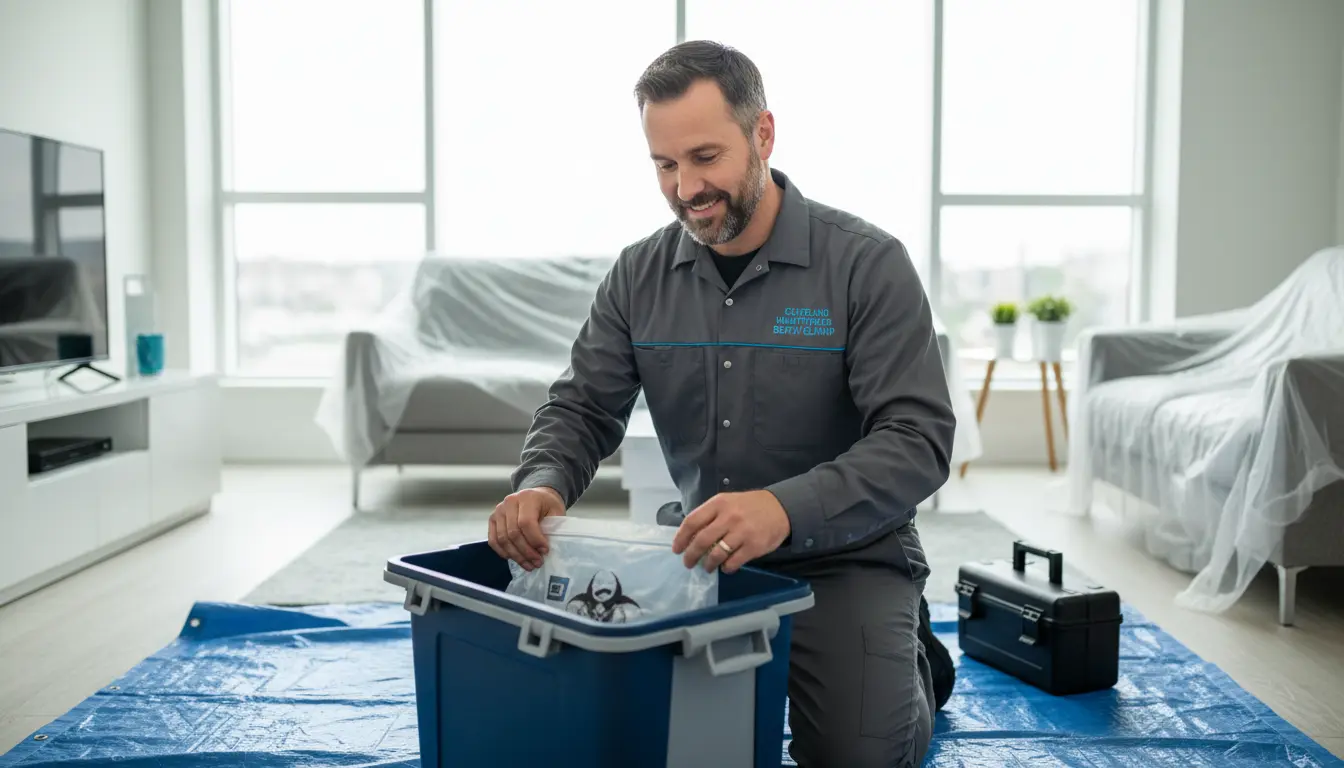
Every scene is different. The duration of an unattended death cleanup project depends on a matrix of variables: the condition of the remains, the materials in the room, the local climate, and the extent of secondary damage. For property owners in Cleveland, understanding this timeline is not just about logistics—it is about making informed decisions under extreme stress.
What Determines How Long an Unattended Death Cleanup Project Takes
Several factors converge to shape the timeline of a professional remediation. The single most influential variable is the post-mortem interval—the time between death and discovery. A death discovered within hours presents a fundamentally different challenge than one that has gone unnoticed for weeks.
Temperature and humidity play critical roles. Cleveland’s Great Lakes-effect climate creates humid conditions that accelerate microbial activity. A body in a non-air-conditioned home during a July heatwave will decompose far faster than one in a winter residence with the heat turned off. This directly impacts the depth of biological saturation and the scope of structural decontamination required.
The surface materials also matter. Porous substances like drywall, carpet, and unsealed wood absorb fluids and odors far more aggressively than tile or concrete. A bedroom with wall-to-wall carpeting will demand more time than one with hardwood floors. Each layer of affected material must be assessed, removed, and replaced, which adds hours or even days to the project.
The Step-by-Step Remediation Timeline
A professional remediation follows a structured protocol. Understanding each phase clarifies why the project takes as long as it does. The process is not something to rush; cutting corners compromises safety and leaves behind biohazards that can sicken future occupants.
Initial Assessment and Containment (2–4 hours)
The first step is a thorough site evaluation. Technicians identify all affected areas, test for airborne pathogens, and establish containment zones using negative air pressure. This prevents cross-contamination to the rest of the property. In Cleveland’s older homes, this phase often reveals hidden issues, such as fluid migration through unsealed floor joists or into wall cavities. The initial assessment sets the roadmap for the entire project.
Biohazard Removal and Gross Decontamination (4–8 hours)
This is the most intensive phase. Technicians in full PPE remove all biological matter, including blood, tissue, and bodily fluids. They use hospital-grade disinfectants and specialized enzyme treatments that break down organic material at a molecular level. The goal is not just visible cleanliness but the elimination of bloodborne pathogens and microbial threats. For a typical single-room scene, this phase takes a full day. For larger or more severe scenes, it can extend to two days.
Structural Decontamination and Odor Removal (1–3 days)
After gross removal, the focus shifts to the structure itself. Technicians treat all affected surfaces with EPA-registered antimicrobial agents. They use industrial-grade ozone generators or hydroxyl machines to neutralize odors at the molecular level. In many Cleveland homes, this phase requires removing sections of drywall, subflooring, or insulation that have been saturated. The drying process alone can take 24 to 48 hours, depending on humidity levels and airflow.
Final Verification and Restoration (1–2 days)
The final phase involves ATP fluorescence testing to verify that all biological residues have been eliminated. This test measures adenosine triphosphate, a molecule present in all living cells. A clean ATP reading confirms that the surface is microbiologically safe. After verification, restoration work begins: patching walls, replacing flooring, and repainting. This phase blends remediation with basic reconstruction and can take one to two additional days.
Data Comparison: Professional Remediation vs. Standard Cleaning
The table below illustrates why professional biohazard remediation is fundamentally different from standard janitorial cleaning. The differences in time, methodology, and outcome are stark.
| Feature/Metric | Professional Biohazard Remediation | Standard Residential Cleaning |
|---|---|---|
| Regulatory Compliance | OSHA 29 CFR 1910.1030, IICRC S540 | Not applicable |
| Pathogen Elimination | EPA-registered hospital-grade disinfectants + ATP testing | Household bleach or all-purpose cleaner |
| Structural Assessment | Full inspection for hidden saturation and odor migration | Surface-only cleaning |
| Waste Disposal | Licensed biohazard waste transport and incineration | Standard trash removal |
| Typical Timeline | 3–7 days | 2–4 hours |
Expert Insights for Property Owners
Three advanced diagnostic tips can help property owners understand what a thorough job looks like. First, technicians must check for hidden biological seepage. Fluids do not stay on the surface. They migrate through drywall, along baseboards, and into subflooring. A proper assessment uses moisture meters and thermal imaging to detect saturation that the naked eye cannot see.
Second, porous materials almost always require replacement. Carpet, padding, upholstery, and unsealed wood cannot be fully decontaminated. Attempting to clean them leaves behind pathogens that can cause long-term health risks. Replacement is not an upsell; it is a safety requirement.
Third, negative pressure containment is non-negotiable. Without it, airborne pathogens and odors spread throughout the building. In multi-unit properties, this can contaminate adjacent units and create liability issues. Technicians must set up containment barriers and air scrubbers before any removal work begins.
Common mistakes include using household bleach on biological matter. Bleach is corrosive and does not penetrate porous surfaces. It also releases toxic fumes when mixed with organic material. Another mistake is waiting for odors to dissipate naturally. Odors indicate active microbial decomposition. By the time you smell it, the contamination has already spread. Allowing untrained personnel into the site is another error. Without proper PPE and training, these individuals risk exposure to bloodborne pathogens and may inadvertently spread contamination.
Pricing Structure for Unattended Death Cleanup
- Standard mobilization fee: $250–$500 for the initial site visit and assessment. This covers travel, equipment setup, and the creation of a remediation plan tailored to the specific scene.
- Hourly remediation rates: $150–$300 per hour per technician. Most projects require a team of two to four technicians. The total labor cost depends on the duration of the project and the complexity of the scene.
- Specialized disposal fees: $100–$500 for biohazardous waste transport and incineration. This cost is regulated by state and federal guidelines for proper disposal of contaminated materials.
Three main factors influence the final cost. The extent of structural material replacement drives the price up when large sections of drywall, flooring, or insulation must be removed. The total volume of biohazardous waste also matters; larger scenes generate more waste, which increases disposal fees. Finally, the necessity for specialized HVAC decontamination adds cost if the ventilation system has been compromised by airborne pathogens or odor particles.
Safety Standards and Certifications
Professional remediation companies operate under strict regulatory frameworks. The IICRC S540 standard provides the industry benchmark for trauma and crime scene cleanup. OSHA’s Bloodborne Pathogens Standard, 29 CFR 1910.1030, mandates specific protocols for handling human blood and other potentially infectious materials. Technicians must complete annual training on these standards and demonstrate proficiency in using PPE and disinfectants.
In practice, these standards protect everyone involved. They ensure that all biological waste is contained, transported, and disposed of through authorized medical waste services. They also require documentation of every step, from the initial assessment to the final ATP test. For property owners in Cleveland, choosing a company that adheres to these standards is not optional—it is a legal and ethical responsibility.
Frequently Asked Questions
How long does an unattended death cleanup project take for a typical residential scene?
A typical single-room scene in a Cleveland home takes three to five days from start to finish. This includes initial assessment, biohazard removal, structural decontamination, odor remediation, and final verification. Scenes that involve multiple rooms or extensive saturation can extend to seven days or more. The timeline depends on the condition of the remains, the materials affected, and the specific environmental conditions at the property.
Can I clean the scene myself to save time?
No. Attempting to clean an unattended death scene without professional training and equipment creates serious health risks. Bloodborne pathogens such as hepatitis B, hepatitis C, and HIV can survive on surfaces for days or weeks. Household cleaners do not eliminate these pathogens. Improper cleanup can also lead to structural damage that reduces property value. Professional remediation ensures that the space is safe for future occupancy.
Why does odor removal take so long?
Odor removal is not a surface-level task. Odor molecules penetrate porous materials and become trapped in the structure. Neutralizing them requires time and specialized equipment. Ozone generators and hydroxyl machines work by breaking down odor molecules at the chemical level. This process takes 24 to 48 hours per treatment cycle. In severe cases, multiple cycles are necessary. Rushing this phase leaves behind odors that can return when humidity rises.
What happens if I delay the cleanup?
Delaying cleanup allows decomposition to continue, which worsens the contamination. Fluids spread further into the structure, odors intensify, and the risk of pest infestation increases. Each day of delay adds to the total cost and duration of the project. In Cleveland’s humid climate, the window for effective remediation is narrow. Prompt action minimizes damage and reduces the overall timeline.
How do Cleveland’s weather conditions affect the cleanup timeline?
Cleveland’s Great Lakes-effect humidity accelerates microbial growth and decomposition. In summer, high humidity can double the rate of biological breakdown compared to dry conditions. In winter, frozen pipes and ice management can delay site access. Technicians must account for these variables when planning the remediation timeline. Proper drying and decontamination protocols account for local climate factors.