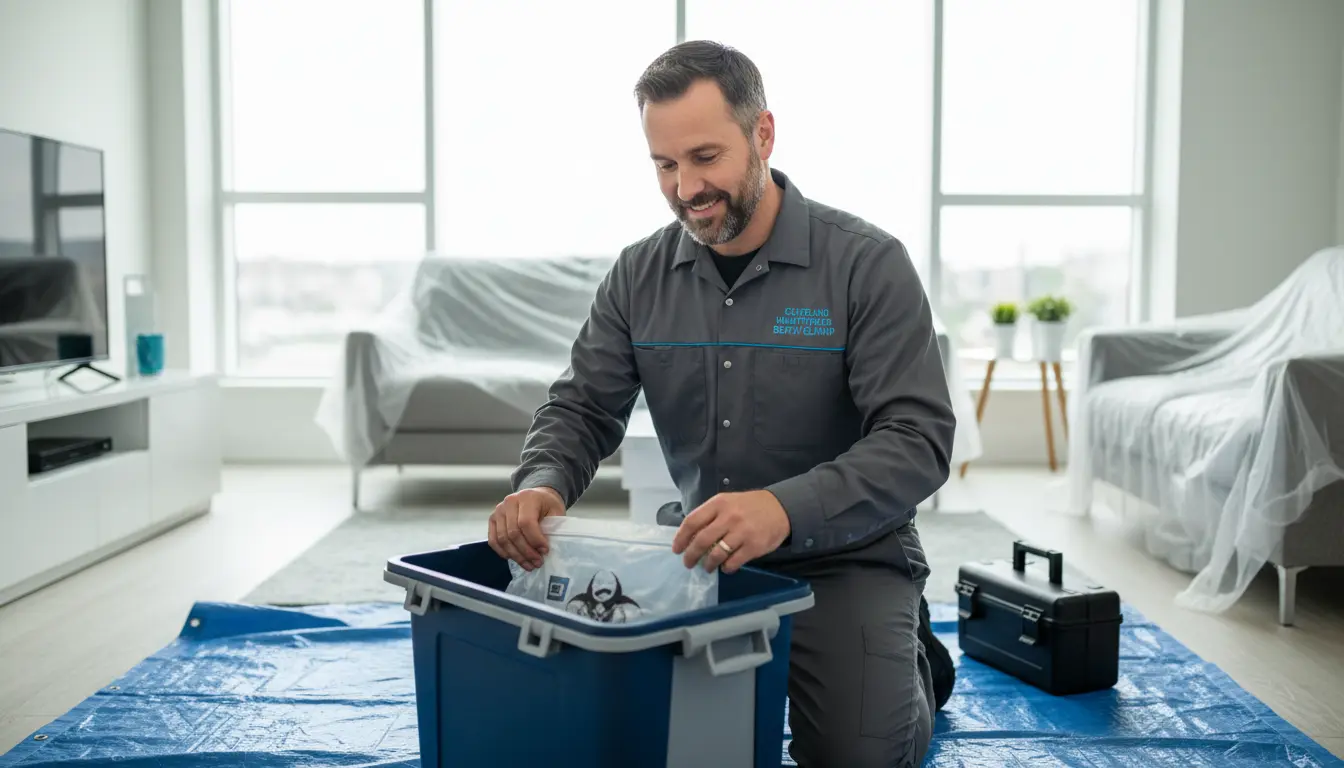
Most people assume that after a home has been aired out for a few weeks, any odor from an unattended death will simply fade away. That assumption is not just wrong — it is dangerously misleading. The lingering smell is not a passive remnant that time can erase; it is an active chemical and biological signal that decomposition fluids have saturated porous building materials, often in ways that are invisible to the naked eye. Understanding how odor removal works after an unattended death in a home requires shifting from a cleaning mindset to a forensic restoration mindset — one that acknowledges that the odor itself is a symptom of a deeper structural contamination.
In Cleveland, where historic homes with plaster walls, hardwood subfloors, and older HVAC systems are common, the challenges multiply. The region’s Great Lakes-effect humidity profiles accelerate the breakdown of soft tissues and drive volatile organic compounds deep into wood, drywall, and carpet padding. Professional biohazard remediation specialists know that removing the odor means removing the source — and that source is often hiding where no household cleaner can reach.
The Science of Decomposition Odor: Why It Persists
When the human body begins to decompose, it releases a complex mixture of gases and liquids. Putrescine and cadaverine — two diamines produced during protein breakdown — are responsible for the characteristic sweet, pungent smell. These compounds are not just unpleasant; they are chemically sticky. They bond with porous surfaces at a molecular level, and standard cleaning agents cannot break those bonds.
Beyond the chemical side, microbial activity continues long after the visible remains have been removed. Bacteria and fungi that thrived during decomposition leave behind biofilms and metabolic byproducts that continue to off-gas. In Cleveland’s humid summers, when indoor relative humidity can exceed 70 percent, these microbial colonies remain active, releasing new waves of odor even after initial cleaning attempts.
Step-by-Step Odor Removal Process Used by Professionals
Initial Assessment and Containment
The first step any certified remediation team takes is a thorough assessment. Using moisture meters, thermal imaging cameras, and their own trained sense of smell, technicians map the zones of contamination. Negative air pressure machines are set up to prevent airborne pathogens and odor particles from migrating to unaffected areas of the home. This is especially critical in Cleveland’s older duplexes and multi-story homes, where shared HVAC systems can quickly spread contamination.
Physical Removal of Biohazardous Materials
All visible biological matter, including blood, tissue, and bodily fluids, must be physically removed. This is not a wiping process — it involves cutting out sections of carpet, removing soaked drywall, and extracting saturated subflooring. Specialized enzyme treatments are applied to break down organic residues at the cellular level. These enzymes, often derived from bacterial cultures, target the specific proteins and lipids that standard disinfectants miss.
Chemical Neutralization and Thermal Fogging
After the bulk material is gone, the real odor removal begins. EPA-registered hospital-grade disinfectants are applied to all hard surfaces. Then, a thermal fogger disperses a fine mist of odor-neutralizing agents throughout the entire space. The fog particles are small enough to penetrate crevices, wall cavities, and the porous surface of unfinished wood. In Cleveland homes with knob-and-tube wiring or lathe-and-plaster walls, this step is vital because there are countless hidden cavities where odor molecules can settle.
HVAC System Decontamination
The HVAC system acts as the circulatory system of the home. If odor particles have been pulled into ductwork, every room will continue to smell, regardless of how thoroughly the primary site is cleaned. Professional HVAC system deodorization involves cleaning and treating all duct surfaces, replacing filters, and sometimes using ozone generators or hydroxyl generators to neutralize residual odors within the air handler.
Final Verification with ATP Testing
Professional crews do not rely on smell alone to confirm completion. They use adenosine triphosphate (ATP) testing, which measures the presence of biological material on surfaces. A clean reading indicates that microbial and organic residues have been reduced to safe levels. This scientific verification is what separates a true remediation from a superficial cleaning.
Professional Remediation vs. Standard Cleaning: A Data Comparison
The table below illustrates the critical differences between professional biohazard remediation and a standard residential cleaning approach.
| Feature/Metric | Professional Biohazard Remediation | Standard Residential Cleaning |
|---|---|---|
| Regulatory Compliance | OSHA 29 CFR 1910.1030, EPA guidelines, DOT waste transport | None |
| Pathogen Elimination | Hospital-grade disinfectants with verified kill claims | Household bleach or all-purpose cleaners |
| Structural Assessment | Moisture meters, thermal imaging, ATP testing | Visual inspection only |
| Odor Removal Method | Enzyme treatments, thermal fogging, HVAC decontamination | Air fresheners or open windows |
| Waste Disposal | Licensed biohazard waste transport and incineration | Regular trash (illegal and hazardous) |
Expert Diagnostic Tips for Property Owners and Adjusters
Even before a cleanup crew arrives, there are signs that experienced professionals look for. One of the most telling is the presence of a dark, waxy stain on hardwood floors or concrete slabs. This is not just a stain — it is a reservoir of decomposition fluid that has wicked upward through the grain of the wood or through the capillaries of the concrete. Sanding or scrubbing will not remove it; the affected material must be cut out or abraded down to clean substrate.
Another diagnostic clue is the pattern of odor in adjacent rooms. If a hallway closet or an upstairs bedroom smells stronger than the room where the death occurred, it suggests that the HVAC system has already spread contamination. In Cleveland’s older homes, where ductwork is often shared between units, this cross-contamination can extend to neighboring residences. A thorough full home restoration plan must account for this spread.
Finally, professionals look for “ghosting” — a pattern of soot-like discoloration on walls and ceilings caused by temperature differentials that draw odor-laden air through porous surfaces. Ghosting is a clear indicator that the contamination is not limited to the floor and lower walls.
Common Mistakes That Make Odor Removal Impossible
One of the most frequent errors property owners make is using household bleach on biological stains. Bleach denatures proteins on the surface but does not penetrate porous materials. Worse, it can react with organic matter to create toxic chloramine gases, putting everyone in the home at risk. Another mistake is waiting for the odor to dissipate naturally. In reality, the odor will only intensify as decomposition fluids continue to seep into deeper layers of the home’s structure.
Perhaps the most costly mistake is allowing untrained family members or janitorial staff into the site. Without proper personal protective equipment and training in bloodborne pathogens, these individuals risk exposure to hepatitis B, hepatitis C, HIV, and other communicable diseases. The long-term consequences include not only health liabilities but also the potential for incomplete cleaning that leads to ongoing odor and structural decay.
Pricing Factors for Unattended Death Odor Removal
- Site mobilization fees typically range from $250 to $500, covering the transport of equipment and the initial assessment. In Cleveland, winter conditions often add logistical costs for ice management and safe site access.
- Hourly remediation rates for trained technicians generally fall between $150 and $300 per hour. The total number of hours depends on the size of the affected area and the degree of saturation. A single bedroom may require eight to twelve hours of work, while a full home can take several days.
- Specialized disposal of biohazardous waste is charged by weight or volume. Disposal fees can run from $200 to $800 or more, depending on the amount of material removed. All waste must be transported by a licensed hauler and incinerated in accordance with Ohio EPA regulations.
Three major factors influence final cost. First, the extent of structural material replacement required — if subflooring, drywall, and insulation must be removed and replaced, material and labor costs rise significantly. Second, the total volume of biohazardous waste directly affects disposal fees. Third, the necessity for specialized HVAC decontamination can add anywhere from $500 to $2,000 depending on ductwork complexity and system size.
Safety Standards and Certifications That Protect You
Professional biohazard remediation is governed by a strict framework of standards. The IICRC S540 standard for trauma and crime scene cleanup provides the protocol for every step, from initial assessment to final clearance. OSHA’s Bloodborne Pathogens Standard (29 CFR 1910.1030) mandates the use of personal protective equipment, proper sharps disposal, and exposure control plans. Additionally, the EPA regulates the disinfectants and antimicrobial products used on scene.
These standards are not bureaucratic formalities. They exist to protect everyone who enters the property — the cleanup crew, the property owner, and future occupants. A remediation company that follows these standards ensures that the risk of cross-contamination is eliminated and that the home is safe for reoccupation. In Cleveland, where many homes are passed down through generations, ensuring that the property is not only odor-free but also pathogen-free protects the health of families for years to come.
Frequently Asked Questions
Can odor from an unattended death ever be completely removed?
Yes, complete odor removal is achievable, but only when the source material — saturated wood, drywall, carpet, and padding — is physically removed and replaced. Surface cleaning alone will not suffice because the odor-causing compounds have penetrated porous materials. Professional teams use enzyme treatments, thermal fogging, and HVAC decontamination to ensure that no residual odor remains. ATP testing provides scientific verification that biological residues have been eliminated.
How long does the odor removal process typically take?
The timeline depends on the extent of contamination and the size of the affected area. For a single room, the process usually takes one to three days. For a multi-story home or a property where decomposition occurred over several weeks, the project can last five to seven days or longer. Factors such as the need for structural drying, the complexity of HVAC decontamination, and the availability of replacement materials all influence the schedule.
Is it safe to stay in the home during the remediation process?
It is generally not safe to remain in the home while biohazard remediation is underway. The use of negative air machines, chemical fogging, and the physical removal of contaminated materials creates airborne particulates and chemical vapors that can be hazardous. Most professional companies recommend that occupants vacate the premises until the final clearance testing is complete and the home has been ventilated.
What should I do immediately after discovering an unattended death?
Do not enter the area or attempt any cleaning. The first step is to contact local authorities, who will secure the scene and conduct their investigation. After they release the property, the next call should be to a certified biohazard remediation company. Prompt action is critical because decomposition fluids begin to soak into building materials within hours, and the window for effective odor removal narrows as time passes. For a detailed guide on initial steps, see what to do after discovering an unattended death.
Professional Biohazard Remediation in Cleveland
Odor removal after an unattended death is not a matter of masking or airing out. It is a technical process that requires knowledge of chemistry, microbiology, building science, and regulatory compliance. In Cleveland, where the climate and the housing stock present unique challenges, hiring a team that understands local conditions is essential. From the initial risk assessment to the final ATP test, every step must be executed with precision and care.
Cleveland Unattended Death Cleanup provides that level of service. Our technicians are trained to IICRC S540 standards, fully compliant with OSHA regulations, and experienced in the specific demands of Cuyahoga County homes. We handle every aspect of the process — from decomposition odor removal to structural restoration — with discretion and technical rigor. If you are facing the aftermath of an unattended death, do not rely on guesswork or household products. Contact a team that can restore your home to a safe, livable condition.