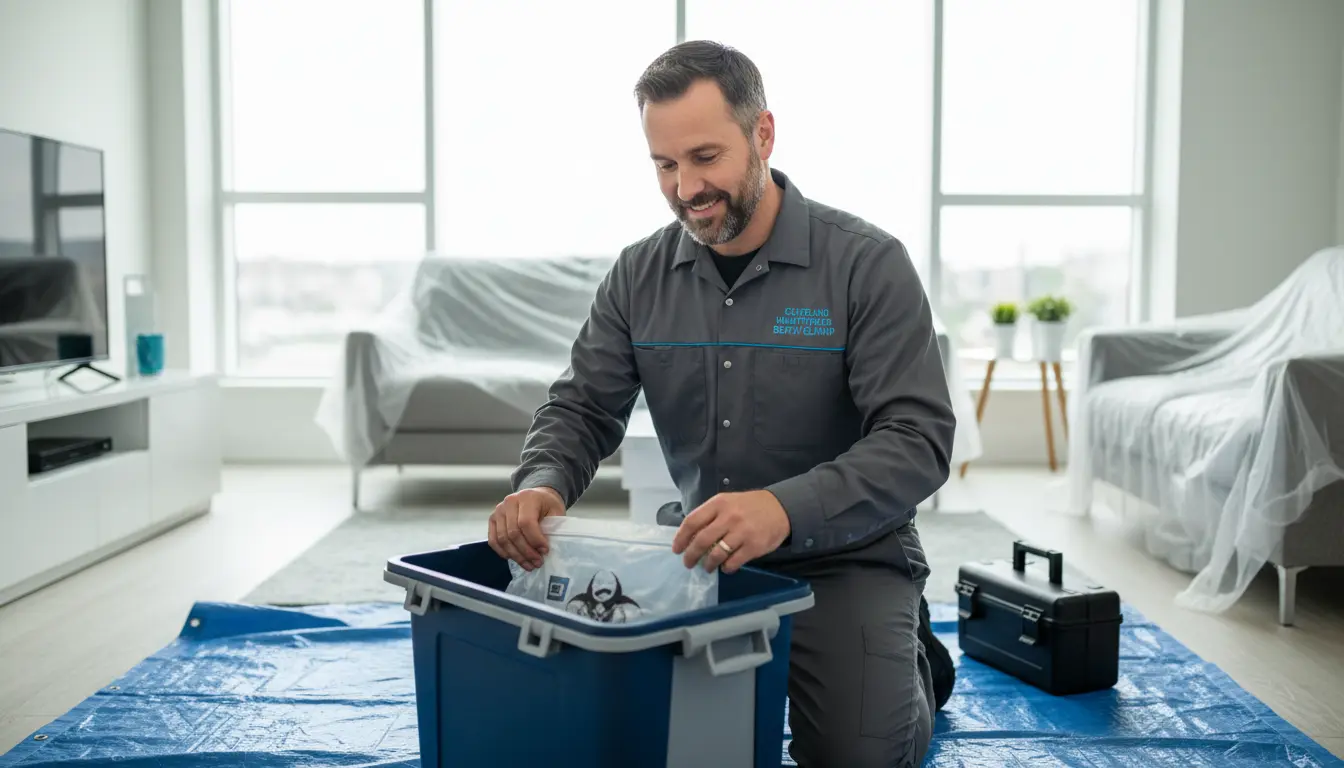
Most homeowners and property managers assume that a standard cleaning crew or a good scrubbing with bleach is enough to handle an unattended death scene. That assumption is not only wrong—it is dangerously misleading. In reality, the biological residues left behind after decomposition include bloodborne pathogens, airborne bacteria, and volatile organic compounds that penetrate porous materials and structural cavities. Standard cleaning products simply cannot eliminate these hazards. For anyone managing a property in Cleveland, Ohio, where the Great Lakes humidity accelerates decomposition and odor migration, the stakes are even higher. A proper unattended death cleanup checklist for homeowners and property managers is not about tidiness—it is about public health, legal compliance, and preserving the structural integrity of the building.
The first step in understanding what is needed is recognizing that unattended death cleanup is a specialized field governed by OSHA Bloodborne Pathogens Standard 29 CFR 1910.1030 and IICRC S540 standards. The process involves risk assessment, removal of biohazardous materials, chemical sanitation, and verification through adenosine triphosphate (ATP) testing. In Cuyahoga County, local regulations also require proper disposal of biological waste through authorized medical waste services. This article provides a technical, step-by-step checklist designed for property owners and managers who need to navigate this difficult situation safely and effectively. We will also explain why relying on professionals like the team at Cleveland Unattended Death Cleanup is the only practical path to full restoration.
The Reality of Decomposition in Cleveland Homes
When a death goes unnoticed for days or weeks, the body undergoes predictable stages of decomposition: autolysis, bloat, active decay, and skeletonization. Each stage releases fluids, gases, and microorganisms that spread into flooring, drywall, insulation, and subflooring. In Cleveland, the humidity profile—often exceeding 70% during summer months—creates an environment where decomposition proceeds faster and odors penetrate deeper into porous materials. The historic residential architecture common in neighborhoods like Slavic Village, Little Italy, and Detroit Shoreway often features wooden subfloors, lath and plaster walls, and unsealed crawl spaces. These materials act like sponges, absorbing biological fluids and harboring pathogens long after the visible stain is gone.
Property managers who attempt to clean these scenes themselves frequently discover that odors return weeks later, or that mold begins growing in areas where fluid seeped into wall cavities. The reason is simple: household bleach cannot penetrate porous materials deeply enough to neutralize pathogens. Professional remediation uses enzyme treatments that break down organic matter at the molecular level, followed by EPA-registered hospital-grade disinfectants that achieve a 6-log reduction in microbial load. Without this level of treatment, the property remains a biohazard zone, posing risks to future occupants and potentially voiding insurance claims. The unattended death cleanup checklist for homeowners and property managers must therefore start with a clear understanding that this is not a DIY project.
Step-by-Step Professional Remediation Workflow
Initial Risk Assessment and Containment
The first step any qualified technician takes is a thorough risk assessment. This includes identifying the boundaries of contamination, checking for airborne pathogens using a negative air machine, and establishing a containment zone with plastic sheeting and HEPA-filtered air scrubbers. In Cleveland’s older homes, technicians must also inspect for hidden seepage behind baseboards, under hardwood flooring, and around plumbing penetrations. The assessment determines whether structural materials can be cleaned or must be removed and replaced.
Personal Protective Equipment (PPE) and Safety Protocols
Technicians wear full Tyvek suits, double-gloved, N95 or P100 respirators, and face shields. This is not optional. Bloodborne pathogens such as hepatitis B, hepatitis C, and HIV can survive in dried blood for days. The PPE prevents cross-contamination and protects the worker from inhaling aerosolized particles created during removal. For property managers, allowing anyone without proper PPE into the scene is a violation of OSHA standards and could lead to fines or liability lawsuits.
Physical Removal of Biohazardous Materials
All visibly contaminated materials—carpet, padding, underlayment, drywall, insulation, and any porous items—are carefully cut out and placed into biohazard bags. This is not a simple removal; it requires precision to avoid spreading contamination. For example, cutting drywall near a fluid line must be done with a HEPA vacuum attachment to capture dust particles. In Cleveland’s humid climate, the removal may extend further than visual cues suggest because fluids wick into materials via capillary action. Technicians use moisture meters and thermal imaging to locate hidden saturation.
Chemical Sanitization and Disinfection
After removal, the area is cleaned with an initial application of an enzyme-based cleaner that breaks down organic residues. This is followed by a broad-spectrum disinfectant registered with the EPA for bloodborne pathogens. The disinfectant must remain wet on the surface for the manufacturer-specified dwell time—typically 10 minutes—to ensure viral inactivation. In areas where porous materials remain (e.g., concrete subfloor), technicians apply a sealant to encapsulate any residual contaminants. This step is often overlooked by janitorial crews, leading to long-term odor and pathogen presence.
Verification Testing: ATP Fluorescence
Professional remediation does not end with cleaning. Technicians use ATP (adenosine triphosphate) testing to measure organic residue on surfaces. A swab is taken from the cleaned area and placed into a luminometer. If the ATP reading is above a threshold (typically 10 relative light units for a healthcare standard), the area is recleaned and retested. This scientific verification is the gold standard for ensuring the space is biologically safe. In contrast, standard residential cleaning relies on visual inspection, which is insufficient.
Structural Restoration and Final Encapsulation
Once the area is verified as clean, the restoration phase begins. This may involve replacing drywall, subflooring, and flooring. In Cleveland homes with historic plaster, technicians must carefully match materials to maintain property value. Additionally, if the HVAC system was contaminated, ducts require cleaning or replacement. The entire process is documented with photographs and testing reports for insurance purposes.
Professional Remediation vs. Standard Janitorial Cleaning: A Data Comparison
| Feature / Metric | Professional Biohazard Remediation | Standard Residential Cleaning |
|---|---|---|
| Regulatory Compliance | OSHA 29 CFR 1910.1030, IICRC S540, EPA waste disposal | None; may violate local health codes |
| Pathogen Elimination | 6-log reduction (99.9999%) using EPA-registered disinfectants | 2-log reduction (99%) with bleach; does not kill all pathogens |
| Structural Assessment | Thermal imaging, moisture meters, ATP testing | Visual only, misses hidden contamination |
| Odor Removal | Enzyme treatments + ozone/ hydroxyl generators | Air fresheners or masking agents |
| Waste Disposal | Licensed medical waste transport to incinerator | Often disposed in regular trash (illegal) |
| Cost for a typical bedroom | $2,500 – $6,000 | $200 – $500 (but incomplete) |
Expert Insights: Advanced Technical Diagnostics
Experienced remediation specialists develop diagnostic skills that go beyond textbook protocols. For example, one key technique is detecting hidden biological seepage by using a black light (UV) to identify dried fluids that fluoresce under ultraviolet light. In Cleveland homes with dark hardwood floors, this often reveals contamination that extends two to three feet beyond the visible stain. Another advanced tip is understanding that porous materials like carpet padding and drywall must almost always be removed. While some property managers try to save money by cleaning only the surface, the IICRC S540 standard states that any porous item that has been saturated with blood or bodily fluids must be replaced. Trying to clean it leads to microbial regrowth and odor.
A third diagnostic skill involves the use of negative air pressure. During remediation, technicians set up a negative air machine to create a pressure differential that prevents airborne contaminants from spreading to unaffected rooms. In a multi-unit building in Cleveland, this is critical because pathogens can travel through shared ventilation systems. Without negative pressure, a single unattended death could contaminate adjacent units, creating liability for the property manager. These are not theoretical concerns—they are real scenarios that occur regularly in Cuyahoga County.
Common Mistakes Property Owners Make
One frequent error is using household bleach directly on biological material. Bleach can actually fix proteins to surfaces, making them harder to remove, and it does not kill all pathogens. Another mistake is waiting for the odor to dissipate naturally. The odor from decomposition is caused by volatile organic compounds (VOCs) such as putrescine and cadaverine, which persist for months if not chemically neutralized. Allowing untrained personnel—even well-meaning family members—into the scene exposes them to bloodborne pathogens and psychological trauma. The consequences include long-term health risks like hepatitis infection and structural damage that lowers property value. The unattended death cleanup checklist for homeowners and property managers should emphasize these pitfalls to avoid costly mistakes.
Pricing Factors for Unattended Death Cleanup
Understanding pricing helps property owners budget realistically. While each situation is unique, the following factors influence the total cost:
- Extent of structural material replacement: If fluid has saturated subflooring, drywall, or insulation, removal and replacement can account for 50% or more of the total cost. In older Cleveland homes with plaster walls, the labor is higher because plaster is more time-consuming to remove and dispose of.
- Total volume of biohazardous waste: Disposal fees for regulated medical waste are charged per pound. A typical unattended death scene generates between 50 and 200 pounds of waste, including contaminated materials and PPE. Disposal costs range from $0.50 to $1.00 per pound.
- Need for specialized HVAC decontamination: If the HVAC system was running during decomposition, ductwork may contain biological growth. Cleaning or replacing ducts adds $500 to $2,000 depending on the system size.
- Mobilization and travel fees within Cuyahoga County: Companies typically charge a mobilization fee of $150 to $300 to cover travel, setup of containment, and initial assessment. For properties in outlying areas like Bay Village or Garfield Heights, this fee may be higher.
- Level of decomposition: A death discovered after one week versus four weeks involves more extensive contamination. Advanced decomposition requires more enzyme treatments and longer drying times, increasing labor hours.
Property managers should request a written estimate that itemizes these factors. Reputable companies like Cleveland Unattended Death Cleanup provide transparent pricing and work directly with insurance adjusters.
Safety Standards and Certifications
Safety in unattended death cleanup is governed by multiple regulatory bodies. The Occupational Safety and Health Administration (OSHA) mandates that any employer whose workers may be exposed to bloodborne pathogens must implement an Exposure Control Plan. This includes providing hepatitis B vaccinations, PPE, and annual training. For property managers, hiring a company that follows OSHA standards means you are not liable for worker injuries. The IICRC S540 Standard for Trauma and Crime Scene Cleanup sets the industry benchmark for technical procedures, including cleaning verification and waste disposal.
Additionally, the Environmental Protection Agency (EPA) regulates the disinfectants used. Only products registered with the EPA as having efficacy against bloodborne pathogens are acceptable. In Cleveland, the Cuyahoga County Board of Health also requires that any biohazard cleanup company be licensed for medical waste transport. Failure to use authorized waste management services can result in fines up to $10,000 per violation. Property owners should ask for proof of these certifications before hiring. The Ultimate Guide to Biohazard Cleanup After Death provides a deeper look into these safety protocols.
Frequently Asked Questions
Can I use bleach to clean up after an unattended death?
Bleach is not recommended for biohazard cleanup. While it kills some bacteria, it does not inactivate all bloodborne pathogens such as hepatitis C. Bleach also damages porous materials and can cause toxic fumes when mixed with organic matter. Professional remediation uses EPA-registered disinfectants specifically tested for bloodborne pathogens, applied with correct dwell times.
How long does the smell of decomposition last if not properly treated?
If only surface cleaning is performed, odor from volatile organic compounds can persist for months. The compounds embed in porous materials and release gases over time. Professional treatment using enzyme cleaners and ozone or hydroxyl generators can eliminate odors within a few days to a week.
Will my homeowner’s insurance cover unattended death cleanup?
Many standard homeowner policies cover biohazard remediation if the death was accidental or unexpected. However, coverage varies. Property managers should check their liability policy. Most professional cleanup companies will work directly with the insurance company to provide documentation and billing. The What to Do After Discovering an Unattended Death guide offers steps for dealing with insurance.
Why is ATP testing important?
ATP testing measures residual organic matter on surfaces. A low ATP reading (below 10 RLU) indicates that the area is biologically clean. Without this test, there is no way to verify that pathogens have been eliminated. It is a standard requirement in healthcare and trauma cleanup per IICRC S540.
What should I do if I discover an unattended death in a rental property?
Immediately contact law enforcement if not already done. Do not enter the room. Secure the area to prevent unauthorized access. Then contact a certified biohazard remediation company. Property managers should also notify their insurance carrier. The 5 Signs You Need Professional Death Cleanup Services article outlines the critical indicators.
Professional Biohazard Remediation in Cleveland
Unattended death cleanup is a complex, hazardous process that demands specialized training, equipment, and compliance with multiple regulations. For homeowners and property managers in Cleveland, the combination of high humidity, historic architecture, and local health codes makes professional remediation not just a convenience but a necessity. Attempting to handle it internally risks legal liability, health hazards, and permanent property damage. The unattended death cleanup checklist for homeowners and property managers ultimately boils down to one key action: calling a certified, insured, and compassionate team.
Cleveland Unattended Death Cleanup offers discreet, thorough, and technically rigorous services across Cuyahoga County, including Bay Village, Little Italy, Slavic Village, and all surrounding areas. Our technicians hold IICRC certifications and follow OSHA and EPA standards to the letter. We use advanced diagnostic methods like ATP testing and thermal imaging to ensure no contamination remains. Whether you are a family member dealing with a tragic loss or a property manager facing a complex restoration, we provide the expertise and empathy needed to restore safety and peace of mind. For more information, visit our Discreet Property Cleaning page or explore our blog for additional resources.