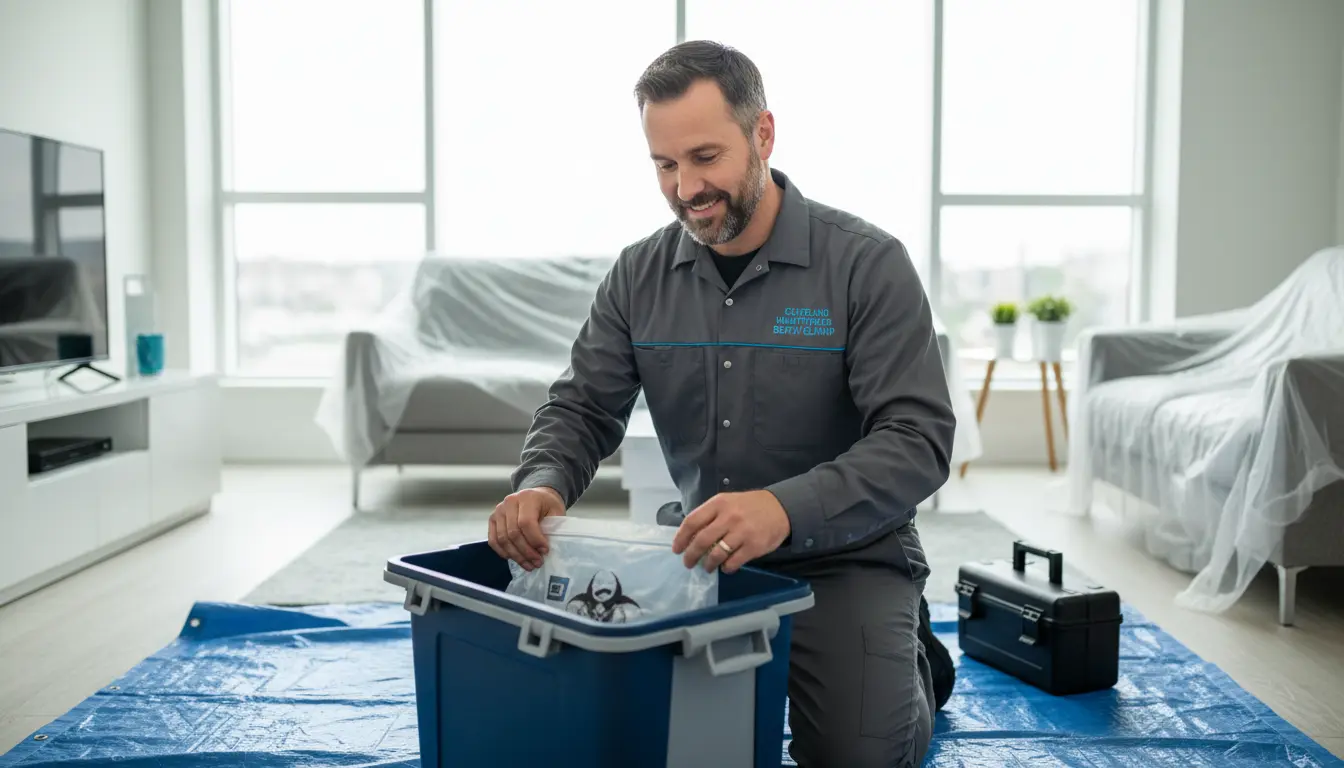
Most people assume that once a contaminated area looks clean, it is safe. In reality, the most dangerous pathogens remain invisible to the naked eye, and standard cleaning methods often spread contamination rather than eliminate it. This misconception is especially hazardous in Cleveland, where the region’s Great Lakes-effect humidity accelerates biological decomposition and drives pathogens deep into porous building materials. For property owners in Cuyahoga County, understanding how contaminated materials are removed and disposed of safely is not just a matter of aesthetics—it is a critical health and legal requirement.
Cleveland’s historic housing stock, with its plaster walls, wooden subfloors, and unsealed crawl spaces, presents unique challenges. Biological fluids and tissue can seep into these materials, creating reservoirs for bloodborne pathogens and microbial growth that standard cleaning cannot address. Professional biohazard remediation specialists follow rigorous protocols to ensure that every trace of contamination is identified, removed, and disposed of in compliance with OSHA, EPA, and IICRC S540 standards. Cleveland Unattended Death Cleanup provides the expertise and discretion needed to restore properties safely and thoroughly.
The Technical Process for Safe Removal and Disposal
Professional remediation begins with a comprehensive risk assessment. Technicians evaluate the extent of contamination, identify affected building materials, and determine the appropriate level of personal protective equipment (PPE). In Cleveland’s humid climate, decomposition fluids can migrate through flooring and into subflooring within hours, requiring immediate containment. Negative air machines are deployed to create a pressure differential, preventing airborne pathogens from spreading to unaffected areas.
Once containment is established, all visible biohazardous materials are physically removed using specialized tools. This includes extracting saturated porous materials such as carpet, padding, drywall, and insulation. Non-porous surfaces are then cleaned with hospital-grade disinfectants and enzyme-based cleaners that break down organic matter at a molecular level. After cleaning, adenosine triphosphate (ATP) fluorescence testing is used to confirm that no biological residue remains. Finally, structural encapsulation—sealing the cleaned surfaces with antimicrobial coatings—prevents future microbial growth. For a detailed walkthrough of each phase, refer to the step-by-step unattended death cleanup process.
Professional Remediation vs. Standard Janitorial Cleaning
The differences between professional biohazard remediation and ordinary cleaning are stark. The following table compares key metrics based on the IICRC S540 standard.
| Feature/Metric | Professional Biohazard Remediation | Standard Residential Cleaning |
|---|---|---|
| Regulatory Compliance | Follows OSHA 29 CFR 1910.1030, EPA disposal regulations, and local Cuyahoga County health codes | No regulatory oversight for biohazards |
| Pathogen Elimination | Achieves >99.99% reduction using EPA-registered disinfectants and ATP testing | May only remove visible dirt; pathogens survive |
| Structural Assessment | Evaluates porous materials for hidden seepage using moisture meters and thermal imaging | No assessment; assumes surface cleaning is sufficient |
| Waste Disposal | Uses authorized medical waste transporters and incineration or autoclaving | Disposal in regular trash, violating EPA rules |
| Cross-Contamination Prevention | Negative air pressure, HEPA filtration, and sealed waste bags | No containment; pathogens can spread via mops and cloths |
Expert Insights: Diagnostic Tips and Common Mistakes
Detecting Hidden Biological Seepage
Even after visible fluids are removed, biological material can wick into subflooring and wall cavities. Professionals use thermal imaging and moisture meters to locate these hidden reservoirs. In Cleveland’s older homes, the presence of hardwood floors over original plank subfloors creates capillary pathways that draw fluids upward. Without specialized detection, homeowners might seal contamination inside, leading to persistent odors and microbial growth that can compromise indoor air quality for years.
Why Porous Materials Require Replacement
Many property owners believe that cleaning a stained carpet or sanding a wooden floor will restore safety. However, bloodborne pathogens like hepatitis B and C can survive for weeks in porous materials. Enzymatic cleaners cannot reach the depths of the material. The only reliable solution is removal and replacement of affected porous surfaces. Attempting to salvage these materials often results in residual contamination that can cause future health issues, as discussed in the ultimate guide to biohazard cleanup.
The Importance of Negative Pressure
Without negative air pressure, contaminants can travel through HVAC systems and doorways, contaminating adjacent rooms. Technicians set up containment zones with zippers and HEPA-filtered negative air machines to ensure that airborne particles—including dried blood dust and fungal spores—are captured and removed. This is particularly important in Cleveland’s winter months, when homes are sealed tight and indoor air recirculation can spread pathogens rapidly.
Common Mistakes Property Owners Make
One frequent error is using household bleach on biological matter. Bleach can fix proteins to surfaces, making them harder to remove and actually preserving pathogens. Another mistake is waiting for odors to dissipate naturally. Decomposition odors indicate ongoing microbial activity and potential airborne pathogens. A third error is allowing untrained personnel—including family members or general cleaning crews—into the site. This exposes them to serious health risks and can compromise evidence if law enforcement is involved. The consequences of these mistakes range from chronic respiratory issues to structural rot and legal liability. For more on why professional intervention is critical, read why Cleveland trusts experts for death scene cleanup.
Pricing for Biohazard Remediation Services
The cost of professional remediation varies based on several factors, but typical charges include:
- Site mobilization fee: $350–$750 to cover travel, equipment setup, and initial assessment within Cuyahoga County.
- Hourly remediation rate: $125–$250 per hour per technician, depending on the complexity and hazard level.
- Disposal fees: $1.50–$3.00 per pound for biohazardous waste, which must be incinerated or autoclaved through authorized medical waste services.
- Structural material replacement: Additional costs for removing and replacing drywall, flooring, and insulation, which can range from $500 to $5,000 depending on the affected area.
Three key factors that influence the final price are the extent of structural material replacement required, the total volume of biohazardous waste, and the necessity for specialized HVAC decontamination. In Cleveland’s older homes, sub-floor remediation often adds significant time and cost because of the need to access and treat original wood structures. For a detailed breakdown, the stats on unattended deaths in Ohio can help property owners understand typical scenarios.
Safety Standards and Regulatory Compliance
Professional biohazard remediation must adhere to strict safety standards. OSHA’s Bloodborne Pathogens Standard (29 CFR 1910.1030) requires that all employees have proper training, vaccines (e.g., Hepatitis B), and access to appropriate PPE. The IICRC S540 standard provides a framework for trauma and crime scene cleanup, including verification of cleanliness through ATP testing. Additionally, all biohazardous waste must be transported and disposed of in compliance with EPA and Ohio EPA regulations, which mandate incineration or autoclaving. These protocols protect not only the technicians but also property owners, occupants, and future residents from communicable diseases such as HIV, hepatitis, and MRSA. In Cleveland, winter ice management for site access adds another layer of logistics: crews must ensure safe entry and exit while maintaining containment, a challenge that only experienced local providers can handle efficiently.
Frequently Asked Questions
How long does a typical biohazard remediation take?
The duration depends on the size of the affected area and the extent of contamination. A single room cleanup can be completed in one to two days, while a full-house scenario may require three to five days. Factors such as the need for structural drying, multiple containment zones, and winter weather delays can extend the timeline. Technicians work methodically to ensure every step is verified, so rushing is never advisable.
Is it safe to stay in the home during remediation?
No. Occupants should vacate the property until containment is removed and final air quality testing confirms safety. Airborne pathogens, chemical fumes from disinfectants, and the physical disruption of contaminated materials pose health risks. Professional crews seal off the work area, but residual contamination can spread if the HVAC system is not properly isolated. Temporary relocation is strongly recommended.
What happens to the removed contaminated materials?
All biohazardous waste is double-bagged in red, labeled bags and sealed in rigid containers. A licensed medical waste transporter picks up the containers and delivers them to a permitted treatment facility, where they are either incinerated at high temperatures or autoclaved to destroy pathogens. Disposal records are maintained for compliance with EPA and local regulations. This process ensures that contaminated materials never enter the general waste stream.
Do you work with insurance companies?
Yes. Cleveland Unattended Death Cleanup assists property owners with insurance claims by providing detailed documentation, including photographs, chain-of-custody forms, and final clearance reports. Most homeowner’s insurance policies cover biohazard remediation as part of structural damage or liability coverage. We can communicate directly with adjusters to expedite the process and ensure that all eligible costs are covered.
Professional Biohazard Remediation in Cleveland
Safe removal and disposal of contaminated materials is a complex, multi-step process that demands specialized knowledge, equipment, and regulatory compliance. From the initial risk assessment to the final ATP test and waste disposal, every stage must be executed with precision to protect health and property. Cleveland’s unique climate and aging infrastructure make professional remediation even more critical, as hidden contamination can persist and cause long-term problems.
Cleveland Unattended Death Cleanup combines technical expertise with compassion and discretion. Our certified technicians understand the emotional weight of these situations and work efficiently to restore your property to a safe, habitable condition. Whether you are dealing with an unattended death, crime scene, or biohazard incident, we provide thorough remediation that meets all safety standards. Contact us today to schedule an assessment and take the first step toward recovery.