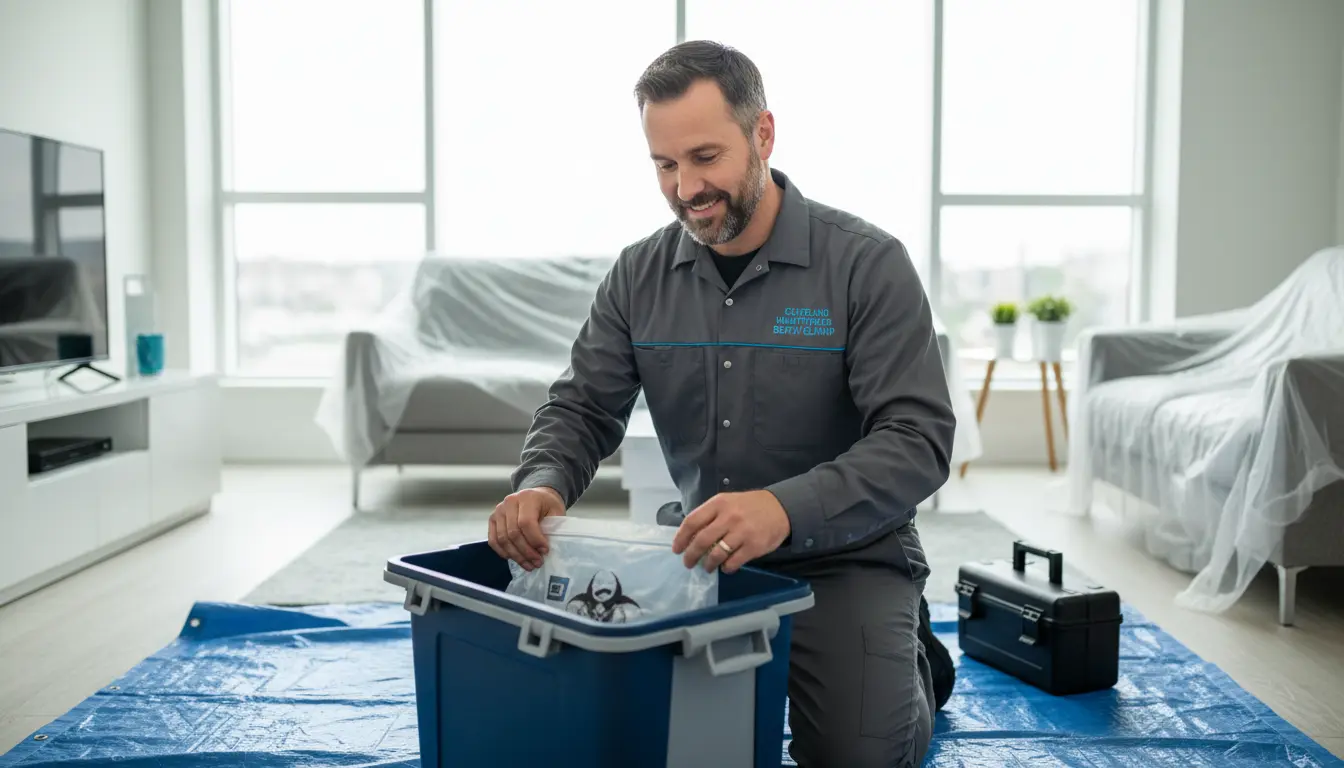
For homeowners, landlords, and families across Cleveland neighborhoods—from the historic stock of Ohio City to the suburban layouts of Parma Heights—the discovery of an unattended death marks the beginning of a complex process. The biological decomposition that occurs releases potent pathogens and airborne contaminants that can compromise the structural integrity of a home and pose serious health risks to anyone who enters. Professional, affordable unattended death cleanup services near Cleveland neighborhoods are not a luxury; they are a critical necessity for restoring safety, value, and peace of mind. Cleveland Unattended Death Cleanup provides the technical expertise and compassionate discretion required to manage these sensitive situations from start to finish.
The Scientific Reality of Unattended Decomposition in Cleveland
Understanding why professional remediation is non-negotiable requires a look at the biology involved. When a body remains undiscovered, the natural process of autolysis and putrefaction begins within hours. Enzymes break down cells, bacteria from the gastrointestinal tract migrate, and gases accumulate, causing the body to bloat and eventually rupture. This releases a complex mixture of fluids, including blood, lymph, and tissue, that seep into porous materials like hardwood floors, drywall, and subflooring.
Cleveland’s climate plays a significant role in this process. The region experiences high relative humidity, especially during the summer months, which creates an ideal environment for microbial growth. Moisture from the atmosphere and the biological fluids themselves saturate building materials, allowing bacteria and fungi to proliferate. This is not a surface-level issue; biological fluids can wick deep into structural elements, creating persistent contamination that standard cleaning methods cannot address. The migration of these fluids also generates volatile organic compounds (VOCs) responsible for the characteristic odor, which can penetrate HVAC systems and affect adjacent units or rooms.
A Step-by-Step Look at Professional Remediation Workflow
Our approach at Cleveland Unattended Death Cleanup follows a strict protocol aligned with IICRC S540 standards and OSHA’s Bloodborne Pathogens Standard (29 CFR 1910.1030). The goal is not just to clean, but to restore the environment to a safe, habitable state. The process begins with a thorough initial risk assessment, where our technicians evaluate the scope of contamination, identify potential hazards like sharps or structural damage, and determine the necessary containment measures.
Following the assessment, we establish a containment zone using heavy-duty plastic sheeting and negative air pressure machines. These industrial-grade units create a vacuum effect, pulling air through HEPA filters to capture airborne particulates and prevent cross-contamination to unaffected areas of the property. Our team then dons full personal protective equipment (PPE), including Tyvek suits, respirators, and nitrile gloves, before entering the work area. The physical removal of biohazardous materials is conducted using specialized tools, including enzymatic cleaners that break down organic matter at a molecular level. We follow this with a thorough application of EPA-registered hospital-grade disinfectants, ensuring pathogen elimination across all surfaces.
Verification is a critical step that sets professional remediation apart from standard cleaning. We use adenosine triphosphate (ATP) fluorescence testing to measure the presence of organic residue on surfaces. A reading below a specific threshold confirms that the area is biologically clean. Finally, we address any structural damage, replacing porous materials like carpet, drywall, or insulation as needed to eliminate hidden contamination and prevent future microbial growth. This comprehensive approach ensures that the property is not only visually clean but also safe for occupancy.
Professional Remediation vs. Standard Cleaning: A Data Comparison
The difference between professional biohazard remediation and a standard residential cleaning service is vast. The table below highlights key distinctions based on industry standards and technical requirements.
| Feature/Metric | Professional Biohazard Remediation | Standard Residential Cleaning |
|---|---|---|
| Regulatory Compliance | Full adherence to OSHA, EPA, and IICRC S540 standards | No biohazard-specific compliance requirements |
| Pathogen Elimination | Uses EPA-registered disinfectants with verified contact times; ATP testing for verification | General-purpose cleaners; no verification of biological cleanliness |
| Structural Assessment | Evaluates porous materials for hidden contamination; replaces as needed | Superficial cleaning only; no consideration of fluid wicking |
| Cross-Contamination Prevention | Negative air pressure, HEPA filtration, and containment zones | Standard cleaning equipment; no containment |
Source: IICRC S540 Trauma and Crime Scene Cleanup Standard
Expert Insights: What Property Owners Often Miss
Three advanced diagnostic tips can help property owners understand the true scope of an unattended death scene. First, biological fluids do not stay on the surface. When a body decomposes on a hardwood floor, the liquid can seep between the planks and into the subfloor. If the subfloor is plywood, it acts like a sponge, retaining biological material that will continue to release odors and foster microbial growth for years. Effective remediation requires removal and replacement of these materials.
Second, the use of negative pressure is non-negotiable. Without it, airborne contaminants, including bacteria and fungal spores, can travel through the entire property via the HVAC system. We have handled cases in Lakewood where a single incident on the first floor led to contamination in the basement and attic because of airflow. Third, porous materials like carpet and upholstery can never be fully sanitized after biological saturation. The internal structure of these materials provides a haven for pathogens, making replacement the only viable option.
Common mistakes property owners make include attempting to use household bleach on biological matter. Bleach is corrosive and can damage surfaces while failing to eliminate all pathogens, especially in porous materials. Another frequent error is waiting for the odor to dissipate naturally. The odor is a sign of ongoing microbial activity, and it will not disappear without professional intervention. Finally, allowing untrained family members or maintenance staff into the scene can expose them to bloodborne pathogens like hepatitis B and C, leading to long-term health risks. These mistakes can also result in liability issues and further property damage, increasing the overall cost of restoration.
Understanding the Cost of Unattended Death Cleanup
- Standard site mobilization fees cover the arrival of our specialized vehicle, equipment setup, and initial containment. These fees typically range from $250 to $500 depending on the location within the Cleveland area.
- Hourly remediation rates for trained technicians are applied for the actual cleaning labor. Rates generally fall between $150 and $250 per hour per technician. The total number of hours is determined by the square footage of contamination and the complexity of the scene.
- Itemized costs for specialized disposal are based on the weight of biohazardous waste. Proper disposal through authorized medical waste incinerators can add $200 to $600 to the total bill.
Several factors influence the final cost. The extent of structural material replacement is a primary driver. If fluids have seeped into subflooring, drywall, or insulation, these materials must be removed and replaced. The volume of biohazardous waste also plays a role—a larger scene requires more disposal fees. Specialized HVAC decontamination is another factor; if the odor has migrated into the ductwork, we must use ozone or hydroxyl generators to neutralize it. While the cost may seem significant, it is a fraction of what improper cleanup can lead to in terms of health liabilities and long-term property devaluation.
Safety Standards and Certifications: What They Mean for You
Certifications are not just credentials; they are a promise of safety and technical rigor. Our technicians are trained under the IICRC S540 standard for trauma and crime scene cleanup, which outlines the specific procedures for biological hazard remediation. Additionally, we comply with OSHA’s Bloodborne Pathogens Standard (29 CFR 1910.1030), which mandates the use of PPE, proper waste disposal, and exposure control plans. These standards ensure that every step of the process is designed to protect the workers and the property’s occupants.
In practice, this means we use authorized medical waste services that follow strict guidelines for the transport and incineration of biohazardous materials. We also maintain detailed documentation of the remediation process, which is critical for insurance claims and property records. For property owners in Cleveland, this adherence to standards provides peace of mind, knowing that their property has been restored to a safe condition. Failing to hire certified professionals can lead to incomplete remediation, ongoing health risks, and potential legal consequences if future tenants or buyers are exposed to residual contamination.
Frequently Asked Questions About Unattended Death Cleanup
How quickly should I call a professional after an unattended death is discovered?
Immediately. The longer biological materials remain untreated, the deeper they can penetrate building materials, increasing the complexity and cost of remediation. Within hours, fluids begin to wick into porous surfaces. Calling a professional right away minimizes structural damage and reduces the risk of airborne contamination spreading through the property. Our 24/7 emergency response service ensures that we can be on-site in Cleveland neighborhoods within a short time frame to begin assessment and containment.
Can I use bleach to clean up an unattended death scene myself?
No. Household bleach is not an effective disinfectant for bloodborne pathogens in porous environments. It is a corrosive chemical that can damage surfaces and does not penetrate deeply enough to neutralize contaminants within materials like wood or drywall. Furthermore, bleach solution can react with organic matter, releasing toxic chlorine gas. Professional remediation uses EPA-registered disinfectants with specific contact times to ensure complete pathogen elimination, followed by ATP testing to verify cleanliness.
Will my homeowner’s insurance cover unattended death cleanup costs?
Most standard homeowner’s insurance policies provide coverage for the cleanup of unattended deaths under their liability or property damage provisions. However, coverage varies widely depending on the policy and the specific circumstances. We recommend contacting your insurance provider as soon as possible to discuss your coverage. Our team also offers insurance claim support, helping you document the remediation process and communicate with adjusters to ensure you receive the benefits you are entitled to.
How do I know if the property is truly safe after cleanup?
Visual cleanliness is not enough. We use ATP fluorescence testing to measure biological residue on surfaces. A clean reading indicates that the area is free of organic contamination. Additionally, we conduct a final structural inspection to ensure that all contaminated materials have been removed and that the environment is dry and free of odor. For properties with significant fluid migration, we may recommend post-remediation verification testing to provide documented proof of safety for insurance or future occupancy.
Professional Biohazard Remediation in Cleveland
When an unattended death occurs, the aftermath is not a task for amateurs. The biological hazards, structural challenges, and emotional weight demand a response that is both technically precise and deeply respectful. Our team at Cleveland Unattended Death Cleanup has the training, equipment, and local knowledge to handle these situations with the seriousness they require. From the historic homes of Detroit Shoreway to the newer constructions in Strongsville, we have seen how quickly a missed detail can lead to long-term problems.
Choosing affordable unattended death cleanup services near Cleveland neighborhoods is about more than cost—it is about ensuring that the restoration is complete, compliant, and safe. We work closely with families, property managers, and insurance companies to navigate the process with minimal disruption. Whether you need help with a specific scene or want to understand the full scope of services we offer, we are here to provide clear, actionable guidance. Trust the professionals who understand the science, the standards, and the city you call home.