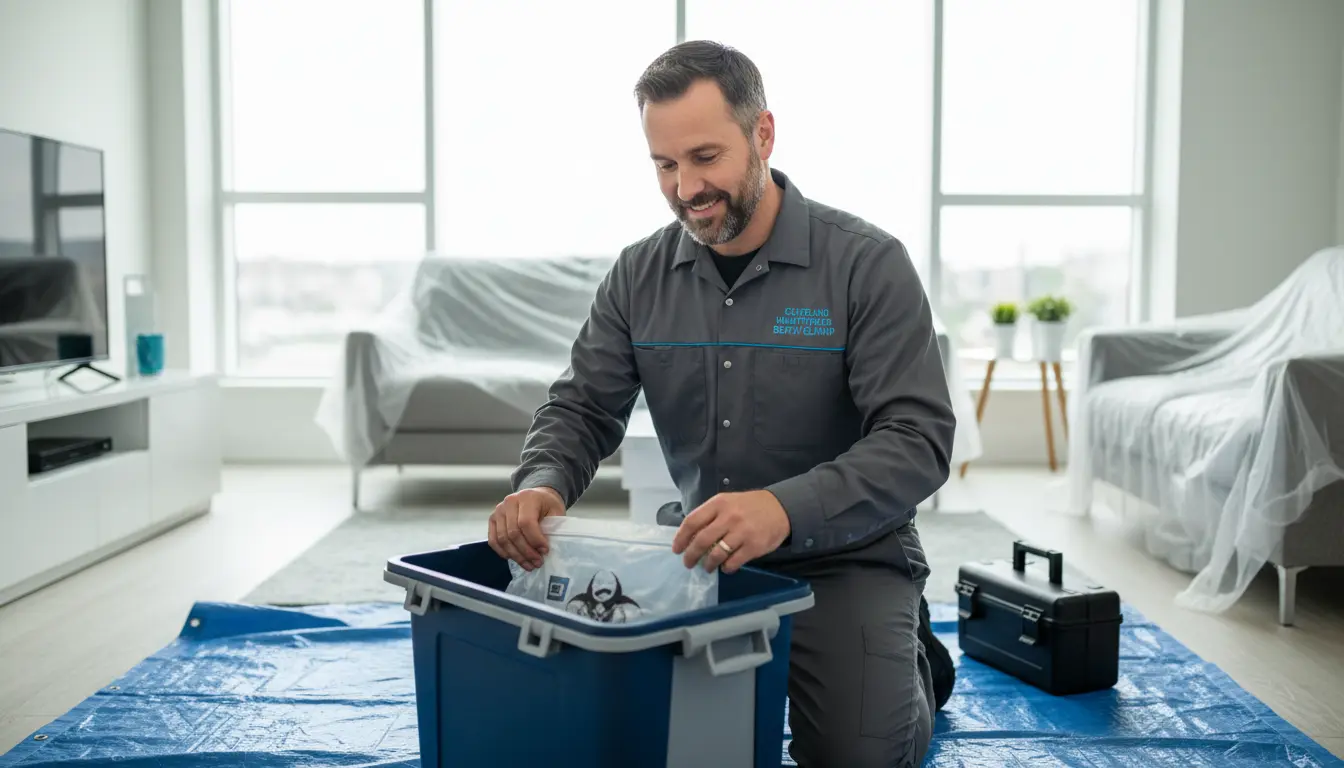
In Cuyahoga County, the Cuyahoga County Medical Examiner’s Office reported handling over 1,200 death investigations in a recent year, a significant portion of which were unattended deaths discovered days or even weeks after the event. This stark statistic underscores a grim reality for Cleveland property owners: the scene of an unattended death is not merely a sad place but a complex biohazard zone requiring specialized intervention. The decomposition process, accelerated by Cleveland’s humid Great Lakes climate, can saturate porous building materials like drywall, subflooring, and insulation with potentially infectious fluids, creating airborne pathogens that persist long after the visible signs are gone.
Choosing the right response team is not a matter of convenience; it is a critical decision that impacts the structural integrity of your property, the health of its future occupants, and your compliance with state and federal regulations. This article provides a detailed, technical framework for comparing unattended death cleanup companies in Cleveland, OH, focusing on verifiable credentials, remediation methodologies, and local expertise rather than marketing fluff. We will dissect the essential elements of a professional service, from their adherence to the IICRC S540 standard to their ability to navigate the logistical challenges of a Cleveland winter, so you can make an informed decision during a difficult time. For a deeper dive into the local landscape, consult our specific statistics on cleanup needs in Ohio.
The Technical Standard: What Professional Remediation Actually Entails
When comparing companies, the first filter should be their operational definition of cleanup. A professional biohazard remediation company follows a rigorous, science-based protocol, not a general cleaning checklist. The process begins with a comprehensive risk assessment of the scene, which involves evaluating the duration of exposure, the type of biological materials present, and the structural porosity of the affected area. This assessment dictates the level of personal protective equipment (PPE) required, from Tyvek suits and full-face respirators to shoe covers and double-gloving, in strict compliance with OSHA’s Bloodborne Pathogens Standard (29 CFR 1910.1030). A company that sends a worker in a dust mask and latex gloves is not qualified to handle this work.
The physical removal of biohazardous materials is only the first phase. After all visible matter is removed, the team employs EPA-registered hospital-grade disinfectants and specialized enzyme treatments to break down biological fluids at a molecular level. This step is followed by adenosine triphosphate (ATP) fluorescence testing, a scientific method that uses a luminometer to measure the presence of organic material on surfaces. A reading below a certain threshold verifies that the area is biologically clean, not just visually clean. This is a critical differentiator; a substandard company may skip ATP testing entirely. You can learn more about the detailed workflow in our step-by-step explanation of the unattended death cleanup process.
Data Comparison: Professional Remediation vs. Standard Cleaning
To illustrate the vast chasm in capability and outcome, the following table contrasts a certified biohazard remediation service with a standard residential cleaning service. This comparison is foundational when comparing unattended death cleanup companies in Cleveland, OH, as it highlights non-negotiable criteria.
| Feature/Metric | Professional Biohazard Remediation | Standard Residential Cleaning |
|---|---|---|
| Regulatory Compliance | Adheres to OSHA, EPA, and IICRC S540 standards. Properly documents all waste disposal per federal and state guidelines. | Generally not trained or licensed for hazardous materials. May improperly dispose of bio-waste. |
| Pathogen Elimination | Uses hospital-grade disinfectants and ATP testing to verify elimination of bloodborne pathogens like Hepatitis B, HIV, and MRSA. | Relies on household cleaners (e.g., bleach) that are not sporicidal or effective against dried, embedded biological matter. |
| Structural Assessment | Identifies and quantifies biological seepage into subflooring, drywall, and insulation using moisture meters and thermal imaging. | Cleans only visible surfaces. Misses saturated materials that will continue to decompose and emit odors. |
| Odor Control | Employs industrial-grade negative air machines with HEPA filtration and ozone or hydroxyl generators to neutralize odors at the molecular level. | Attempts to mask odors with air fresheners, which is ineffective for decomposition gases. |
Expert Insights: The Details That Matter Most
Detecting Hidden Biological Seepage
One of the most common failures of inexperienced companies is the inability to locate all affected areas. Biological fluids do not stay on the surface; they are drawn into porous materials like wood, concrete, and drywall through capillary action. A qualified technician uses thermal imaging and non-invasive moisture meters to detect saturated areas behind walls and beneath flooring. In Cleveland’s historic homes, which often have hardwood floors and plaster walls, this seepage can travel far beyond the immediate visible stain. If a company does not mention these diagnostic tools, they are likely missing significant contamination.
Why Porous Materials Must Be Replaced
No amount of cleaning or disinfection can fully restore a porous material that has been saturated with biological fluids. The organic matter soaks into the matrix of the material, making it impossible to achieve the necessary level of sanitation. Professional standards mandate the removal and disposal of affected drywall, carpet, padding, and subflooring. Attempting to clean these materials is a health risk and a waste of time. A reputable company will be transparent about the scope of removal required and will not offer false promises of complete restoration through cleaning alone.
The Critical Role of Negative Pressure
To prevent cross-contamination of the rest of the property, the remediation area must be placed under negative air pressure. This is achieved by using a HEPA-filtered negative air machine that exhausts air to the outside, creating a vacuum that traps airborne particles inside the work zone. Without this containment, microscopic pathogens and odor particles can migrate through the HVAC system and into every room of the house. This is a non-negotiable safety protocol that a professional company will implement before any physical removal begins.
Common Mistakes Property Owners Make
Many homeowners make the critical error of using household bleach on biological matter. Bleach is not an effective cleaner for organic soil; it can actually fix proteins to surfaces, making them harder to remove. Furthermore, bleach fumes are toxic and can react with other chemicals. Another frequent mistake is waiting for the odor to dissipate naturally. Decomposition odors are caused by volatile organic compounds that persist for months and can embed themselves into the building’s structure. Finally, allowing untrained family members or friends to enter the site exposes them to serious health risks, including respiratory infections and bloodborne diseases. Understanding these dangers is crucial, and our analysis of the top dangers of unattended deaths provides further context.
Pricing Factors: Understanding the Cost of Remediation
- Site Mobilization Fees: Most professional companies charge a flat fee for the initial response and setup. This covers the travel time, the deployment of containment equipment, and the initial risk assessment. In Cleveland, winter conditions can increase this fee due to the logistical challenges of ice management and ensuring safe access for equipment.
- Hourly Remediation Rates: The bulk of the cost is often billed on an hourly basis. Rates typically range from $150 to $300 per hour per technician, depending on the complexity of the scene. A scene involving advanced decomposition will require more time and more technicians.
- Disposal Costs: The removal and disposal of biohazardous waste is a regulated process. Medical waste must be placed in approved red bags and incinerated or autoclaved. The volume of waste directly impacts this cost, as does the need to dispose of larger structural materials like carpet and drywall.
- Structural Repairs: In many cases, the remediation company will coordinate with contractors for the removal and replacement of subflooring, drywall, and insulation. These costs are separate from the biohazard cleanup and can vary widely based on the extent of the damage.
Safety and Standards: The Framework for Trust
Certifications are not just pieces of paper; they are a guarantee that a company operates under a strict code of conduct and technical proficiency. Look for a company that holds current IICRC certifications in trauma and crime scene cleanup (TCSC). This certification requires ongoing education and adherence to the S540 standard. Additionally, every technician must be trained under OSHA’s Bloodborne Pathogens Standard, which mandates proper handling, disposal, and exposure control plans. A company that cannot provide proof of these certifications should be eliminated from consideration.
Furthermore, a legitimate company will have a partnership with a licensed medical waste transport and disposal service. They will provide you with a manifest documenting the chain of custody of the biohazardous waste, which is crucial for legal and environmental compliance. In Cuyahoga County, improper disposal of medical waste can result in significant fines and legal liability for the property owner. For more information on what constitutes a qualified service, review our ultimate guide to biohazard cleanup after death.
Frequently Asked Questions About Unattended Death Cleanup
What specific pathogens are present at an unattended death scene?
The primary biological hazards are bloodborne pathogens, including Hepatitis B (HBV), Hepatitis C (HCV), and Human Immunodeficiency Virus (HIV). However, the environment also fosters the growth of opportunistic bacteria like MRSA and Clostridium difficile, which can survive on surfaces for weeks. Additionally, the decomposition process releases airborne pathogens and volatile organic compounds that can cause respiratory illness. A professional remediation service is trained to neutralize this entire spectrum of threats using EPA-registered disinfectants with specific kill claims.
How long does the remediation process typically take?
The timeline is highly variable and depends on the size of the affected area, the extent of decomposition, and the complexity of the structure. A small room with a recent death might take 4 to 8 hours to remediate. A large home with a death that went undiscovered for weeks could take multiple days. The process includes initial assessment, containment setup, physical removal, chemical disinfection, ATP testing, and final structural encapsulation. A reputable company will provide a detailed estimate after the initial site inspection.
Is it safe to stay in the home during the cleanup?
No, it is generally not safe. The remediation process involves the use of strong chemical disinfectants, the generation of airborne particles, and the operation of heavy equipment. The affected area is isolated with negative air pressure to prevent cross-contamination, but it is best for occupants to vacate the property until the work is complete. The company will advise on the safe re-entry time, which typically occurs after final air quality testing confirms the environment is safe.
Will my homeowner’s insurance cover this service?
Many standard homeowner’s insurance policies do cover biohazard remediation, but it is not guaranteed. Coverage often depends on the specific policy and the cause of death. If the death is a result of a covered peril (like a crime or an accident), the policy may pay for cleanup. It is essential to contact your insurance agent immediately and review your policy. A professional remediation company can often provide the necessary documentation and scope of work to assist with your claim. For immediate steps after a death, read our guide on what to do after discovering an unattended death.
Professional Biohazard Remediation in Cleveland
Selecting the right company for an unattended death cleanup is a decision that should be made with complete information and a focus on safety, not price alone. The unique challenges of Cleveland’s climate—from high humidity that accelerates decomposition to winter conditions that complicate logistics—require a local team with proven expertise. A company that invests in advanced diagnostic tools, follows IICRC S540 standards, and provides transparent documentation is the only partner you should trust for this critical work.
When you need a team that combines technical rigor with genuine compassion, Cleveland Unattended Death Cleanup stands ready. We understand the gravity of your situation and are committed to restoring your property to a safe and healthy condition. Our certified technicians are available 24/7 to respond in strict confidentiality. To learn more about our team and our commitments, visit our about us page or reach out to us directly. We are here to help you move forward with confidence.