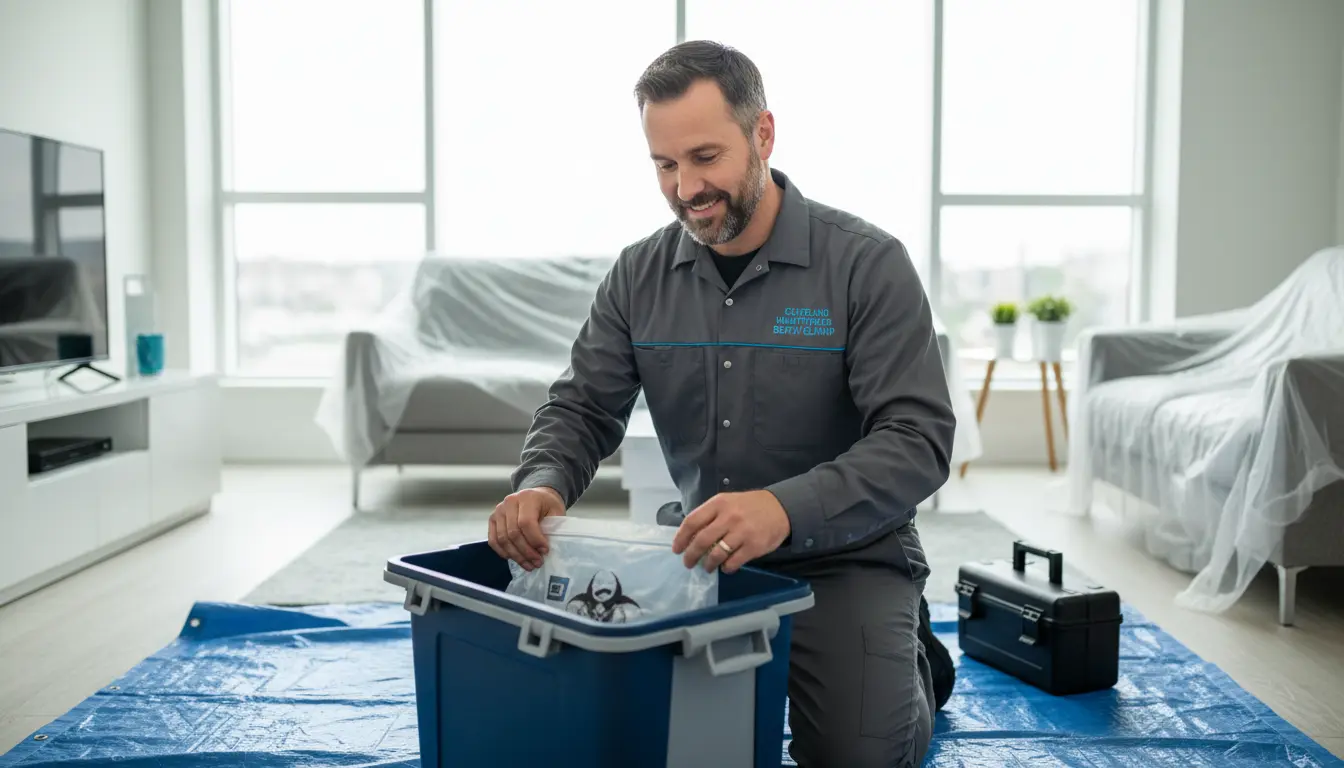
When a death goes undiscovered for days or weeks, the scene is not merely a matter of cleanup. It becomes a complex intersection of forensic restoration, structural decontamination, and insurance policy interpretation. Homeowners, landlords, and family members in the Cleveland area often discover that standard homeowner’s policies contain specific provisions—and exclusions—that directly impact coverage for biohazard remediation. Navigating these provisions without professional guidance frequently leads to denied claims or insufficient reimbursement. The key lies in understanding the policy language, documenting the scene appropriately, and working with a remediation firm that specializes in insurance claim support.
Understanding Policy Coverage for Unattended Death Cleanup
Most standard homeowner’s insurance policies in Ohio cover sudden and accidental direct physical loss. The critical phrase here is “sudden and accidental.” An unattended death, by its very nature, is neither sudden in its discovery nor accidental in the sense of a burst pipe or a kitchen fire. Insurance adjusters often classify biological decomposition as a gradual process, which falls outside the scope of many standard peril-based policies. This distinction is where claims are frequently contested.
However, there are important exceptions. Many policies include a “fungus, wet rot, dry rot, and bacteria” endorsement that may provide limited coverage for microbial remediation resulting from biological fluids. Additionally, if the death results from a covered peril—such as a homicide during a home invasion or a fatal accident caused by a structural failure—the cleanup may be covered under the same claim. The burden of proof falls on the policyholder to demonstrate that the contamination was the direct result of a covered event, not simply the passage of time. This is why immediate documentation and professional assessment are indispensable.
Step-by-Step: How to File a Successful Claim
The process of filing a claim for unattended death cleanup follows a specific sequence that, if executed correctly, significantly improves the likelihood of approval. The first step, immediately after law enforcement releases the scene, is to contact your insurance provider and explicitly ask whether your policy covers biohazard remediation. Do not assume coverage based on general language about “cleanup” or “debris removal.” Request the specific policy section and endorsement numbers relevant to biological contamination.
Next, secure the scene and prevent any further contamination. Do not allow family members, well-meaning neighbors, or unlicensed cleaning services to enter. Untrained entry not only creates cross-contamination risks but also invalidates the chain of custody that insurance adjusters require for claim validation. Contact a certified trauma scene cleanup provider, such as the team at Discreet Property Cleaning, who will arrive with the proper documentation protocols already in place.
The remediation firm should provide a detailed scope of work that includes an initial risk assessment, a list of contaminated materials, the proposed remediation methods, and an itemized cost estimate. This document becomes the foundation of your claim. Submit it to your insurance adjuster along with photographs of the scene taken by the remediation team—never by the property owner—to maintain objectivity. Finally, retain all invoices, waste disposal manifests, and air quality testing results. These records demonstrate that the work was performed to IICRC S540 standards, which adjusters recognize as the industry benchmark.
The Technical Process of Professional Remediation
Professional unattended death cleanup is not a sanitation service; it is a forensic restoration process governed by strict protocols. Upon arrival, the team conducts a comprehensive risk assessment that includes identifying all bloodborne pathogens present, evaluating structural saturation levels, and measuring airborne particulate matter. Cleveland’s Great Lakes-effect humidity profile accelerates biological decomposition, meaning that fluids can wick into subflooring and drywall within hours, not days. This environmental factor demands a more aggressive initial response than would be necessary in arid climates.
The remediation team then establishes containment using negative air machines equipped with HEPA filtration. These machines create a pressure differential that prevents aerosolized pathogens from migrating to uncontaminated areas of the property. All personnel wear full PPE, including Tyvek suits, N95 or P100 respirators, face shields, and chemical-resistant gloves. Physical removal of biohazardous material follows, using enzyme-based cleaners that break down organic matter at the molecular level. This is followed by a thorough application of EPA-registered hospital-grade disinfectants capable of inactivating hepatitis B, hepatitis C, HIV, and other bloodborne pathogens.
After the initial cleaning, the team performs adenosine triphosphate (ATP) fluorescence testing. ATP testing measures the presence of biological residue on surfaces by detecting the energy molecule common to all living cells. If ATP levels exceed the threshold established by the IICRC, the area is cleaned and tested again. This scientific verification ensures that the space is not merely visually clean but biologically safe. Finally, structural materials that cannot be fully decontaminated—such as saturated drywall, carpet padding, and wooden subflooring—are removed and replaced. The Structural Damage Repair phase restores the property to its pre-loss condition, which is essential for both insurance reimbursement and future occupancy.
Professional Remediation vs. Standard Cleaning: A Data Comparison
Understanding the difference between professional biohazard remediation and standard janitorial cleaning is critical when presenting your case to an insurance adjuster. The following table highlights the key distinctions that impact both claim approval and long-term property safety.
| Feature/Metric | Professional Biohazard Remediation | Standard Residential Cleaning |
|---|---|---|
| Regulatory Compliance | OSHA 29 CFR 1910.1030, EPA FIFRA, IICRC S540 | No specific regulatory framework |
| Pathogen Elimination | ATP testing to <10 RLU; hospital-grade disinfectants with 6-log kill rate | Visual inspection only; household cleaners ineffective against bloodborne pathogens |
| Structural Assessment | Moisture mapping, thermal imaging, saturation depth analysis | None; cleaning is surface-only |
| Waste Disposal | Licensed biohazard waste transporter; incineration or autoclaving | Standard trash disposal (illegal for biohazard materials) |
| Cross-Contamination Prevention | Negative air pressure, HEPA filtration, sealed containment zones | No containment; pathogens spread via mops and sponges |
When an adjuster sees a line-item estimate from a professional firm that includes ATP testing, negative air machines, and licensed waste disposal, they immediately recognize a legitimate, standard-compliant claim. An estimate from a general cleaning service, by contrast, suggests the work was performed without the necessary expertise or regulatory oversight, which often leads to claim denial.
Expert Insights from the Field
After two decades of managing complex biohazard scenes across Cuyahoga County, three diagnostic insights consistently separate adequate remediation from truly thorough restoration. First, always test for hidden biological seepage beneath flooring materials. In many historic Cleveland homes, original hardwood floors rest directly on joists without a vapor barrier. When biological fluids pool, they migrate laterally through the gaps between planks and saturate the subfloor from below. A visual inspection of the top surface reveals nothing. Only a moisture meter with a deep-penetration probe or a thermal imaging camera can detect the contamination that will eventually cause structural rot and persistent odor.
Second, porous materials are never truly cleanable after biological saturation. Gypsum drywall, cellulose insulation, and carpet padding act like sponges. Once body fluids penetrate these materials, the structural integrity is compromised, and pathogens can remain viable for weeks. Some property owners attempt to save money by asking cleaners to “spot treat” a stained section of drywall. This approach inevitably fails. The pathogens continue to off-gas volatile organic compounds, producing the characteristic decomposition odor that returns days after cleaning. The only effective solution is removal and replacement of all affected porous materials.
Third, negative air pressure is non-negotiable. In the absence of containment, airborne pathogens can travel through HVAC systems, contaminating an entire building. I have personally tested homes where the only death occurred in a second-floor bedroom, yet ATP levels in the basement family room exceeded safe thresholds because the furnace fan distributed aerosolized particles throughout the ductwork. Any remediation plan that does not include isolation of the HVAC system and placement of negative air machines should be rejected outright. This is particularly important in Cleveland’s older homes, where shared ductwork is common and cross-contamination risk is high.
Common Mistakes That Derail Claims
The most frequent error property owners make is applying household bleach to biological stains. Bleach is a disinfectant only when used at the correct concentration on clean, non-porous surfaces. On porous materials like wood or drywall, bleach reacts with organic matter to form chlorinated compounds that are both toxic and ineffective at eliminating pathogens. Worse, bleach damages the surface structure, making it more absorbent and harder to decontaminate later. Professional remediation teams use specialized enzyme cleaners that break down proteins and facilitate complete removal.
Another common mistake is waiting for the odor to dissipate naturally. Decomposition odors are caused by volatile organic compounds produced by bacterial metabolism. These compounds do not simply evaporate; they adsorb into porous materials and can persist for months or years. The longer the delay, the deeper the penetration and the more extensive the remediation required. Insurance adjusters often view delayed remediation as evidence of neglect, which can reduce or eliminate coverage.
Finally, allowing untrained personnel—including family members or general contractors—into the scene before professional remediation is a serious error. Not only does this create a direct exposure risk to bloodborne pathogens, but it also compromises the documentation needed for the insurance claim. Adjusters rely on the chain of custody and the professional scope of work to validate the claim. If the scene has been disturbed, the adjuster may argue that the contamination was exacerbated by the untrained entry, reducing the insurer’s liability.
Pricing Structures for Unattended Death Cleanup
- Site mobilization fees typically range from $500 to $1,500 depending on the distance from the remediation company’s base of operations and the urgency of the response. In Cleveland, winter ice management adds logistical complexity that can increase mobilization costs.
- Hourly remediation rates for certified technicians generally fall between $150 and $300 per hour. This fee covers not only labor but also the use of specialized equipment such as negative air machines, HEPA vacuums, and ATP testing devices.
- Itemized costs for specialized disposal of biohazardous waste range from $200 to $800 per drum, depending on local waste management regulations. Cuyahoga County requires all biohazard waste to be transported by a licensed medical waste hauler and incinerated at an approved facility.
Three primary factors influence the total cost. The extent of structural material replacement is the largest variable. A scene confined to a single room with tile flooring may require only surface cleaning and minor drywall repair. A scene that has saturated subflooring, wall cavities, and carpeting across multiple rooms can necessitate full room restoration, including joist encapsulation. The total volume of biohazardous waste also drives cost, as disposal fees are charged per container. Finally, the necessity for specialized HVAC decontamination can add several thousand dollars to the project. If airborne contaminants have entered the ductwork, the entire system must be cleaned, disinfected, and tested to prevent recontamination of the restored space.
Safety Standards and Certifications
Compliance with established safety standards is not optional—it is a legal and ethical requirement. The OSHA Bloodborne Pathogens Standard (29 CFR 1910.1030) mandates that any employee with occupational exposure to blood or other potentially infectious materials must receive specific training, be offered the hepatitis B vaccination, and use appropriate PPE. A remediation company that cannot produce written documentation of this training for every technician on-site is operating outside federal law. Insurance adjusters know this, and they will flag any claim submitted by a non-compliant firm.
The IICRC S540 Standard for Trauma and Crime Scene Cleanup provides the procedural framework for every phase of remediation, from initial assessment to final verification. This standard requires that all cleaning protocols be documented, that ATP testing be used to confirm biological safety, and that waste disposal follow applicable federal, state, and local regulations. Property owners should ask potential remediation companies for their IICRC certification number and proof of compliance with S540. Working with a certified firm not only ensures the scene is restored correctly but also strengthens the insurance claim by providing an industry-recognized standard of care.
Authorized waste management services are another critical component. Biohazard waste cannot be placed in standard trash receptacles or dumped at municipal landfills. It must be transported in approved containers by a licensed hauler and destroyed through incineration or autoclaving. Reputable remediation companies maintain contracts with medical waste disposal firms and provide manifests that document the chain of custody from the scene to the disposal facility. These manifests are essential for insurance claims and for demonstrating compliance with Ohio EPA regulations.
Frequently Asked Questions
Does my homeowner’s insurance cover unattended death cleanup?
Coverage depends on the specific language of your policy. Most standard HO-3 policies exclude gradual damage, which adjusters often classify biological decomposition as. However, if the death was caused by a covered peril such as a fire, a structural collapse, or a criminal act covered under your policy’s personal liability section, the cleanup may be included. You should also check for endorsements related to microbial remediation or pollution cleanup. The safest approach is to contact your agent immediately after the scene is released and request a written determination of coverage before any work begins.
What documentation do I need to submit with my insurance claim?
You will need a detailed scope of work from a certified remediation firm, including an itemized cost estimate, photographs of the scene taken before remediation began, waste disposal manifests, and ATP test results confirming post-remediation safety. The remediation firm should also provide a written narrative describing the initial assessment, the methods used, and the final verification. Insurance adjusters rely on these documents to validate that the work was performed to professional standards. Without them, the claim is likely to be denied or substantially reduced.
How long does the remediation process take?
The duration depends on the extent of contamination and the size of the affected area. A single-room scene with minimal structural saturation can often be remediated in one to two days. A multi-room scene that requires subfloor removal, HVAC decontamination, and full structural restoration can take five to ten days or longer. Cleveland’s humidity and temperature variations can extend drying times between decontamination stages, so your remediation team should provide a realistic timeline based on the specific conditions of your property. Rushing the process increases the risk of incomplete pathogen elimination and subsequent odor recurrence.
Can I clean the scene myself to save money?
Attempting to clean a scene involving human decomposition without professional training and equipment is extremely dangerous. Bloodborne pathogens such as hepatitis B, hepatitis C, and HIV can remain viable in dried biological material for days or weeks. Inhaling aerosolized particles during cleaning can lead to serious respiratory infections. Additionally, improper cleaning leaves behind biological residue that will continue to decompose, causing persistent odor and potential long-term health risks. Insurance companies will not reimburse for self-performed cleaning, and if you later file a claim for professional remediation, the adjuster may argue that your attempts worsened the contamination. Professional remediation is not an expense to be avoided; it is an investment in safety and property value.
Professional Biohazard Remediation in Cleveland
Handling the aftermath of an unattended death is a profound responsibility that requires technical precision, regulatory compliance, and genuine compassion. The intersection of insurance claim management and professional remediation can feel overwhelming, especially during a time of emotional distress. However, with the right partner, the process becomes manageable. Cleveland Unattended death cleanup brings decades of combined experience in forensic restoration, IICRC-certified protocols, and a deep understanding of how to navigate insurance claims specific to the greater Cleveland area.
Every scene is different, but the principles remain the same: immediate containment, thorough documentation, scientific verification, and complete restoration. Whether you are a property manager facing a complex claim, a family member protecting a loved one’s home, or a landlord ensuring a safe and habitable unit for future tenants, professional remediation is the only path that ensures safety, compliance, and financial protection. When an adjuster reviews a claim supported by ATP test results, waste manifests, and a scope of work written to IICRC S540 standards, the outcome is almost always favorable. The key is acting quickly, choosing the right team, and understanding the process before the need arises.