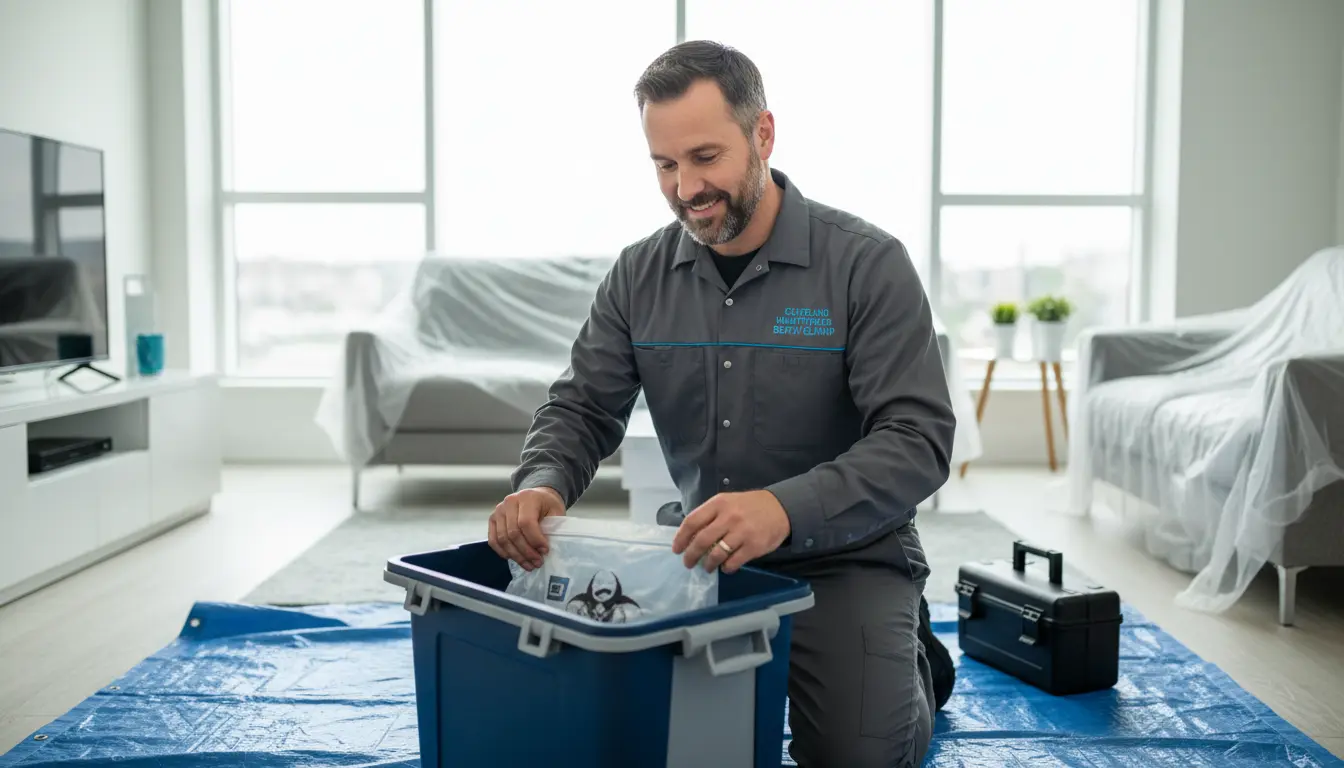
Most people assume that biohazard cleanup is simply a more intense version of household cleaning. The truth is that the gap between a standard mop bucket and a certified remediation protocol is measured not in degrees of dirtiness, but in lives, legal liability, and irreversible structural damage. In Cleveland, where historic homes with porous plaster walls and crawl spaces are common, and where Great Lakes humidity accelerates biological decomposition, a single misstep in handling bloodborne pathogens or microbial matter can turn a contained crime scene into a neighborhood health hazard. Professional cleanup specialists do not just scrub stains; they execute a forensic restoration process governed by OSHA, EPA, and IICRC S540 standards, and the margin for error is zero.
At Cleveland Unattended Death Cleanup, we have witnessed firsthand the consequences of well-intentioned but dangerous DIY cleanup attempts. Homeowners, landlords, and even some general contractors underestimate the invisible risks that linger after a traumatic event. Whether it is an unattended death in a Slavic Village apartment or a homicide scene in Detroit Shoreway, the biological contamination extends far beyond what the eye can see. This article explains exactly how cleanup specialists safely handle biohazard contamination, from the initial risk assessment to the final ATP test, and why professional intervention is not a luxury but a necessity for property safety and value retention in Cuyahoga County.
Technical Process of Professional Biohazard Remediation
The remediation workflow begins long before a technician enters the affected zone. After a secure perimeter is established, the lead specialist conducts a thorough risk assessment, evaluating the type of biohazard (blood, tissue, bodily fluids, or decomposition byproducts), the degree of saturation into porous materials, and the potential for cross-contamination prevention through HVAC systems. In Cleveland’s humid summers, biological fluids can migrate into subflooring and wall cavities within hours, making rapid containment critical. The next step is the strict implementation of personal protective equipment (PPE) protocols: full-body Tyvek suits, N100 respirators, multiple layers of nitrile gloves, and chemical-resistant boots. Every technician is certified under the OSHA Bloodborne Pathogens Standard (29 CFR 1910.1030), and the team leader ensures that no exposed skin remains.
Once PPE is verified, the physical removal of bulk biohazard material begins. Specialists use hospital-grade, EPA-registered disinfectants with proven efficacy against a broad spectrum of pathogens, including hepatitis B, hepatitis C, HIV, and MRSA. These disinfectants are not applied with a spray bottle; they are fogged through industrial-grade negative air machines that create a vacuum effect, removing airborne contaminants while continuously exchanging the air inside the room. For porous materials like drywall, carpet, and insulation, complete removal and disposal are mandatory because no cleaning technique can guarantee the elimination of pathogens from within the material. The waste is double-bagged, labeled, and transported via authorized biohazard transport services to a licensed incineration facility. After removal, the underlying structure undergoes structural decontamination using enzyme treatments that break down organic residues at the molecular level, followed by a final rinse with an EPA-registered sanitizer. The entire process is verified using adenosine triphosphate (ATP) fluorescence testing, which measures the presence of organic matter on surfaces. A reading below the threshold set by the IICRC S540 standard confirms that the area is safe for reoccupation.
Data Comparison: Professional Remediation vs. Standard Cleaning
To understand why professional biohazard cleanup cannot be replaced by janitorial services, consider the following metrics based on the IICRC S540 standard:
| Feature / Metric | Professional Biohazard Remediation | Standard Residential Cleaning |
|---|---|---|
| Regulatory Compliance | Full compliance with OSHA, EPA, and local Cuyahoga County health regulations | No specific regulatory framework for biohazards |
| Pathogen Elimination | ≥99.999% reduction verified by ATP testing | No quantitative verification; may leave dangerous residues |
| Structural Assessment | Inspection of subfloor, wall cavities, and HVAC for hidden contamination | Surface-level only; no structural evaluation |
| Waste Disposal | Medical waste incineration per Ohio Revised Code | Standard trash disposal, illegal for biohazards |
| Odor Neutralization | Chemical vapor sealants and ozone treatment | Masking agents only; odor returns |
Expert Insights for Homeowners and Property Managers
Even after a professional cleanup, some property owners make costly mistakes. One common error is using household bleach on biological matter. While bleach is a disinfectant, it is inactivated by organic material and can cause toxic fumes when mixed with decomposition fluids. A better approach is to allow the remediation team to use hospital-grade disinfectants that maintain efficacy in the presence of heavy soil. Another mistake is waiting for odors to dissipate naturally. In Cleveland’s humid climate, decomposition odors can penetrate insulation and drywall, leading to a lingering smell that lowers property value and attracts pests. The only reliable solution is the removal of affected materials and the application of encapsulating sealants, a process called forensic restoration.
Three professional diagnostic tips can help identify hidden contamination. First, use a thermal imaging camera to detect moisture pockets where biological fluids have seeped into subflooring. Second, perform a sniff test with a trained dog; canines can detect minute traces of decomposition that human noses miss. Third, conduct ATP swab testing on surfaces that appear clean but may harbor residual organic matter. If a reading exceeds 30 relative light units (RLU), the surface requires further decontamination. Property owners who ignore these signs often face microbial remediation later, as mold and bacteria flourish in the contaminated substrate. The top dangers of unattended deaths in Cleveland, OH include not only biological hazards but also structural damage from prolonged decomposition.
Pricing Considerations for Biohazard Cleanup
- Site mobilization fee: Typically $250–$500, covering the initial assessment, setup of containment zones, and deployment of specialized equipment.
- Hourly remediation rate: Ranges from $150 to $300 per technician per hour, depending on the complexity and the level of contamination. Most jobs require a team of 2–3 specialists for 4–8 hours.
- Disposal costs: Biohazard waste must be transported and incinerated, adding $100–$500 per disposal unit.
Three factors heavily influence the final cost. The first is the extent of structural material replacement. If contamination has penetrated drywall, flooring, or insulation, replacement costs can double or triple the price. The second is the total volume of biohazardous waste: a single unattended death in a small apartment generates far less waste than a prolonged decomposition in a large house. The third is the need for specialized HVAC decontamination. If the HVAC system has circulated contaminated air, duct cleaning and sealing may be required, adding $500–$2,000. For a detailed breakdown of the remediation steps, read our step-by-step unattended death cleanup process explained.
Safety Standards and Certifications
Every technician at Cleveland Unattended Death Cleanup holds certifications that go beyond basic training. The IICRC S540 standard for trauma and crime scene cleanup is the industry benchmark, covering everything from initial response to final clearance testing. Our team also adheres to the OSHA Bloodborne Pathogens Standard (29 CFR 1910.1030), which mandates annual training, hepatitis B vaccinations, and the use of engineering controls such as sharps containers and splash guards. In Cuyahoga County, we follow the Ohio Revised Code for the transport and disposal of infectious waste, which requires specific labeling, containment, and tracking manifest. These standards are not just bureaucratic hurdles; they are scientifically proven methods to protect property owners, occupants, and future tenants from communicable diseases. Without them, a simple cleanup can lead to lawsuits, health department citations, and long-term health risks such as hepatitis or staph infections.
Frequently Asked Questions About Biohazard Cleanup
Can I clean a biohazard scene myself to save money?
While it is possible to clean visible blood or fluids, the risk of exposure to bloodborne pathogens is extremely high. Even if you wear gloves and a mask, you likely lack the equipment to disinfect porous surfaces, neutralize airborne pathogens, or properly dispose of contaminated materials. In Cleveland, where older homes often have plaster walls that absorb fluids, a DIY cleanup can leave behind dangerous organic residues that attract insects and mold. The legal liability also falls on the property owner if a future tenant becomes ill. Professional remediation ensures that every surface meets the ATP threshold for safety, and the waste is disposed of legally.
How long does it take to remediate an unattended death scene?
The timeline depends on the extent of decomposition and the size of the affected area. For a typical single-room incident in a Cleveland home, the process takes 6 to 12 hours spread over two to three days. The first day involves containment and removal of bulk biohazard, the second day focuses on deep cleaning and decontamination, and the third day is for ATP testing and final sealing. If the death went unnoticed for several weeks, the decomposition fluids may have spread into subflooring and HVAC systems, requiring additional days for structural repairs and duct cleaning. Our team works efficiently to minimize disruption, but safety cannot be rushed.
What happens to the waste after cleanup?
All biohazardous waste, including blood-soaked materials, personal protective equipment, and removed building materials, is double-bagged in red biohazard bags and placed in rigid containers. These containers are transported by a licensed medical waste hauler to an incineration facility that meets state and federal regulations. In Ohio, the waste must be incinerated at temperatures above 1,800°F to destroy all pathogens. The ash is then disposed of in a landfill designated for medical waste. We maintain a detailed chain of custody for every job, providing clients with a certificate of disposal for their records.
Will my homeowner’s insurance cover biohazard cleanup?
Many homeowner’s and property insurance policies include coverage for cleanup after a traumatic event, especially if the death was accidental or unattended. However, coverage varies widely. Some policies specifically exclude biohazard remediation, while others include it under a “special loss” or “crime scene cleanup” rider. We recommend contacting your insurance provider immediately after the incident. Our team can provide an itemized estimate that you can submit to your insurer. In our experience, most policies cover at least a portion of the cost, and we work with clients to navigate the paperwork. For more information, see our guide on what to do after discovering an unattended death.
Professional Biohazard Remediation in Cleveland
When a traumatic event leaves your Cleveland property contaminated, the path to recovery requires more than cleaning supplies and good intentions. It demands a team that understands the interplay of local climate, building materials, and stringent regulations. Cleveland Unattended Death Cleanup brings decades of combined experience in forensic restoration, microbial remediation, and cross-contamination prevention. Our technicians are certified, insured, and compassionate, handling every scene with the discretion and respect it deserves. We serve the entire Greater Cleveland area, from Bay Village to Slavic Village, and we are available 24/7 for emergencies. Do not compromise your health or your property’s future. Trust the specialists who know how cleanup specialists safely handle biohazard contamination — and who do it right, every time. Contact us today for a confidential assessment.