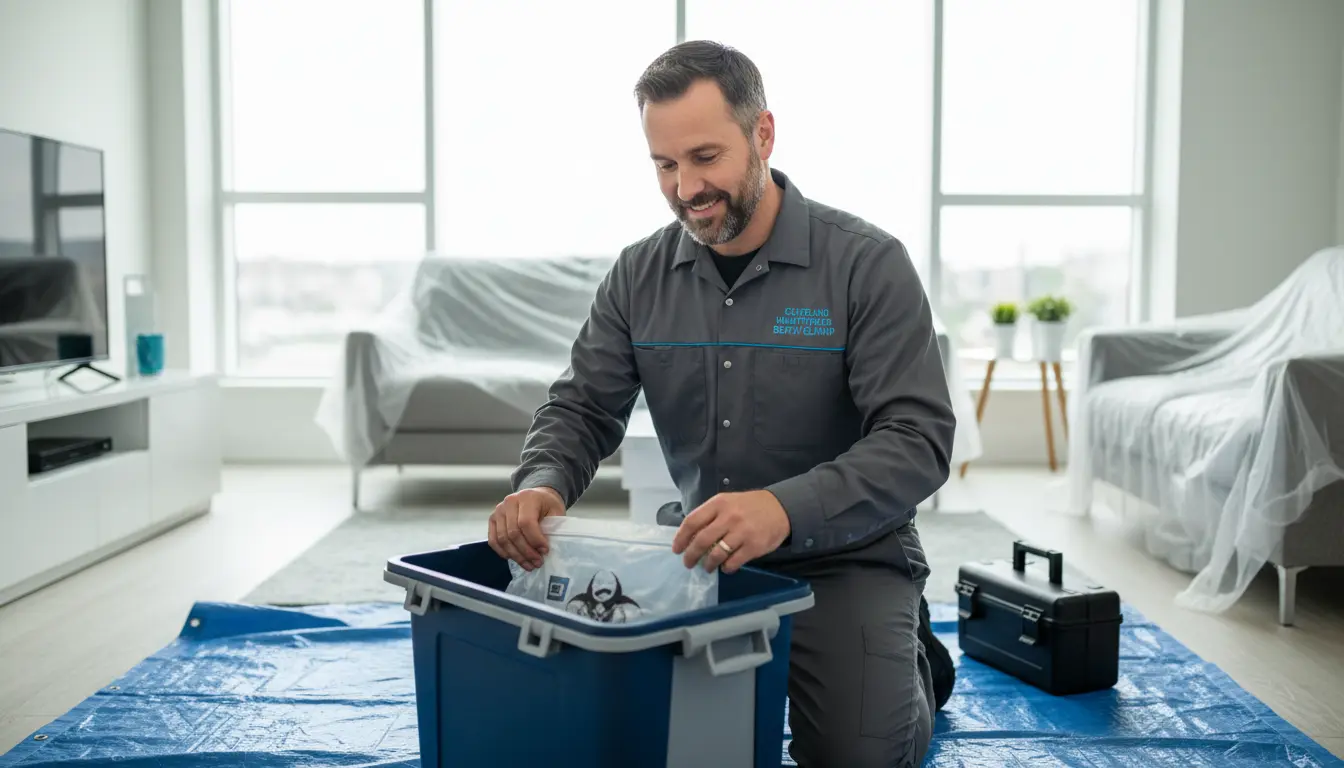
Most people assume that a thorough scrubbing with bleach and a few deodorizers can handle the aftermath of an unattended death. That assumption is not only wrong—it is dangerous. The biological breakdown that occurs when a body remains undiscovered for days or weeks produces a cascade of hazards that household cleaners simply cannot neutralize. In Cleveland, where the humid Great Lakes climate accelerates decomposition and older residential architecture allows fluids to seep deep into porous materials, the gap between what a mop can do and what is actually required is enormous. Why specialized equipment is necessary for unattended death remediation becomes clear once you understand the physical and biological realities of these scenes.
Professional biohazard remediation is not about aesthetics; it is about eliminating pathogens, preventing cross-contamination, and restoring the structural integrity of the property. Standard cleaning tools are designed for everyday dirt, not for bloodborne pathogens, prions, or the byproducts of advanced decomposition. The equipment used by certified remediation specialists—industrial negative air machines, HEPA vacuums, enzymatic cleaners, and ATP fluorescence testing devices—addresses threats that cannot be seen or smelled. For property owners in Cuyahoga County, relying on untrained personnel or DIY methods often leads to hidden contamination, lingering health risks, and a steep drop in property value. Cleveland Unattended Death Cleanup provides the technical expertise and specialized gear required to handle these scenes safely and thoroughly.
The Step-by-Step Professional Remediation Workflow
Every unattended death scene follows a rigorous protocol designed to contain and eliminate biohazards from the moment a technician enters the property. The first step is an initial risk assessment, where specialists evaluate the extent of contamination, identify structural vulnerabilities, and determine the required level of personal protective equipment (PPE). This is not a visual inspection alone—it includes readings of surface moisture, airflow patterns, and the presence of airborne contaminants. In Cleveland, where historic homes often have crawl spaces and unsealed floorboards, the assessment must also account for fluid migration that can travel beyond the visible stain.
Once the scope is defined, the team establishes a containment zone using negative air machines. These devices create a pressure differential that prevents airborne pathogens from spreading to unaffected areas of the house. The machines are equipped with HEPA filters that capture 99.97% of particles as small as 0.3 microns, including bacteria and viruses. Inside the containment area, technicians remove all visible biological material, including saturated flooring, drywall, and insulation. This is a physical removal process—no amount of chemical cleaning can restore materials that have been permeated by bodily fluids. After removal, the remaining surfaces are cleaned with EPA-registered hospital-grade disinfectants applied using electrostatic sprayers, which ensure coverage on all sides of objects. Finally, an ATP fluorescence test is used to confirm that organic residues have been eliminated. This test measures adenosine triphosphate, a molecule present in all living cells, and a reading below the threshold indicates successful decontamination.
Why Specialized Equipment Matters in Cleveland’s Climate
The Great Lakes region creates a unique challenge for unattended death remediation. High humidity levels during the summer months accelerate the growth of mold and bacteria, while the freeze-thaw cycles of winter can cause fluid to wick further into porous materials like brick and mortar. Specialized equipment such as thermal imaging cameras and moisture meters are essential for detecting hidden pockets of contamination that would otherwise go unnoticed. Without these tools, a property might appear clean but still harbor biological hazards that cause health issues years later.
Data Comparison: Professional Remediation vs. Standard Residential Cleaning
| Feature / Metric | Professional Biohazard Remediation | Standard Residential Cleaning |
|---|---|---|
| Regulatory Compliance | Follows OSHA 29 CFR 1910.1030, IICRC S540, EPA disposal guidelines | No compliance with biohazard regulations |
| Pathogen Elimination | Uses EPA-registered disinfectants with validated contact times; ATP testing verifies results | Household bleach or generic cleaners; no verification of efficacy |
| Structural Assessment | Thermal imaging, moisture mapping, and containment zone setup | Visual inspection only; no assessment of hidden contamination |
| Waste Disposal | Licensed biohazard waste transport and incineration | Placed in regular trash, violating local ordinances |
| Odor Elimination | Ozone generators, hydroxyl machines, and enzyme treatments | Air fresheners or open windows, which mask but do not remove odor |
Expert Insights: Advanced Diagnostic Tips for Property Owners
Even after visible fluids are removed, biological seepage can remain trapped in subflooring, behind baseboards, or inside HVAC ducts. Specialists use a technique called “dry vacuum extraction” followed by a moisture probe to identify areas where fluid has traveled laterally. In Cleveland’s older homes, where wood subfloors are often layered over unsealed crawl spaces, this step is critical. Without it, you might end up with a persistent odor that reappears months later, along with the risk of microbial growth.
Another common mistake is assuming that porous materials can be cleaned. Once blood, tissue, or decomposition fluid has soaked into drywall, wood, or carpet padding, the material must be removed and replaced. Cleaning only sterilizes the surface; the interior of the material remains contaminated. Professionals use a “cut-and-remove” approach, replacing up to four feet of drywall above the fluid line in some cases. This is not an overreaction—it is a standard precaution to prevent long-term structural degradation and health hazards.
Finally, the use of negative pressure during the remediation process is not optional. Without it, airborne pathogens can spread to other rooms, contaminating furniture, curtains, and personal belongings. Many property owners mistakenly allow family members or police officers to walk through the site without containment, exposing themselves to bloodborne pathogens. The consequences can include hepatitis B, hepatitis C, HIV, and bacterial infections that require medical treatment. Always require a professional containment zone before anyone enters the scene.
Common Mistakes Property Owners Make
Using household bleach on biological matter is a frequent error. Bleach is corrosive and can damage surfaces, but it does not effectively kill all pathogens, especially when organic matter is present. The organic material consumes the chlorine, leaving the surface still contaminated. Professionals use quaternary ammonium compounds or hydrogen peroxide-based disinfectants that are specifically designed for biohazard cleaning.
Waiting for odors to dissipate naturally is another mistake. Decomposition gases are not just smelly—they indicate the presence of volatile organic compounds and pathogens. The odor will not go away on its own; it will set into porous materials and require specialized equipment like ozone generators or hydroxyl machines to neutralize. Ignoring the odor can lead to health complaints from neighbors and even legal issues if the property is sold without disclosure.
Pricing Structure for Unattended Death Remediation
Pricing for professional biohazard remediation varies based on the specific conditions of the scene. Most companies in Cleveland charge a standard site mobilization fee that covers the initial assessment, containment setup, and transportation of equipment. This fee typically ranges from $300 to $600, depending on the distance from the service center.
- Hourly remediation rates: Expect $150 to $250 per hour per technician, with a minimum of two to three hours on site. Complex scenes may require multiple technicians and longer hours.
- Specialized disposal costs: Biohazardous waste must be transported, tracked, and incinerated in accordance with Ohio EPA regulations. This adds $200 to $500 to the total, depending on the volume of waste.
- Structural material replacement: If sections of flooring, drywall, or cabinetry must be removed and replaced, those costs are separate. Professional remediation teams can provide estimates for reconstruction, but it is often handled by a restoration contractor.
Three factors that influence cost: the extent of structural material replacement required (e.g., replacing subflooring versus just cleaning tile), the total volume of biohazardous waste (measured in pounds or gallons), and the necessity for specialized HVAC decontamination (if fluids have entered ductwork, additional cleaning and sealing are needed). Always request a written estimate that includes these breakdowns.
Safety Standards and Certifications
Professional unattended death remediation companies operate under strict regulatory frameworks. The most important is OSHA’s Bloodborne Pathogens Standard (29 CFR 1910.1030), which mandates proper training, PPE, and exposure control plans for anyone handling human blood or potentially infectious materials. Additionally, the IICRC S540 standard for trauma and crime scene cleanup provides a detailed protocol for cleaning, disinfection, and waste disposal. Companies that claim to be “certified” but cannot show proof of IICRC or OSHA compliance should be avoided.
In Cleveland, biohazard waste must be disposed of through a licensed medical waste transporter. Simply bagging the material and putting it in the trash is illegal and can result in fines, as well as endangering sanitation workers. Certified remediation teams also use EPA-registered disinfectants that are applied with the correct dwell times to ensure pathogen kill. Without these standards, the site remains a health hazard for anyone who enters.
Frequently Asked Questions
How long does decomposition take in a Cleveland home?
Decomposition rates vary widely based on temperature, humidity, and access by insects. In Cleveland’s humid summers, a body can reach advanced stages of bloating and purge within a week. In winter, the process slows but does not stop, especially if the heating system is running. The microbial activity that drives decomposition creates gases that can build up pressure, causing fluids to be expelled and penetrate deeper into porous materials. The sooner remediation begins, the less damage is done to the property.
Can I stay in my home during the remediation?
No. The containment zone, negative air pressure, and use of chemicals mean that the affected area is unsafe for occupancy. Depending on the extent of contamination, it may be necessary to remain out of the home for several days. Technicians will advise on when it is safe to return. In some cases, the entire structure may need to be vacated if the HVAC system has been compromised.
What happens to the biohazard waste after removal?
All biological waste is placed in red biohazard bags, sealed, and transported by a licensed medical waste hauler to an incineration facility. The manifest is tracked and kept on file for compliance. This ensures that no pathogenic material enters the environment. Ordinary waste disposal is not only illegal but also dangerous.
Is insurance coverage available for unattended death cleanup?
Many homeowner’s insurance policies cover biohazard remediation as part of the “hazardous material removal” or “sudden and accidental” clauses. Coverage varies, so it is advisable to contact your provider and ask specific questions about unattended death cleanup. Some policies have a cap on the amount, so it is wise to get a professional estimate before filing a claim.
Professional Biohazard Remediation in Cleveland
Understanding why specialized equipment is necessary for unattended death remediation is the first step toward making an informed decision when tragedy strikes. The combination of advanced diagnostic tools, industrial-grade containment systems, and EPA-registered disinfectants ensures that every trace of biological hazard is removed from the property. In Cleveland, where the climate and older housing stock amplify the risks, cutting corners is simply not an option. Cleveland Unattended Death Cleanup provides the technical expertise, compassion, and reliability that families need during the most difficult times. Our team is IICRC-certified, OSHA-compliant, and familiar with the unique challenges of Cuyahoga County homes. When you need a scene restored to a safe and habitable condition, trust the professionals who understand the science behind the cleanup.