Trying to clean an unattended death scene with household bleach and a mop isn’t just a tragic mistake—it’s a decision that can cost you upwards of $20,000 in structural repairs and expose you to life-threatening pathogens. In neighborhoods like Ohio City, where historic Victorian homes and tightly packed row houses are common, the biological fluids from a decomposition event can seep through hardwood floor gaps, wick into plaster walls, and saturate the subflooring in a matter of hours. What appears as a simple stain on the surface is often a reservoir of bloodborne pathogens, including Hepatitis B and C, HIV, and drug-resistant bacteria, actively multiplying in the warm, humid microclimate of a Cleveland summer.
Property owners across Cuyahoga County who attempt DIY cleanup or hire a standard janitorial service after an unattended death are unknowingly signing up for long-term health hazards, lingering odors that reduce property value, and potential legal liability under OSHA’s Bloodborne Pathogens Standard (29 CFR 1910.1030). The only way to restore a home in Ohio City or the surrounding neighborhoods to a safe, habitable condition is with professional unattended death cleanup services near Ohio City and surrounding neighborhoods. A certified biohazard remediation team brings the correct equipment, EPA-registered disinfectants, and forensic-level training to ensure every trace of biological material is removed.
The Hidden Dangers of Unattended Death Scenes in Ohio City
When a body is discovered days or weeks after death, the process of decomposition has already released a cascade of biohazards. In the first 24 to 48 hours, cells begin to break down and release enzymes that liquefy organs, while bacteria from the gut start migrating through the body’s tissues. By the time fluid pools and skin slippage occur, the scene contains not just blood but also stool, urine, and a complex mixture of microbial life that can remain infectious for weeks.
In older Ohio City homes, the challenge multiplies. These structures often have original wide-plank hardwood floors, horsehair plaster, and brick foundations that act like sponges for biological fluids. The porous nature of these materials allows pathogens to penetrate deep into the structure, where standard cleaning products cannot reach. Without professional intervention, the site becomes a ongoing source of contamination that can sicken current occupants and future residents.
Step-by-Step Professional Remediation Process
Professional unattended death cleanup follows a strict, science-based protocol designed to eliminate all biological hazards and restore the property to a pre-incident condition. The process begins with a comprehensive risk assessment, where the technician evaluates the extent of contamination, identifies the types of materials affected, and measures the area for negative air pressure containment. This initial step is critical because it determines the scope of work and the specific equipment needed.
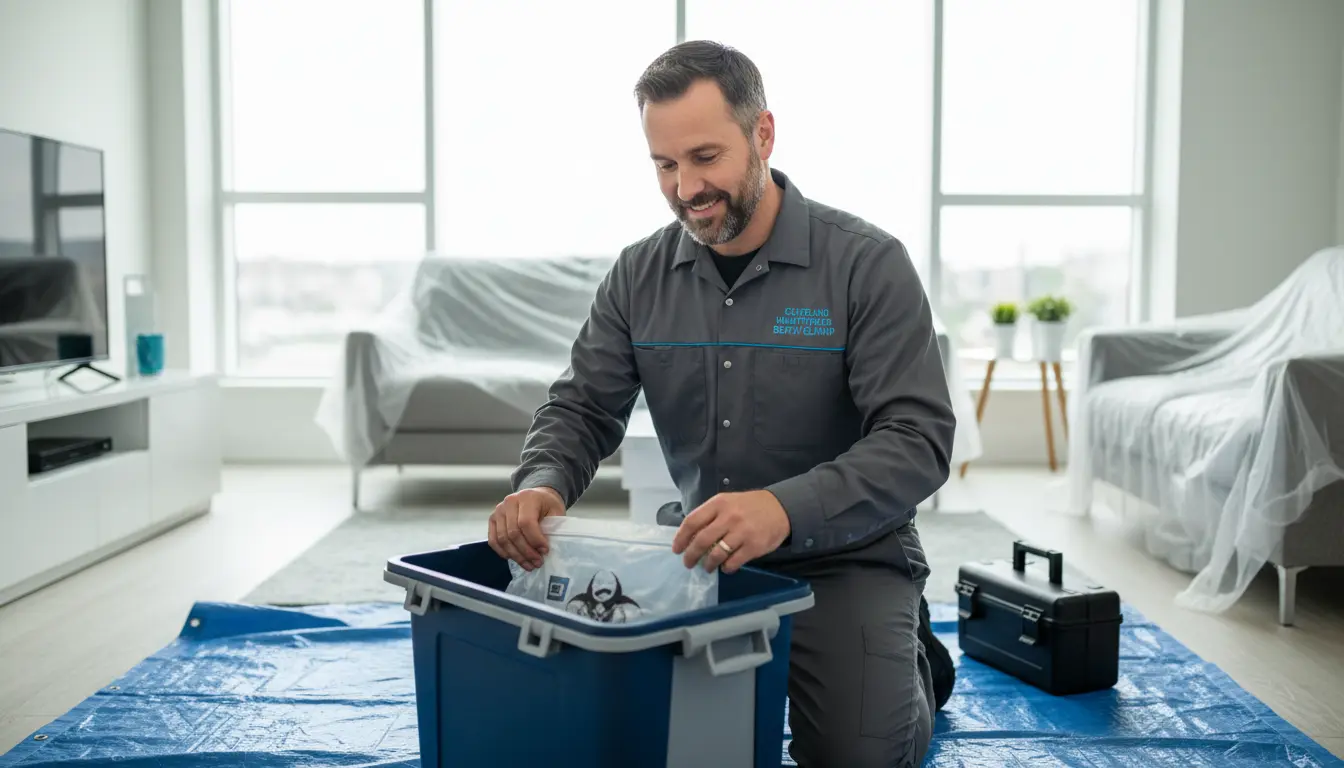
Next, the team establishes a containment zone using heavy-gauge polyethylene sheeting and creates negative air pressure with industrial-grade HEPA-filtered negative air machines. This prevents airborne particles from spreading to unaffected parts of the home. Once containment is in place, technicians don full personal protective equipment (PPE), including Tyvek suits, N-100 respirators, face shields, and chemical-resistant gloves, before beginning the physical removal of biohazardous materials.
After all visible biological matter is removed, the team applies hospital-grade disinfectants with a proven kill claim against bloodborne pathogens. These chemicals are left to dwell for the manufacturer-specified contact time to ensure complete inactivation. Finally, adenosine triphosphate (ATP) testing is performed on cleaned surfaces to verify that no organic material remains. If the ATP reading exceeds the threshold, the area is re-cleaned and re-tested until it meets the standard.
Specialized Equipment Used in Ohio City Homes
The tools used in professional remediation are not available to the general public. Negative air machines with HEPA filtration capture particles as small as 0.3 microns, which includes viruses and bacterial spores. Thermal foggers and ozone generators are used for odor removal, breaking down volatile organic compounds at the molecular level. For porous materials like carpet, drywall, and insulation, the only effective solution is removal and disposal in accordance with Ohio EPA regulations.
Why Local Conditions in Cleveland Require a Different Approach
The Great Lakes-effect humidity in Cleveland creates a unique challenge for biohazard remediation. The high moisture content in the air accelerates the natural breakdown of organic matter, meaning that decomposition fluids spread faster and penetrate deeper than in drier climates. A scene that sits for a week in July in Ohio City will cause damage to structural elements that would take three weeks in a desert environment. This is why prompt response is not just a matter of convenience—it is a necessity for minimizing structural damage and reducing remediation costs.
Professional Remediation vs. Standard Janitorial Cleaning
Many property owners mistakenly believe that any cleaning company can handle an unattended death scene. The reality is that standard janitorial services lack the training, equipment, and legal authorization to handle biohazardous waste. The table below illustrates the critical differences between professional biohazard remediation and a typical cleaning service.
| Feature/Metric | Professional Biohazard Remediation | Standard Residential Cleaning |
|---|---|---|
| Regulatory Compliance | OSHA 29 CFR 1910.1030, EPA, DOT, and Ohio EPA waste disposal regulations | None specific to biohazards |
| Pathogen Elimination | Uses EPA-registered hospital-grade disinfectants with verified kill claims against Hepatitis B, C, HIV, and MRSA | Household cleaners and bleach, which are not effective against all pathogens |
| Structural Assessment | Inspects for hidden seepage in subflooring, wall cavities, and HVAC systems | Surface cleaning only; no structural evaluation |
| Odor Removal | Combination of physical removal, thermal fogging, ozone treatment, and HVAC deodorization | Masking with air fresheners; no removal of volatile organic compounds |
| Waste Disposal | Properly packages, labels, and transports biohazard waste to licensed incineration facilities | May place contaminated items in regular trash, violating Ohio EPA regulations |
| Insurance Claim Support | Provides detailed documentation, photographs, and chain-of-custody records to support homeowner’s insurance claims | No specialized documentation for biohazard cleanup |
Expert Insights from a Certified Remediation Specialist
After more than a decade of performing unattended death cleanup in Cuyahoga County, patterns emerge that separate a properly restored property from one that will develop problems over time. One of the most overlooked issues is hidden biological seepage. When decomposition fluids pool on a hardwood floor, the liquid can run between the floorboards and accumulate on the top of the subfloor or even drip into the basement ceiling. A standard mop and bucket will never reach this hidden contamination, which becomes a breeding ground for mold and bacteria that can cause respiratory issues for years.
Another critical insight is that porous materials almost always require removal rather than cleaning. Drywall, carpet, padding, and insulation absorb biological fluids like a sponge. Even if the surface appears clean after scrubbing, the pathogens and decomposition byproducts remain embedded within the material. The only safe course of action is to cut out and replace these materials, a step that many property owners resist due to cost. However, leaving contaminated porous materials in place virtually guarantees that the odor will return and that the structural integrity of the building will be compromised.
The importance of negative pressure cannot be overstated. Without containing the scene and using negative air machines, airborne particles from the decomposition process—including bacterial spores and viral particles—can travel through the HVAC system and contaminate the entire home. This cross-contamination turns a single-room incident into a whole-house problem that multiplies the cost and scope of remediation. Professional teams always establish containment before any cleaning begins.
Common mistakes that property owners make in Ohio City include waiting to see if the odor dissipates on its own. This is never effective because the volatile organic compounds that cause the smell are constantly being produced as decomposition continues. Another frequent error is allowing family members or friends to enter the scene to collect valuables. These individuals are not protected with proper PPE and can easily become infected by touching contaminated surfaces. Finally, attempting to use household bleach is a mistake because bleach does not kill all bloodborne pathogens and can actually fix proteins to surfaces, making them harder to remove.
Pricing and Factors That Influence the Cost
- Standard site mobilization fee: $350 to $750. This covers the technician’s travel time to the Ohio City area, setup of containment equipment, and initial risk assessment. The fee is typically higher during Cleveland winter months when ice management for site access is required.
- Hourly remediation rate: $175 to $350 per hour per technician. Most scenes require a team of two to four technicians, and the total hours depend on the size of the affected area and the extent of contamination.
- Specialized disposal of biohazardous materials: $150 to $500 per drum. Biohazard waste must be transported to a licensed incineration facility in Ohio, and the volume of waste directly impacts the cost.
Three primary factors influence the total cost of unattended death cleanup in Ohio City. The first is the extent of structural material replacement required. If decomposition fluids have soaked through hardwood floors and into the subflooring, the entire section must be removed and replaced, which adds materials and labor costs. The second factor is the total volume of biohazardous waste. A scene that has been decomposing for two weeks will produce significantly more waste than one discovered within 24 hours. The third factor is the necessity for specialized HVAC decontamination. If airborne contaminants have entered the ductwork, the entire system must be cleaned and disinfected, which can add $1,500 to $4,000 to the total cost.
Safety Standards and Certifications
Professional unattended death cleanup services operate under strict regulatory frameworks designed to protect both workers and property occupants. The most important standard is OSHA’s Bloodborne Pathogens Standard (29 CFR 1910.1030), which mandates specific training, PPE, and work practices for anyone who may come into contact with human blood or other potentially infectious materials. Technicians must complete annual training that covers topics such as exposure control plans, proper use of PPE, and post-exposure procedures.
The IICRC S540 Standard for Trauma and Crime Scene Cleanup provides the industry benchmark for technical procedures. This standard outlines the required steps for containment, cleaning, disinfection, and verification. Companies that follow S540 standards use ATP testing to confirm that surfaces are biologically clean, rather than relying on visual inspection alone. This scientific approach ensures that the property is safe for reoccupation.
Additionally, authorized waste management services must be used for the disposal of biohazardous materials. In Ohio, regulated medical waste must be packaged in red biohazard bags, labeled with the universal biohazard symbol, and transported to a licensed treatment facility. Improper disposal can result in fines from the Ohio EPA and potential legal liability if the waste causes harm to others.
Frequently Asked Questions
How quickly should unattended death cleanup begin after the body is removed?
Cleanup should begin immediately, ideally within 24 hours of the body being removed. Decomposition fluids continue to spread and damage structural materials as long as they remain on surfaces. In Cleveland’s humid climate, the window for minimizing structural damage is very short. Delaying cleanup by even a few days can turn a manageable situation into one requiring extensive demolition and reconstruction.
Is it safe for family members to enter the scene before cleanup?
No. Unattended death scenes contain bloodborne pathogens that can remain infectious for days or weeks on surfaces. Family members who enter without proper PPE risk exposure to Hepatitis B, Hepatitis C, HIV, and other serious diseases. Professional remediation teams can safely remove personal belongings after the scene has been decontaminated, using specialized techniques to recover items without spreading contamination.
Will my homeowner’s insurance cover the cost of unattended death cleanup?
Most homeowner’s insurance policies in Ohio cover biohazard remediation under the liability or property damage provisions. However, coverage varies by policy, and some insurers may require a specific rider. Professional remediation companies typically provide detailed documentation, including photographs and chain-of-custody records, which can help support insurance claims. It is advisable to contact your insurance provider as soon as possible after the incident.
What happens if unattended death cleanup is not done properly?
Improper cleanup leaves behind biological material that can cause ongoing health problems, including respiratory infections, allergies, and psychological distress for occupants. The odor of decomposition can persist for months or years, significantly reducing property value and making the home uninhabitable. In some cases, the contamination can spread through the HVAC system, affecting multiple rooms. The only way to ensure that the property is safe and odor-free is to hire a certified biohazard remediation professional.
Professional Biohazard Remediation in Cleveland
When an unattended death occurs in Ohio City or the surrounding neighborhoods, the aftermath requires more than standard cleaning—it demands expert, compassionate, and technically rigorous site restoration. Every minute that passes allows biological fluids to penetrate deeper into the structure, increasing the cost and complexity of remediation. The team at Cleveland Unattended Death Cleanup brings years of certified experience, specialized equipment, and a deep understanding of the local environmental conditions that affect decomposition in Northeast Ohio.
From the initial risk assessment to the final ATP verification test, every step is conducted with precision and respect for the property and the family. We handle the difficult work so that you can focus on what matters most during a challenging time. If you need unattended death cleanup services near Ohio City and surrounding neighborhoods, contact Cleveland Unattended Death Cleanup today for a discreet, no-obligation consultation.