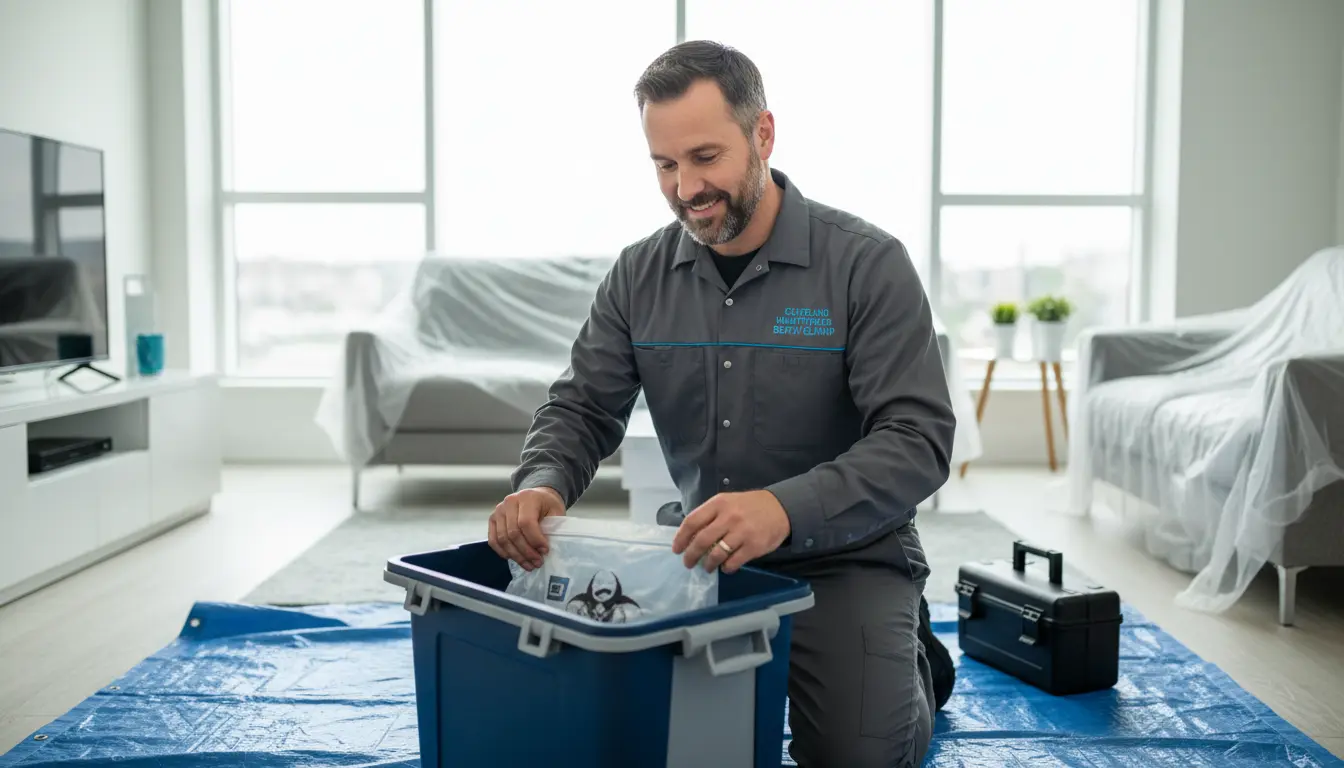
The technician knelt in the silent bedroom, the faint odor of decay still clinging to the air after three days. He had seen this before—a Cleveland winter that had masked the signs until the mail piled up. Behind him, a negative air machine hummed, pulling contaminated particles through HEPA filters, while his partner calibrated an ATP meter to test for residual biological matter. This is the reality of unattended death cleanup, a process that goes far beyond simple cleaning to restore a home to a safe, habitable condition.
When a death goes undiscovered for days or weeks, the decomposition process releases biohazards such as bloodborne pathogens, bacteria, and airborne toxins. These contaminants can penetrate porous materials, seep into subflooring, and migrate through HVAC systems, creating serious health risks for anyone who enters the property. Professional remediation is not optional—it is a critical step to prevent disease transmission and structural damage. In Cleveland, where humidity levels from Lake Erie can accelerate decomposition and where historic homes often have unsealed basements and crawl spaces, the need for specialized expertise is even greater. Cleveland Unattended death cleanup provides the technical rigor and compassionate discretion required to return a property to a safe living environment.
The Remediation Process: A Step‑by‑Step Technical Breakdown
Every unattended death cleanup begins with a thorough risk assessment. Technicians arrive in full personal protective equipment (PPE) including Tyvek suits, N‑100 respirators, and nitrile gloves. The first step is to establish a containment zone using negative air pressure machines to prevent cross‑contamination. This is especially critical in Cleveland’s older residential architecture, where shared ductwork or porous plaster walls can allow bioaerosols to travel throughout the structure.
Once containment is set, physical removal of all biohazardous materials begins. This includes blood‑soaked carpet, padding, upholstery, and any other porous items that cannot be effectively decontaminated. Non‑porous surfaces are cleaned with EPA‑registered hospital‑grade disinfectants, often using fogging equipment to reach every crevice. Adenosine triphosphate (ATP) testing is then performed to verify that no organic residue remains—a standard that typical janitorial cleaning cannot achieve. After the structural surfaces are decontaminated, the team applies specialized enzyme treatments that break down odor‑causing molecules at the molecular level. Finally, the entire space is encapsulated with antimicrobial sealants to prevent future microbial growth.
In Cleveland, the Great Lakes‑effect humidity can cause decomposition to accelerate by 30‑40% compared to drier climates. This means that fluids and decomposition byproducts may penetrate deeper into subflooring, wall cavities, and even concrete slabs. Professional remediation teams use thermal imaging and moisture meters to detect hidden biological seepage that would otherwise go unnoticed. Without this level of forensic restoration, a home may still harbor dangerous pathogens long after the visible signs are removed.
Professional Remediation vs. Standard Cleaning: A Data‑Driven Comparison
| Feature / Metric | Professional Biohazard Remediation | Standard Residential Cleaning |
|---|---|---|
| Regulatory Compliance | Adheres to OSHA 29 CFR 1910.1030, IICRC S540, and EPA waste disposal guidelines | No biohazard training or compliance documentation |
| Pathogen Elimination | 99.9% elimination validated by ATP fluorescence testing | Surface cleaning only; no verification of biological residue removal |
| Structural Assessment | Includes thermal imaging, moisture mapping, and subfloor inspection | No structural evaluation; potential for hidden contamination |
| Odor Removal | Uses ozone generators, hydroxyl machines, and enzyme‑based neutralizers | Masking agents only; odor returns after cleaning |
| Waste Disposal | Biohazard waste transported to licensed incineration facilities | Household waste disposal, which is illegal for biohazard materials |
Expert Insights: What Professionals Know That Property Owners Don’t
Hidden Biological Seepage
Blood and bodily fluids can migrate through wooden floorboards, wick up drywall, and pool beneath baseboards. Untrained individuals often assume that cleaning the visible stain is sufficient. In reality, the contaminated area can extend several feet beyond the visible mark. Professional remediators use moisture meters and boroscopes to detect and remove all affected materials, often cutting out sections of subfloor or drywall that would otherwise release pathogens over time.
Porous Material Replacement vs. Cleaning
Materials like carpet, padding, upholstered furniture, and even some types of insulation cannot be fully decontaminated once saturated with biological fluids. The IICRC S540 standard mandates that these items be removed and disposed of as regulated medical waste. Attempting to clean them not only fails to eliminate pathogens but also creates a bioaerosol hazard when the fibers are disturbed. In Cleveland’s humid summers, mold growth can compound the problem, making the space uninhabitable.
Negative Pressure and Cross‑Contamination Prevention
Creating a negative pressure environment is essential to prevent airborne contaminants from spreading to other parts of the home. Technicians use HEPA‑filtered negative air machines to exhaust air outside, ensuring that particles are captured before they can circulate. Without this step, simply walking through the affected area can carry pathogens into the kitchen, living room, or bedrooms—putting the entire household at risk.
Common Mistakes Property Owners Make
One of the most frequent errors is using household bleach to clean up blood or other biological matter. Bleach is not a registered disinfectant for all bloodborne pathogens and can be inactivated by organic material. Furthermore, bleach fumes can be toxic in enclosed spaces, and it does not penetrate porous surfaces. Professional‑grade hospital disinfectants with a kill time of 10 minutes or less are required to achieve true decontamination.
Another mistake is waiting for the odor to dissipate naturally. Decomposition odors are caused by volatile organic compounds that can linger for months. Even after the visible mess is gone, the odor can permeate the home’s structure, leading to health complaints and reduced property value. Professional remediation includes ozone shock treatments and hydroxyl radical generators that eliminate odors at the molecular level.
Finally, allowing untrained personnel or family members to enter the scene before cleanup is complete can cause additional contamination and emotional trauma. The risk of exposure to hepatitis B, hepatitis C, HIV, and other bloodborne pathogens is real. Professional teams follow strict protocols to ensure that no one is endangered during the process.
Pricing for Unattended Death Cleanup in Cleveland
Costs vary based on the unique circumstances of each case, but property owners can expect the following general structure:
- Site mobilization fee: $150–$300 covers the arrival of the team, equipment setup, and initial containment.
- Hourly remediation rates: $150–$250 per hour for a two‑person crew, which includes all equipment, PPE, and chemical agents.
- Specialized disposal of biohazardous waste: $50–$150 per large waste bag or container, depending on the weight and local disposal fees.
Three key factors influence the final price:
- Extent of structural material replacement: If fluids have soaked into subflooring, drywall, or insulation, the cost of cutting out and replacing these materials can add $500–$3,000 to the total.
- Volume of biohazardous waste: Decomposition over weeks produces more fluids and waste than a fresh death, requiring more disposal bags and longer cleaning time.
- HVAC decontamination: If the home’s HVAC system has been contaminated, duct cleaning and antimicrobial fogging may be necessary, adding $400–$1,200.
Most insurance policies cover unattended death cleanup under homeowners’ or property insurance, so it is worth filing a claim before proceeding.
Safety Standards and Certifications
Professional biohazard remediation companies are held to rigorous standards. The Occupational Safety and Health Administration (OSHA) Bloodborne Pathogens Standard (29 CFR 1910.1030) requires that all employees receive annual training, have access to the hepatitis B vaccine, and use proper PPE. The IICRC S540 standard for trauma and crime scene cleanup provides a framework for cleaning, disinfection, and verification. Additionally, the Environmental Protection Agency (EPA) regulates the disposal of biohazardous waste, which must be taken to a licensed incinerator—not mixed with regular trash.
For Cleveland property owners, working with a certified company means that every step of the process is documented, from initial assessment to final clearance testing. This documentation is vital for insurance claims and for assuring future occupants that the home is safe. Without these certifications, a cleanup performed by an unqualified party could leave behind hidden pathogens, leading to liability issues down the road.
Frequently Asked Questions About Unattended Death Cleanup
How long does an unattended death cleanup take?
The timeline depends on the duration of decomposition and the size of the affected area. A typical cleanup in a single room can take 4–8 hours, while a full‑house contamination may require multiple days. Technicians work efficiently to minimize disruption, but thoroughness is never compromised. In Cleveland’s winter, snow and ice can delay access, so scheduling is often coordinated with weather conditions.
Is it safe to stay in the home during the cleanup?
In most cases, it is not safe for occupants to remain in the home while the remediation is in progress. The use of negative air machines, chemical foggers, and heavy equipment creates a hazardous environment. It is also emotionally difficult for family members to witness the process. Professional teams recommend that residents stay elsewhere until final clearance testing confirms the space is safe.
What about odor removal—does it really work?
Yes, but only if the source of the odor is addressed. Decomposition odor is caused by volatile organic compounds that bind to porous surfaces. Professional remediation combines removal of the contaminated materials, use of enzyme‑based cleaners, and ozone or hydroxyl treatment to break down the odor molecules. The result is a space that smells clean and fresh, not just masked.
Will homeowners insurance cover the cost?
Most standard homeowners insurance policies include coverage for biohazard cleanup as part of the dwelling protection or personal property coverage. It is important to contact your insurance provider as soon as possible after discovering the situation. The cleanup company can provide documentation and work directly with the insurance adjuster to streamline the claim process.