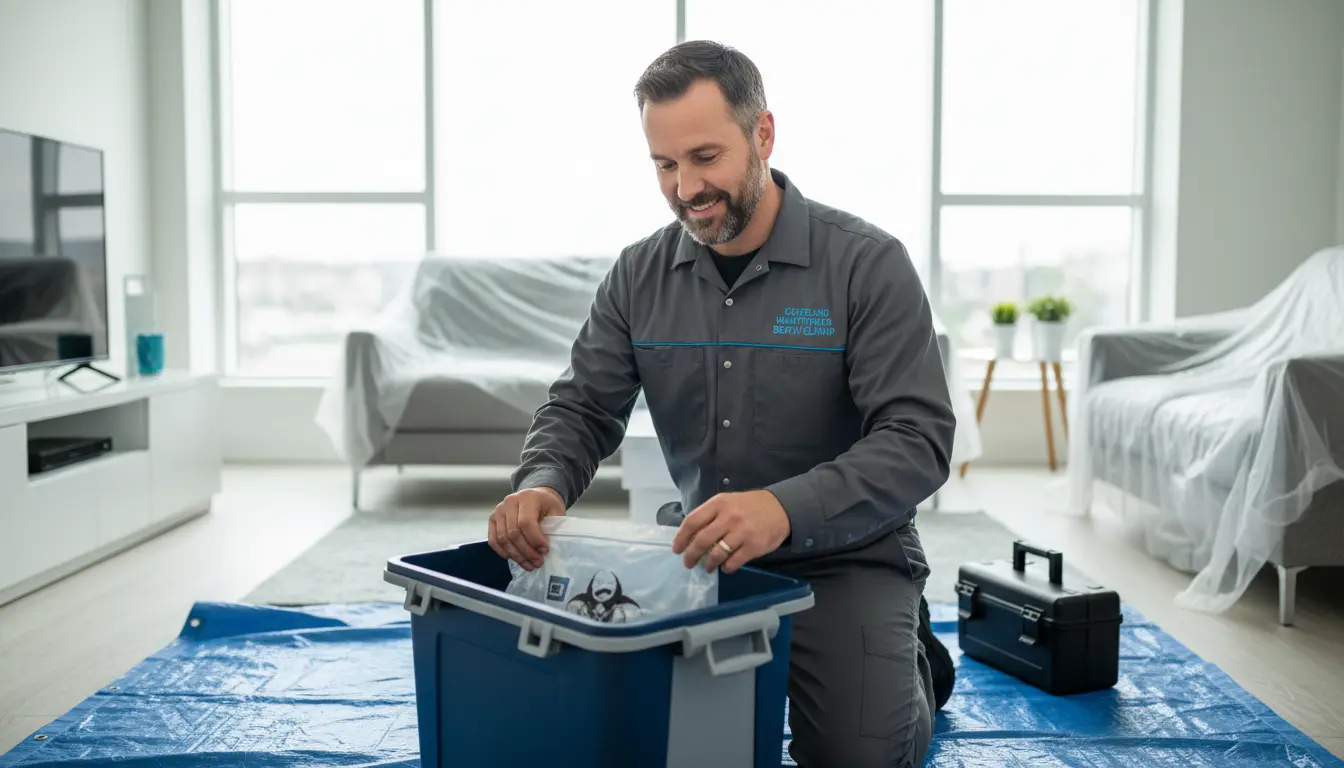
Hiring the wrong company to clean up after an unattended death in a Cleveland home can cost you over $15,000 in additional structural repairs and a potential biohazard liability lawsuit from a future tenant. Many property owners make the mistake of believing a general cleaning service or a restoration franchise without biohazard specialization can handle the job. The result is often incomplete remediation, lingering odors that reduce property value, and exposure to bloodborne pathogens that can cause lifelong health issues for occupants. This is not a scenario where cutting corners protects your budget—it creates a cascade of technical and legal problems that are far more expensive to fix than the initial job would have been.
Unattended death scenes in Cleveland present unique challenges due to the region’s climate. The body’s natural decomposition process accelerates in the humid summer months and slows during freezing winters, but the biological fluids always seep deeply into porous materials like hardwood floors, drywall, and subflooring. Professional biohazard remediation is not optional; it is a critical public health measure that requires specialized training, equipment, and certification. For Cleveland property owners, understanding how to choose a trusted unattended death cleanup company in Cleveland is the first step toward protecting your investment, your health, and your peace of mind.
This guide provides a technical breakdown of the standards, processes, and red flags you need to evaluate any company offering these services. We will cover the step-by-step remediation workflow, expert diagnostic insights, pricing realities, and the specific certifications that separate a legitimate biohazard firm from a general cleaner. By the end, you will have the knowledge to make an informed decision that aligns with Ohio regulations and IICRC standards.
Understanding the Unattended Death Cleanup Process in Cleveland
A professional unattended death cleanup follows a rigorous, multi-step protocol designed to eliminate all biological hazards and restore the property to a safe, habitable condition. The process begins with a thorough initial risk assessment conducted by a certified technician who evaluates the extent of the contamination, identifies potential safety hazards like structural instability or biohazardous aerosols, and documents the scene for insurance purposes. This assessment is critical because it determines the scope of work, the required personal protective equipment, and the specific remediation strategy needed for the property.
Following the assessment, the crew establishes a containment zone using heavy-duty plastic sheeting and negative air machines. These machines create negative pressure within the work area, preventing airborne pathogens and odor molecules from migrating to unaffected parts of the home. OSHA bloodborne pathogen standards require this level of containment to protect both the workers and the occupants. Once containment is secure, the team begins the physical removal of all biohazardous materials, including blood, bodily fluids, tissue, and any saturated porous materials such as carpet, padding, drywall, and insulation. This step is performed using specialized tools like forensic cleaning agents and enzyme treatments that break down organic matter at a molecular level.
Advanced Chemical Sanitization and ATP Testing
After all visible biohazards are removed, the entire affected area undergoes a comprehensive chemical sanitization process using EPA-registered hospital-grade disinfectants. These chemicals are applied using electrostatic sprayers or fogging equipment that ensures complete coverage of all surfaces, including walls, ceilings, and hidden crevices. The goal is to achieve a 99.9999% reduction in microbial contamination, a standard verified through adenosine triphosphate testing. ATP testing measures the presence of organic material at a microscopic level, providing a quantifiable metric to confirm that the site is biologically clean. This level of verification is not performed by standard janitorial services and is a hallmark of professional biohazard remediation.
Finally, the crew conducts a structural encapsulation process where any remaining porous surfaces that cannot be fully decontaminated are sealed with specialized antimicrobial coatings. This step prevents future microbial growth and odor re-emergence, especially in Cleveland’s humid climate where moisture can reactivate dormant biological residues. The entire process is documented with detailed reports, including pre- and post-remediation ATP test results, disposal manifests for biohazard waste, and photographs of each phase. This documentation is essential for insurance claims and provides peace of mind that the property is safe for reoccupation.
Comparing Professional Remediation vs. Standard Cleaning
Many property owners assume that a basic cleaning service can handle an unattended death scene, but the technical requirements and regulatory compliance involved could not be more different. The table below illustrates the key differences between professional biohazard remediation and standard residential cleaning.
| Feature/Metric | Professional Biohazard Remediation | Standard Residential Cleaning |
|---|---|---|
| Regulatory Compliance | OSHA 29 CFR 1910.1030, IICRC S540, EPA waste disposal | No biohazard-specific regulations |
| Pathogen Elimination | EPA-registered hospital-grade disinfectants, ATP testing verified | Household bleach or all-purpose cleaners, no verification |
| Structural Assessment | Full evaluation for hidden seepage, porous material replacement, microbial testing | Visual inspection only, no testing |
| Waste Disposal | Licensed medical waste transporter, incineration or autoclaving | Trash pickup, illegal for biohazards |
As the table shows, professional remediation involves a level of technical rigor and regulatory adherence that standard cleaning simply cannot provide. Relying on a general cleaner exposes you to legal liability for improper waste disposal and health risks from incomplete pathogen elimination. The cost difference is not a premium—it is an investment in safety and legal compliance.
Expert Insights for Choosing a Trusted Company
When evaluating companies for how to choose a trusted unattended death cleanup company in Cleveland, you need to look beyond the marketing language and assess their technical capabilities. Experienced technicians understand that biological fluids do not stay on the surface. They can migrate through floorboards, wick up drywall, and infiltrate HVAC systems, creating hidden reservoirs of contamination. A trusted company will perform a thorough inspection using moisture meters and thermal imaging to detect these hidden areas before they become a problem.
Another critical diagnostic tip is the assessment of porous materials. Many property owners want to salvage carpet or drywall to save money, but once organic material has saturated a porous surface, cleaning alone cannot restore it to a safe condition. The material must be removed and replaced. A company that offers to “clean” saturated drywall instead of cutting it out is not following IICRC standards and is likely cutting corners. Similarly, the use of negative pressure is non-negotiable. Without it, particles and odors spread throughout the home, contaminating furniture and personal belongings that were never near the scene.
Common Mistakes Property Owners Make
One of the most frequent errors is using household bleach on biological matter. Bleach is a disinfectant only on clean surfaces; when organic material is present, the proteins in the blood bind to the bleach, neutralizing its effectiveness. This leaves the pathogens alive and active. The result is a false sense of safety and continued health risk. Another mistake is waiting for the odor to dissipate naturally. Unattended death odors are caused by volatile organic compounds released during decomposition, and they can linger for months if not properly remediated. The odor is not just unpleasant—it is a sign that airborne pathogens are still present in the environment.
Allowing untrained personnel, such as family members or general contractors, into the scene before professional remediation is another dangerous error. These individuals can track biohazardous material throughout the property on their shoes and clothing, widening the contamination zone and increasing the cost of remediation. Professional biohazard companies follow strict protocols for site access and decontamination, ensuring that the contamination remains contained.
Pricing Structure and Cost Factors
The cost of unattended death cleanup in Cleveland varies based on several technical factors, but understanding the pricing structure helps you avoid surprises. Most reputable companies charge a standard site mobilization fee that covers the deployment of the crew, equipment, and initial assessment. This fee typically ranges from $500 to $1,500 depending on the distance from the company’s base of operations and the complexity of the scene. After mobilization, hourly remediation rates are common, usually falling between $150 and $300 per hour per technician. A typical cleanup can take anywhere from 8 to 40 hours, depending on the extent of the contamination.
Three key factors influence the final cost:
- Extent of structural material replacement: If biological fluids have penetrated hardwood floors, drywall, insulation, or subflooring, these materials must be removed and replaced. This can add thousands of dollars to the project, particularly in older Cleveland homes where materials are difficult to match.
- Total volume of biohazardous waste: The amount of waste generated directly affects disposal costs. Biohazard waste must be transported by a licensed medical waste carrier and incinerated or autoclaved, which costs significantly more than standard trash disposal. Larger scenes require more waste containers and disposal fees.
- Necessity for specialized HVAC decontamination: If the HVAC system has been contaminated by airborne particles or odors, it must be cleaned and disinfected by a certified professional. This can involve duct cleaning, coil disinfection, and filter replacement, adding $500 to $2,500 to the total cost.
Always request a written estimate that itemizes these factors. Avoid companies that give a flat price over the phone without a site inspection, as they are likely underestimating the scope of work and may surprise you with additional charges later.
Safety Standards and Certifications
Legitimate unattended death cleanup companies in Cleveland operate under strict safety standards that protect both their crews and property occupants. The most critical certification is compliance with OSHA’s Bloodborne Pathogens Standard, 29 CFR 1910.1030. This standard requires companies to have a written exposure control plan, provide appropriate personal protective equipment, and ensure all employees receive annual training on handling biohazards. A company that cannot produce its OSHA compliance documentation should not be considered.
IICRC certification is another essential benchmark. The IICRC S540 standard for trauma and crime scene cleanup sets the industry’s best practices for everything from containment procedures to waste disposal. Companies that are IICRC-certified have undergone rigorous training and are subject to audits to ensure they maintain these standards. Additionally, authorized waste management services must be used. Biohazard waste cannot be disposed of in regular landfills; it must be transported and processed by a licensed medical waste handler. Failure to comply with these regulations can result in fines and legal action against the property owner.
These standards are not abstract—they have real-world implications. Properly trained technicians know how to handle needles, broken glass, and other sharps that may be present at a death scene, preventing injuries and potential infections. They also use antimicrobial treatments that are safe for pets and children once dry, ensuring that the home is safe for everyone who enters. Without these certifications, you cannot be confident that the work is being done correctly or safely.
Frequently Asked Questions About Unattended Death Cleanup
How long does a body need to be unattended before professional cleanup is required?
Professional cleanup is required any time a death occurs in a residence without immediate medical attention or body removal. Even a few hours of unattended time can allow decomposition fluids to begin leaking and seeping into flooring and walls. In Cleveland’s warm months, decomposition can begin within 24 hours, and the resulting biohazards are present from the moment the body starts to break down. Waiting longer than 24 hours significantly increases the difficulty and cost of remediation.
Can I perform the cleanup myself to save money?
Self-cleanup of an unattended death scene is strongly discouraged and, in many cases, illegal. Ohio law requires that biohazardous waste be handled by a licensed medical waste transporter. Additionally, without proper training and equipment, you risk exposure to bloodborne pathogens such as hepatitis B, hepatitis C, and HIV. Household cleaning products are ineffective against these pathogens, and improper disposal can lead to fines and legal liability. Professional remediation is the only safe and compliant option.
What happens to the biohazard waste after it is removed?
All biohazard waste from an unattended death cleanup is placed in leak-proof, puncture-resistant containers that are labeled with the universal biohazard symbol. These containers are then transported by a licensed medical waste disposal company to a facility where the waste is incinerated or autoclaved. Incineration reduces the waste to sterile ash, while autoclaving uses high-pressure steam to kill all microorganisms. The disposal process is documented with manifests that are kept for legal and insurance purposes.
How do I know if a company is properly certified?
Ask for copies of their IICRC certification, OSHA training records, and medical waste transporter license. A reputable company will provide these documents upon request without hesitation. You can also check the IICRC website for a list of certified firms in your area. Additionally, verify that the company carries liability insurance and workers’ compensation coverage, as this protects you from financial responsibility if an accident occurs on your property.
Final Thoughts on Choosing a Trusted Provider
Selecting the right company for unattended death cleanup in Cleveland is a decision that affects your health, your property’s structural integrity, and your legal standing. The technical requirements are substantial, from OSHA compliance and IICRC certification to proper containment, chemical application, and waste disposal. The cheapest option often leads to hidden costs from incomplete remediation, mold growth, or legal penalties. The trusted option provides a documented, verifiable restoration that gives you confidence that the property is safe for future use.
Cleveland Unattended death cleanup brings together all of these elements: certified technicians, proven processes, and a deep understanding of local conditions that affect decomposition and remediation. Whether you are a property manager, a homeowner, or an executor of an estate, working with a company that prioritizes safety, transparency, and technical excellence is the only way to navigate this difficult situation. Contact us today to schedule an assessment and see the difference that professional, compassionate service makes.