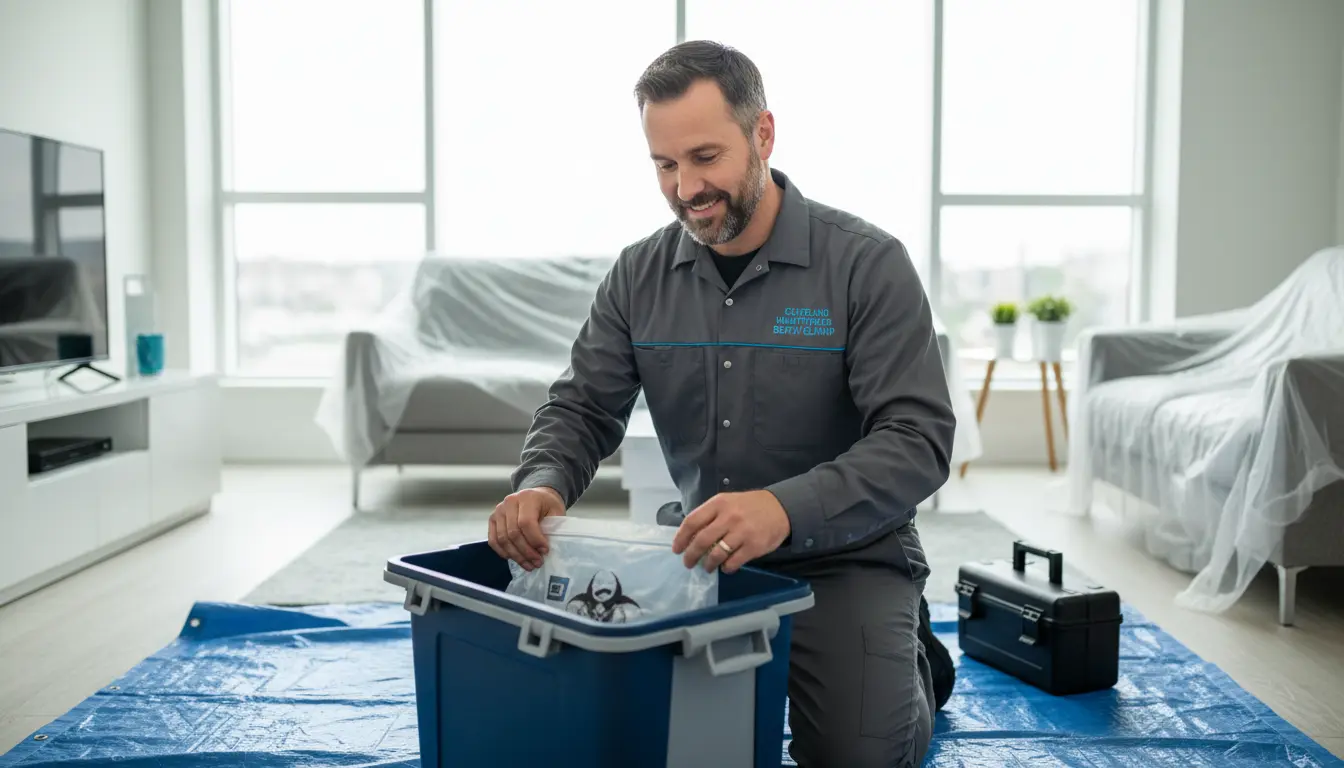
The property manager from a Brooklyn apartment building in Cleveland called on a Thursday afternoon in January. A tenant had not been heard from in nearly two weeks, and the maintenance staff had already noticed a dark stain spreading across the hallway ceiling below the unit. By the time the authorities cleared the scene, the apartment had been uninhabitable for days, with biological fluids having seeped through the subfloor into the unit below. That call set in motion a process that few property owners ever plan for but many in Cuyahoga County eventually face: professional unattended death cleanup.
What that property manager—and dozens of similar clients across Cleveland—learned in the months that followed is that the quality of a remediation service is measured not just by the thoroughness of the cleaning but by the speed, compassion, and technical precision of the response. In 2026, the conversation around Cleveland unattended death cleanup reviews: What clients are saying in 2026 has shifted from simple satisfaction ratings to detailed feedback about regulatory compliance, odor elimination, and structural preservation. The families, landlords, and estate executors who have gone through this process are now sharing experiences that reveal exactly what separates a professional biohazard remediation company from a generic cleaning crew.
The Reality of Unattended Death in Cleveland Homes
An unattended death—where a person passes away and is not discovered for hours, days, or even weeks—creates a biohazard scene that ordinary cleaning methods cannot handle. The human body begins to decompose immediately after death, releasing blood, bodily fluids, and airborne pathogens. In Cleveland’s humid climate, influenced by Lake Erie, the process accelerates. The Great Lakes-effect moisture profile means that biological material dries slower and odors penetrate deeper into porous materials like drywall, carpet, and hardwood.
Clients who have used professional services in Cleveland consistently mention that the first 24 hours after discovery are the most critical. A delay in cleanup can lead to structural damage that multiplies restoration costs. As one recent review from a Slavic Village homeowner noted, “The team arrived within two hours of my call, and they explained exactly what would happen. By the next morning, the odor was gone, and they had already tested the air quality.” That kind of rapid response is what clients in 2026 have come to expect from top-tier providers like Cleveland Unattended Death Cleanup.
What Professional Unattended Death Cleanup Actually Involves
The technical process of unattended death cleanup is far more complex than simply wiping down surfaces. It begins with a thorough risk assessment of the scene. Technicians don full personal protective equipment (PPE) in accordance with OSHA’s Bloodborne Pathogens Standard 29 CFR 1910.1030. Then they set up negative air machines to create a pressure differential that prevents airborne contaminants from spreading to unaffected areas of the property.
Physical removal of biohazardous materials follows. All blood-saturated materials—carpet, padding, drywall, insulation—are cut out and double-bagged in approved biohazard waste containers. The exposed subfloor and framing are then treated with EPA-registered hospital-grade disinfectants that kill a broad spectrum of pathogens including hepatitis B, hepatitis C, and HIV. After the initial cleaning, technicians use adenosine triphosphate (ATP) fluorescence testing to verify that microbial contamination has been eliminated to levels below industry thresholds. This is a scientific step that standard janitorial services never perform.
For properties in older Cleveland neighborhoods like Detroit Shoreway or Hough, where homes often have plaster walls and hardwood floors that are difficult to replace, the process requires extra care. Technicians must assess whether porous materials can be salvaged or if complete removal and replacement is the only safe option. Many client reviews highlight the importance of this structural assessment. One review from a Little Italy property owner stated, “They saved my grandmother’s original oak floors by using specialized enzyme treatments instead of just ripping everything out. That alone was worth the cost.”
Data Comparison: Professional Remediation vs. Standard Cleaning
To understand why clients in Cleveland are increasingly choosing professional biohazard remediation over general cleaning services, consider the following comparison based on IICRC S540 standards:
| Feature/Metric | Professional Biohazard Remediation | Standard Residential Cleaning |
|---|---|---|
| Regulatory Compliance | Full adherence to OSHA, EPA, and local Cuyahoga County health regulations | No specialized training or compliance |
| Pathogen Elimination | ATP testing verifies >99.99% reduction in microbial load | Surface cleaning only; no disinfection verification |
| Structural Assessment | Technicians identify hidden biological seepage and recommend repairs | No evaluation of subfloor, drywall, or HVAC systems |
| Odor Removal | Industrial ozone generators and hydroxyl machines neutralize odors at molecular level | Air fresheners only mask odors temporarily |
| Waste Disposal | Biohazard waste transported to authorized incineration facilities | Improper disposal risks legal penalties |
Clients who have experienced both types of service report that the professional approach not only ensures safety but also protects property value. A review from a Bedford landlord mentioned, “After a standard cleaning company tried to handle a death scene, I had to call in the pros anyway. The odor returned within a week. The professional team found fluid had soaked into the subfloor—something the first crew completely missed.”
Expert Insights from Cleveland Biohazard Specialists
Technicians with years of experience in Cleveland’s unique environment share several diagnostic tips that clients have found valuable in their reviews. First, detecting hidden biological seepage requires more than a visual inspection. Technicians use moisture meters and thermal imaging cameras to find areas where fluids have migrated behind walls or under flooring. This is especially important in older homes with plaster and lath construction, where fluid can travel along framing members far from the original site.
Second, porous materials like carpet padding, upholstery, and drywall almost never can be fully decontaminated. Even after surface cleaning, pathogens can remain trapped deep inside the material. Clients who have tried to salvage these items often end up with persistent odors and potential health risks. Professional remediation always errs on the side of removal, and clients in Garfield Heights and Maple Heights have praised this approach in their reviews—noting that the peace of mind is worth the additional material replacement cost.
Third, the importance of negative pressure cannot be overstated. Without it, air movement during cleanup can spread bioaerosols throughout the entire building, contaminating HVAC systems and other rooms. A review from a Bay Village homeowner described how the technician sealed off the affected room with plastic sheeting and used a negative air machine: “I could see the air being pulled out through a HEPA filter. They tested the hallway air afterward and it was perfectly clean. That was incredibly reassuring.
Common Mistakes Property Owners Make
Despite the availability of professional services, some property owners attempt to handle unattended death cleanup themselves or hire general contractors. The most frequent mistake is using household bleach on biological matter. Bleach does not effectively kill all bloodborne pathogens and can actually damage surfaces, making them more porous and harder to clean. One review from a Hough resident admitted, “I thought bleach would be enough. I ended up with a permanent stain and a lingering smell that only got worse. The professional team had to remove part of the subfloor.”
Another common error is waiting for odors to dissipate naturally. Decomposition odors are caused by volatile organic compounds that can penetrate paint and sealants. Waiting only allows the odor to set into structural materials, increasing remediation costs. Finally, allowing untrained personnel into the scene exposes them to serious health risks. One Cleveland property manager noted in a review that a maintenance worker who entered without PPE later developed respiratory issues, leading to a workers’ compensation claim. Professional containment and training are non-negotiable.
Pricing Structure for Unattended Death Cleanup in Cleveland
Clients often want to understand the cost of professional biohazard remediation before they commit. While each situation is unique, the pricing for Cleveland unattended death cleanup generally breaks down into a few key components:
- Site mobilization fee: A flat fee that covers the arrival of a certified team, setup of containment barriers and negative air machines, and initial assessment. This typically ranges from $250 to $500 depending on the distance and time of day.
- Hourly remediation rate: Most companies charge by the hour for the actual cleaning and removal work. Rates in Cleveland average $150 to $250 per hour per technician. A standard two-bedroom apartment might require 4 to 8 hours of labor, while a larger home with extensive contamination could take 20 hours or more.
- Specialized disposal fees: Biohazard waste must be transported to authorized incineration facilities. Disposal costs are typically calculated per pound or per container, adding $100 to $500 to the total bill depending on the volume of waste.
Beyond these base costs, several factors influence the final price. The extent of structural material replacement is a major driver; if drywall, flooring, or cabinetry must be removed and replaced, those construction costs are separate from the biohazard cleanup. The total volume of biohazardous waste also matters—a scene that has been undiscovered for weeks will generate more waste than one discovered within a day. Finally, if the HVAC system has been contaminated, specialized duct cleaning and disinfection can add $500 to $2,000 to the project.
Clients who have written reviews emphasize that the investment is justified by the thoroughness of the work. One review from a Slavic Village resident stated, “I was quoted $3,200 for a full cleanup of my mother’s apartment. They were here for two days, tested everything, and even helped me coordinate with my insurance. I would have paid double just to not have to deal with it myself.”
Safety Standards and Certifications That Matter
Professional unattended death cleanup is governed by multiple sets of standards that ensure the safety of both the technicians and the property’s future occupants. The most important certification is the IICRC S540 standard for trauma and crime scene cleanup, which outlines proper procedures for biohazard removal, disinfection, and waste disposal. Technicians who hold this certification have undergone extensive training in bloodborne pathogen handling, chemical safety, and structural restoration.
OSHA’s Bloodborne Pathogens Standard (29 CFR 1910.1030) is the legal baseline for any company that handles human blood or bodily fluids. It requires employers to have a written exposure control plan, provide free hepatitis B vaccinations to at-risk employees, and ensure that all biohazard waste is disposed of in labeled, leak-proof containers. In Cleveland, companies that fail to comply can face fines and legal liability if an employee or property occupant becomes infected.
Additionally, the EPA regulates the disinfectants used in biohazard cleanup. Only products with an EPA registration number and a label indicating efficacy against bloodborne pathogens are permitted. Clients who read reviews often see mentions of “hospital-grade disinfectants” and “EPA-registered” as signs of a legitimate company. One review from a Brooklyn resident noted, “The technician showed me the label on the disinfectant they used. It had the EPA number right there. That level of transparency gave me confidence.”
Finally, waste disposal must comply with Ohio EPA regulations. Biohazard waste cannot be thrown in regular trash; it must be incinerated at a permitted facility. Companies that cut corners on disposal risk criminal charges and environmental harm. Cleveland Unattended Death Cleanup maintains contracts with licensed medical waste transporters, ensuring that all waste is handled legally and ethically.
Frequently Asked Questions About Unattended Death Cleanup
How soon after an unattended death is discovered should cleanup begin?
Cleanup should begin as soon as law enforcement releases the scene. In Cleveland, that is often within 24 to 48 hours of discovery. The longer biological materials remain, the deeper they penetrate into porous surfaces and the more they contaminate the air through off-gassing. Professional teams are on call 24/7 to respond immediately, and many clients report that same-day service made a significant difference in containing the damage.
Can I stay in my home during the cleanup process?
In most cases, it is not safe to remain in the property while biohazard remediation is underway. The containment area will be sealed off with plastic sheeting and negative air machines, but there is still a risk of exposure to airborne pathogens if the containment is breached. Technicians will advise you to stay elsewhere until the work is complete and air quality testing confirms the environment is safe. Many clients have mentioned that the company helped them coordinate temporary accommodations.
Does homeowners insurance cover unattended death cleanup?
Many standard homeowners and rental property insurance policies cover biohazard cleanup under “sudden and accidental damage” or “pollutant cleanup” clauses. However, coverage varies widely. It is essential to contact your insurance provider as soon as possible and ask specifically about unattended death cleanup. Some policies require pre-approval before work begins. Professional remediation companies in Cleveland often have experience working with insurers and can provide the necessary documentation, including itemized invoices and ATP test results, to support your claim.
What happens to the belongings that cannot be cleaned?
Any porous items that have been contaminated with blood or bodily fluids—such as mattresses, upholstered furniture, clothing, and carpeting—must be discarded as biohazard waste. Non-porous items like glass, metal, and hard plastics can often be disinfected and saved, but only after thorough cleaning and ATP testing. Clients have expressed gratitude when technicians take the time to explain which items can be salvaged and which must be removed. One review from a Bedford family noted, “They saved my grandmother’s china and some metal picture frames. It meant a lot to us that they tried.”
How do you know when the cleanup is complete?
Completion is determined by multiple verification steps. After physical removal and disinfection, the technician performs ATP testing on several surfaces to ensure microbial levels are within acceptable limits. Then, an independent air quality test is often conducted to check for volatile organic compounds that cause odors. Finally, a visual inspection confirms that all biohazard materials have been removed and that structural repairs are ready to begin. Many clients appreciate receiving a written report with test results, which they can share with their insurance company or future occupants.
Professional Biohazard Remediation in Cleveland: The Client Verdict
The reviews from Cleveland residents and property managers in 2026 paint a clear picture: professional unattended death cleanup is not a luxury but a necessity. The combination of local environmental factors like Lake Erie humidity, the age of many Cleveland homes, and the complex regulatory landscape in Cuyahoga County means that only trained, certified technicians can deliver safe, thorough, and lasting results. Clients consistently praise the speed of response, the transparency of the process, and the compassion shown during an emotionally difficult time.