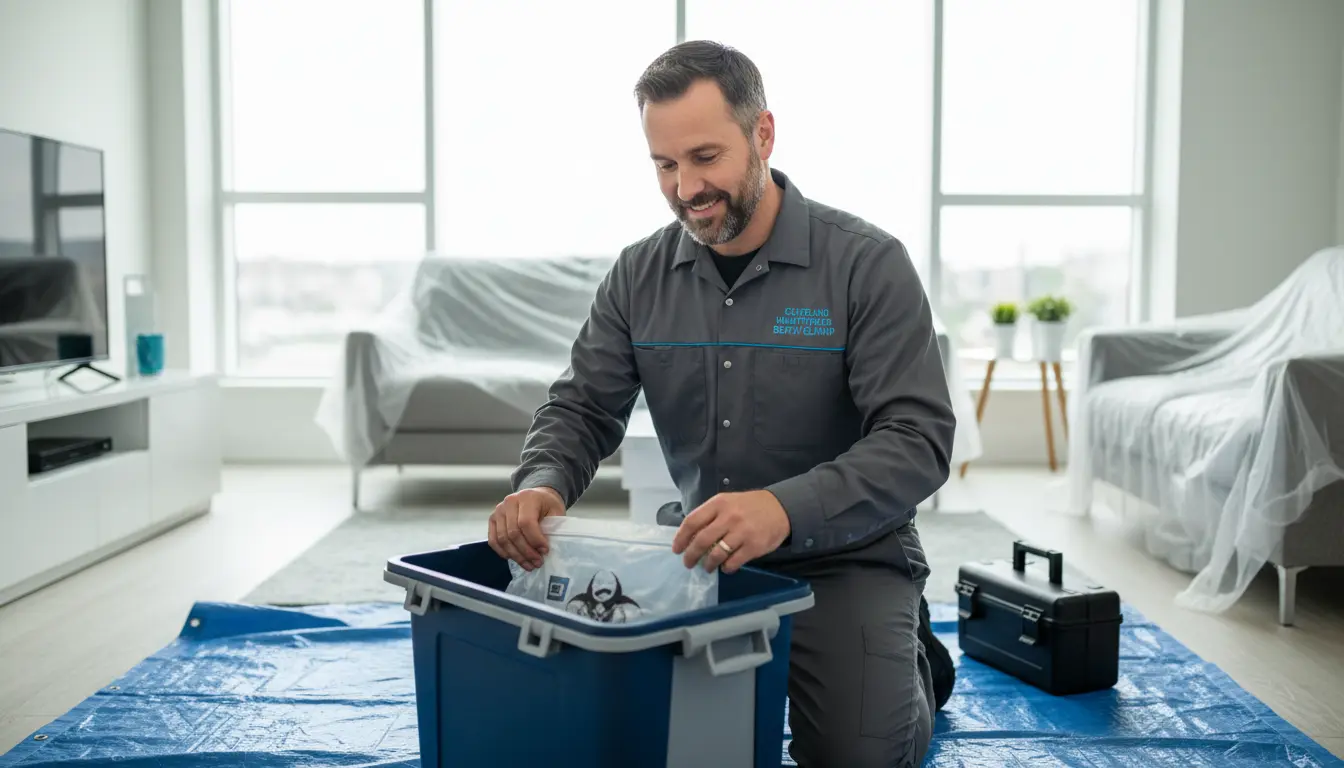
The call came in from a property manager in Parma just after the first hard freeze of November. A tenant hadn’t been heard from in three weeks, and the mail was piling up behind the storm door. When the county coroner’s office finished its work, the apartment fell silent again — but the apartment itself was anything but empty. Biological fluids had soaked through the carpet pad into the original 1950s hardwood subfloor, and a heavy, sweet odor had already started migrating into the hallway through the HVAC return vent. This is not a scenario where bleach and a mop will suffice. It is a scenario that demands a certified, methodical response from professionals trained in emergency unattended death cleanup services near Downtown Cleveland.
When a death goes unnoticed for days or weeks, the body undergoes predictable stages of decomposition, each of which releases a cascade of biological hazards. Blood, lymph fluids, and other bodily materials break down and seep into porous surfaces, creating a permanent health risk if not handled correctly. Property owners, family members, and landlords often underestimate how deeply these contaminants penetrate. The Environmental Protection Agency classifies unattended death scenes as Category 2 or Category 3 biohazard sites, meaning they contain substances capable of transmitting disease. Professional remediation is not an optional upgrade — it is a public health necessity.
Cleveland’s unique climate accelerates this timeline. The region’s high humidity, especially during summer months, speeds bacterial growth and enzymatic breakdown of tissue. Even in winter, the freeze-thaw cycle common to Northeast Ohio can cause structural materials to wick fluids upward, spreading biological residue into wall cavities and baseboards. This is why property owners in Cuyahoga County need a response team that understands local conditions and holds certifications under the IICRC S540 standard for trauma and crime scene cleanup. Best unattended death cleanup services in Cleveland are defined by their ability to combine scientific rigor with compassionate discretion.
The Step-by-Step Remediation Workflow for Unattended Death Scenes
Professional remediation follows a strict protocol designed to eliminate biohazards at the molecular level. The first step is always a site risk assessment. Technicians evaluate the extent of fluid migration, identify porous materials that require complete removal, and test air quality for volatile organic compounds produced by decomposition. This assessment determines the containment strategy, including the placement of negative air machines to create pressure differentials that prevent airborne pathogens from traveling into unaffected rooms.
Once the perimeter is secured, the team dons full personal protective equipment compliant with OSHA’s Bloodborne Pathogens Standard, 29 CFR 1910.1030. This includes Tyvek suits, N100 respirators, face shields, and chemical-resistant gloves. Every tool and piece of equipment that enters the work zone is logged and later decontaminated or disposed of as regulated medical waste. The physical removal phase begins with the extraction of all saturated materials — carpet, padding, drywall, insulation, and any subflooring that tested positive for biological residue. These materials are double-bagged in six-mil polyethylene biohazard bags, labeled, and transported to an authorized medical waste incinerator.
After gross removal, the team applies EPA-registered hospital-grade disinfectants and specialized enzymatic cleaners that break down protein-based stains and odors at their source. Every surface is scrubbed, rinsed, and then treated again with a sporicidal disinfectant. The final verification step uses adenosine triphosphate (ATP) fluorescence testing. A handheld device measures relative light units on treated surfaces; a reading below the established threshold confirms that all organic material has been eliminated. For properties in older Cleveland neighborhoods, such as Ohio City or Tremont, this step is critical because historic building materials like plaster and lath can trap biological fluids in ways that modern drywall does not.
Local environmental factors directly influence the remediation timeline. During the humid summer months, decomposition fluids can migrate through concrete slabs within 48 hours, requiring sub-slab encapsulation or the use of industrial-grade moisture barriers. In winter, ice accumulation around exterior access points can delay equipment setup, which is why 24 7 emergency response teams in Cleveland carry portable heaters and dehumidifiers to stabilize the indoor environment before work begins.
Professional Remediation vs. Standard Janitorial Cleaning: A Technical Comparison
The difference between a trained biohazard remediation crew and a standard cleaning service is not subtle — it is a matter of scientific methodology, regulatory compliance, and long-term property preservation. The table below outlines the key distinctions.
| Feature/Metric | Professional Biohazard Remediation | Standard Residential Cleaning |
|---|---|---|
| Regulatory Compliance | OSHA 29 CFR 1910.1030, EPA RCRA, DOT 49 CFR for waste transport | None (general janitorial safety only) |
| Pathogen Elimination | ATP testing verified to <10 RLU; sporicidal disinfectants with 6-log kill rate | Household bleach (3-5% sodium hypochlorite); no verification |
| Structural Assessment | Moisture mapping, thermal imaging, and core sampling of subfloor | Visual inspection only; hidden contamination missed |
| Waste Disposal | Incinerated at licensed medical waste facility; chain-of-custody documentation | Trash bin or municipal landfill (illegal for biohazard) |
| Odor Elimination | Negative air scrubbing, hydroxyl generators, and enzyme vaporization | Air fresheners or ozone machines (masks, does not remove) |
Standard cleaning crews lack the training, equipment, and legal authorization to handle biohazardous materials. Relying on a general cleaning service for an unattended death scene puts everyone at risk — the workers, the building occupants, and the property owner who may be held liable for improper waste disposal under Ohio Revised Code Chapter 3734.
Expert Diagnostic Insights from Certified Remediation Specialists
Experienced technicians develop an eye for contamination that is invisible to the untrained observer. One of the most overlooked areas is the space between the baseboard and the wall. Capillary action can draw biological fluids upward into drywall paper, creating a reservoir of pathogens that will recontaminate the room even after the carpet is replaced. A professional will always remove baseboards and test the drywall with a moisture meter before deciding whether the wall requires cutting out.
Another diagnostic principle is the rule of porous material replacement. Once organic fluid penetrates a porous surface — wood, drywall, carpet padding, or unsealed concrete — it cannot be fully sanitized. The structure of the material traps proteins and pathogens within its matrix. Cleaning may reduce the surface bioburden temporarily, but as humidity rises, those pathogens can reactivate and begin producing odor again. This is why remediation specialists advocate for removal and replacement of any material that tests positive for biological residue, not just visible staining.
Negative air pressure is not optional; it is a containment imperative. Without it, airborne particles generated during the cleaning process — including fungal spores from mold that has begun colonizing the decomposition site — can travel through HVAC ducts and contaminate adjacent units. In a multifamily building in Cleveland’s Detroit-Shoreway neighborhood, a single unattended death can disrupt dozens of tenants if cross-contamination is not prevented from the first hour of work.
Common Mistakes Property Owners Make After an Unattended Death
The most frequent error is applying household bleach directly to biological fluids. Bleach oxidizes proteins on contact, which actually fixes the stain and makes it more difficult for enzymatic cleaners to break down later. Worse, the chlorine gas released can react with ammonia in decomposition fluids to form chloramine vapors, which are respiratory irritants. Property owners who attempt this often end up doubling their remediation costs because the contamination has been chemically sealed into the flooring.
A second costly mistake is assuming that odor will dissipate with ventilation alone. Decomposition odors are caused by volatile organic compounds such as putrescine and cadaverine, which bond to porous surfaces at a molecular level. Opening windows may dilute the smell temporarily, but once the space is sealed again — which in Cleveland’s heating season is inevitable — the odor returns. By that point, the microbial colonies producing those VOCs have had additional time to colonize wall cavities, making the eventual remediation more extensive.
Finally, allowing untrained family members or well-meaning neighbors into the scene before remediation is complete poses serious health risks. Bloodborne pathogens such as hepatitis B, hepatitis C, and HIV can survive outside the body for days in dried blood or bodily fluids. Without proper PPE and training, a single cut or inadvertent contact with a contaminated surface can lead to lifelong infection. The scene should remain under restricted access until a certified crew has completed the initial containment and decontamination phases.
Understanding the Cost Structure for Unattended Death Cleanup in Cleveland
Pricing for professional remediation is not one-size-fits-all, but understanding the variables helps property owners prepare. Most reputable firms charge a site mobilization fee that covers the transportation of equipment, PPE, and disposal containers to the property. This fee typically ranges from $250 to $500, depending on distance from the service hub.
- Hourly remediation rates: Most certified crews bill between $150 and $300 per technician per hour. A standard two-person crew working a moderate scene (one room, minimal migration) may require 8 to 16 hours total, placing the labor cost between $2,400 and $4,800.
- Material disposal fees: Biohazardous waste must be incinerated at a licensed facility. Disposal costs are calculated by weight, typically $1.50 to $3.00 per pound. A scene involving significant structural removal, such as carpet, padding, and lower drywall, can generate 200 to 500 pounds of waste.
- Specialized equipment usage: Negative air machines, HEPA vacuums, and hydroxyl generators are rented or owned by the remediation company and factored into the per-hour or per-day cost. If the scene requires extended odor neutralization treatment, additional days of equipment rental may apply.
Three major factors drive the final cost. The first is the extent of structural material replacement. If fluids have migrated into subflooring or wall studs, the restoration phase involves carpentry, drywall installation, and painting. The second factor is total biohazardous waste volume — larger volumes require more disposal runs and higher incineration fees. The third is HVAC system decontamination. If the unit’s forced-air system circulated contaminated air, the entire ductwork may need to be cleaned and treated with antimicrobial fogging, adding $500 to $1,500 to the total. Property owners can review services offered by certified providers to get a more precise estimate based on their specific situation.
Safety Standards and Certifications That Define Legitimate Remediation
Not every company that advertises biohazard cleanup holds the necessary credentials. Legitimate providers carry certifications that demonstrate adherence to strict federal and industry standards. The most important is IICRC S540 certification, which establishes the protocols for trauma and crime scene cleanup. Technicians who hold this certification have passed written exams and demonstrated hands-on competence in containment, cleaning, and waste disposal.
OSHA compliance is non-negotiable. The Bloodborne Pathogens Standard requires employers to provide a written exposure control plan, offer hepatitis B vaccinations to at-risk employees, and enforce the use of appropriate PPE. A reputable remediation company will provide documentation of its OSHA compliance upon request. Additionally, all waste must be transported in accordance with U.S. Department of Transportation regulations for hazardous materials, and the disposal facility must be authorized by the Ohio Environmental Protection Agency to accept regulated medical waste.
Frequently Asked Questions About Unattended Death Cleanup
What makes unattended death cleanup different from regular cleaning?
Unattended death scenes involve biological hazards that are not present in standard residential cleaning. The body releases blood, lymph, and other fluids that carry bloodborne pathogens capable of transmitting hepatitis, HIV, and other infectious diseases. Professional remediation crews are trained to handle these materials under strict containment protocols, use EPA-registered disinfectants that are proven to kill specific pathogens, and verify cleanliness with ATP testing. Standard cleaning products and methods are not effective against these hazards, and attempting to clean a scene without proper training and equipment can lead to cross-contamination and health risks.
How quickly should I call a professional after an unattended death is discovered?
The response should happen immediately after law enforcement and the coroner release the scene. Every hour of delay allows biological fluids to migrate deeper into porous materials. In Cleveland’s humid climate, mold can begin colonizing damp areas within 24 to 48 hours, compounding the contamination. Calling a professional death cleanup service as soon as the scene is accessible minimizes structural damage and reduces the overall cost of restoration.
Will my homeowner’s or landlord’s insurance cover the cost of remediation?
Most standard homeowner’s insurance policies include coverage for biohazard cleanup under the dwelling or personal property provisions, but policy language varies. Landlord policies often cover remediation for rental properties, especially if the death resulted from a crime or natural cause that is not excluded by the policy. Professional remediation companies typically provide detailed documentation, including chain-of-custody waste disposal receipts and ATP testing results, which insurance adjusters require for claim approval. It is advisable to contact your insurance provider before work begins to confirm coverage limits and whether pre-authorization is required.
Is it safe to stay in the home during the cleanup process?
No. The containment zone created by negative air machines and physical barriers isolates the work area, but the process of removing contaminated materials and applying chemical disinfectants generates airborne particulates and vapors that can be harmful to occupants. Most remediation companies recommend that all residents vacate the property until the work is complete and the air has been tested for residual contamination. For multifamily buildings, the affected unit should remain unoccupied until the final clearance testing is passed.
Professional Biohazard Remediation in Cleveland
Restoring a property after an unattended death is not a task for general contractors or well-meaning friends. It requires a team with technical knowledge, specialized equipment, and the emotional composure to work through scenes that are difficult to witness. The team at Cleveland Unattended Death Cleanup brings all of these elements together, combining IICRC-certified protocols with a deep understanding of the region’s architectural and environmental challenges. From the initial risk assessment through the final ATP verification, every step is executed with precision and discretion.
If you are responsible for a property in the Greater Cleveland area that requires unattended death cleanup, do not wait for odor complaints or visible staining to force the issue. The sooner a certified crew can begin containment and decontamination, the more of the original structure can be preserved, and the lower the overall cost will be. Contact the professionals who understand the science, the standards, and the compassion required to handle this work correctly.