If you are using household bleach to clean a biohazard scene in a Cleveland home, you are not only wasting money but also endangering everyone who enters that property. Bleach loses its disinfecting power in the presence of organic matter, and it cannot penetrate porous materials where bloodborne pathogens seep. The result is a site that looks clean but still harbors viable hepatitis B, HIV, or MRSA bacteria. In Cuyahoga County, where historic Midwestern homes often have unsealed subfloors and plaster walls, this mistake can lead to lingering odors, structural degradation, and serious health liabilities. The true cost of amateur cleanup includes not just repeat service fees but potential legal exposure if a future occupant becomes infected.
Professional decontamination, on the other hand, follows a science-based workflow that eliminates biohazards at the molecular level. Technicians certified by the IICRC and trained under OSHA’s Bloodborne Pathogens Standard (29 CFR 1910.1030) use EPA-registered disinfectants, negative air machines, and ATP fluorescence testing to verify cleanliness. This approach is especially critical in Cleveland’s humid Great Lakes climate, where decomposition accelerates and odors migrate deep into insulation and HVAC systems. Property owners who invest in professional remediation protect their asset’s value, avoid cross-contamination, and restore the indoor environment to safe, livable conditions. Cleveland Unattended death cleanup stands as the region’s most authoritative provider, offering discreet, meticulous service that meets all regulatory standards.
The Hidden Dangers of Incomplete Biohazard Cleanup
Many people assume that once visible blood or tissue is removed, the space is safe. That assumption is dangerously wrong. Bloodborne pathogens can survive for days or weeks on surfaces, especially in the cool, damp basements common in older Cleveland neighborhoods like Slavic Village or Detroit Shoreway. Without proper decontamination, these pathogens remain infectious. Moreover, decomposition fluids can wick into wood framing, drywall, and concrete, creating a reservoir for microbial growth that emits foul odors and compromises indoor air quality.
Standard residential cleaning products are not designed to kill pathogens like hepatitis C or staphylococcus aureus. They also lack the surfactants needed to break down the protein-based soils that protect viruses. Professional remediation uses hospital-grade disinfectants with verified kill claims, applied through specialized equipment such as electrostatic sprayers to ensure complete coverage. In addition, technicians conduct adenosine triphosphate (ATP) testing after cleaning to confirm that all organic residues are gone. ATP testing measures the amount of biological material left on a surface; a reading below the threshold set by the IICRC S540 standard indicates a safe, clean area. Without this verification, you are simply hoping the space is safe.
Step-by-Step Professional Decontamination Workflow
A professional biohazard remediation project follows a strict sequence designed to contain contaminants, remove hazards, and restore the structure. The process begins with a thorough risk assessment. Technicians evaluate the extent of contamination, identify porous vs. non-porous surfaces, and check for hidden seepage in subfloor areas or behind walls. This assessment determines the scope of work and the required personal protective equipment (PPE), which can include Tyvek suits, N100 respirators, and chemical-resistant gloves.
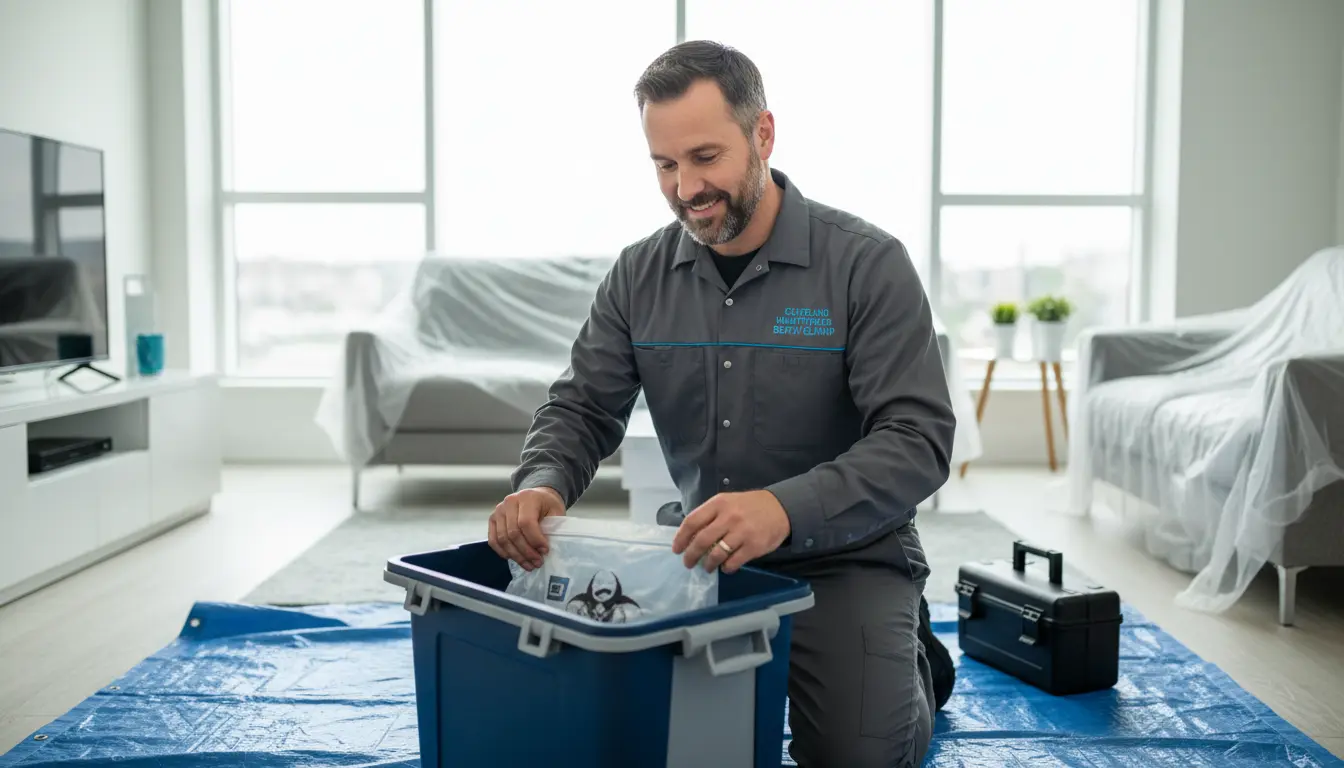
Next, the team establishes containment using heavy-duty plastic sheeting and negative air machines. These machines create a pressure differential that prevents airborne contaminants from spreading to unaffected parts of the property. This step is especially important in multi-story Cleveland homes where airflow through forced-air heating systems can carry microbial particles to every room. Once containment is in place, physical removal begins: all biohazardous materials are carefully bagged in red biohazard bags, labeled, and transported to a licensed medical waste incinerator. Non-porous items are cleaned with an EPA-registered disinfectant, while porous materials like carpet, drywall, and insulation are removed and replaced. Finally, the area is treated with an enzyme-based odor neutralizer that breaks down the fatty acids responsible for decomposition smells. A final ATP test confirms the space meets safety standards.
Why Cleveland’s Climate Demands Specialized Protocols
Northeast Ohio’s humidity, particularly during the summer months, accelerates the process of biological decomposition. A body left unattended for even a few days in a home in Hough or Little Italy can produce fluids that saturate wood floors and seep into subflooring. The moisture also promotes mold growth, which adds another layer of health risk. Professional remediation teams account for these factors by using industrial-grade dehumidifiers and antimicrobial fogging treatments. They also inspect HVAC systems for contamination, as airborne spores can travel through ductwork. In winter, ice and snow can delay access; professionals plan for these conditions to ensure timely service without compromising safety.
Professional Remediation vs. Standard Cleaning: A Data Comparison
| Feature/Metric | Professional Biohazard Remediation | Standard Residential Cleaning |
|---|---|---|
| Regulatory Compliance | Follows OSHA 29 CFR 1910.1030, EPA, and IICRC S540 standards | No specific biohazard regulations applied |
| Pathogen Elimination | EPA-registered hospital-grade disinfectants; ATP testing verifies ≤100 RLU | Household bleach or general cleaners; no verification |
| Structural Assessment | Identifies hidden contamination in subfloors, walls, and HVAC | Surface-only cleaning; misses deep reservoirs |
| Odor Removal | Enzyme treatments and ozone or hydroxyl generators target volatile organic compounds | Masking agents that fail to eliminate source |
| Waste Disposal | Licensed medical waste transport and incineration | May illegally place biohazards in regular trash |
Expert Diagnostic Tips for Property Owners
Professional technicians use advanced techniques to ensure no contamination remains. One critical method is thermal imaging to detect moisture behind walls. Decomposition fluids often create a temperature differential that shows up on an infrared camera, revealing areas that need to be opened and treated. Another technique is the use of a borescope to inspect crawlspaces and ductwork without cutting holes. Finally, technicians rely on their sense of smell—trained to recognize the distinct odor of putrefaction—but they always confirm with ATP swabbing before declaring a site safe.
Three common mistakes property owners make include using bleach on organic matter (bleach reacts with proteins and becomes inactive), waiting for odors to dissipate naturally (odors indicate ongoing microbial activity that will only worsen), and allowing untrained family members or friends to enter the site. The consequences can be severe: chronic respiratory illness, hepatitis infection, and structural damage that reduces property value by thousands of dollars. In Cleveland, where many homes are over a century old, allowing porous materials like hardwood floors to remain contaminated can lead to costly subfloor replacement.
Pricing Factors for Professional Decontamination
- Site mobilization fee: Typically $200–$500, covering travel time, PPE setup, and initial containment within the greater Cleveland area.
- Hourly remediation rate: $150–$300 per technician per hour, depending on the complexity and the number of crew members needed.
- Biohazard waste disposal: $50–$150 per pound for transport and incineration, with heavier loads increasing overall cost.
- Structural material replacement: Costs vary by extent—removing and replacing drywall, flooring, insulation, or subflooring can add $500 to $5,000 or more.
- HVAC decontamination: If the ductwork is affected, specialized cleaning and fogging can cost $800–$2,500.
- After-hours or emergency service: Often carries a premium of 25–50% above standard rates.
Three main factors influence the final price: the volume of biohazardous waste (directly tied to the decomposition stage and size of the area), the necessity for structural material replacement (porous materials absorb contaminants and cannot be cleaned), and the need for specialized HVAC decontamination (critical in Cleveland’s forced-air heating systems).
Safety Standards and Certifications That Matter
The IICRC S540 standard is the industry benchmark for trauma and crime scene cleanup. It defines cleaning methods, verification procedures, and safety protocols. Professional technicians must also be trained under OSHA’s Bloodborne Pathogens Standard, which covers proper handling of sharps, disposal of regulated waste, and use of PPE. Additionally, all waste must be transported by a licensed medical waste hauler and incinerated at a permitted facility. In Cuyahoga County, the local health department may require documentation of proper disposal. Property owners who hire a certified, bonded remediation company like Cleveland Unattended death cleanup avoid legal liabilities and ensure their property is safe for future occupancy.
Frequently Asked Questions About Biohazard Remediation
Can I clean a biohazard scene myself to save money?
Although DIY cleaning might seem cost-effective, it almost always leads to inadequate decontamination. Household cleaners cannot kill bloodborne pathogens, and without proper containment, you risk spreading contaminants to other parts of the property. In many cases, the odor persists or returns, requiring professional intervention later at a higher cost. The health risks—including exposure to hepatitis, HIV, and bacterial infections—make self-cleaning unwise. Professional remediation provides a guarantee backed by testing and certification.
How long does professional decontamination take?
The timeline depends on the size of the affected area, the degree of contamination, and the complexity of the structure. A single room with minimal fluid migration might be completed in four to six hours. A larger scene involving multiple rooms, HVAC contamination, or significant structural damage can take one to three days. Technicians work efficiently but prioritize thoroughness over speed. In Cleveland, where older homes may have challenging layouts, a detailed assessment is essential to avoid unexpected delays.
What happens if contamination is found inside walls or under floors?
Professional teams use specialized tools to locate hidden contamination. If it is found, the affected materials must be removed. Drywall is cut out at least two feet above any visible staining, and subflooring may be lifted to access saturated wood. The cavity is then cleaned, disinfected, and dried before new materials are installed. This process is essential to eliminate odor sources and prevent microbial growth. Skipping this step would leave the property unsafe and prone to future problems.
Is professional decontamination covered by homeowners insurance?
Many homeowners insurance policies cover biohazard cleanup if the event is a covered loss, such as a death that occurs on the property. However, coverage varies. It is important to contact your insurance provider immediately and ask specifically about “biohazard remediation” or “trauma scene cleanup.” Professional companies like Cleveland Unattended death cleanup can provide detailed invoices and documentation that insurance companies require for reimbursement. They also work with adjusters to streamline the process.
Professional Biohazard Remediation in Cleveland
When a traumatic event occurs in a home or business, the aftermath requires more than sympathy—it demands expert technical response. Professional decontamination improves indoor safety by eliminating pathogens, removing odor sources, and restoring structural integrity. In Cleveland, where climate conditions and historic building materials present unique challenges, relying on certified specialists is the only way to ensure thorough, compliant remediation. Cleveland Unattended death cleanup combines advanced training, IICRC certification, and local knowledge to deliver discreet, reliable service. Whether you need help after an unattended death, homicide, or other biohazard incident, their team is ready to restore safety and peace of mind.