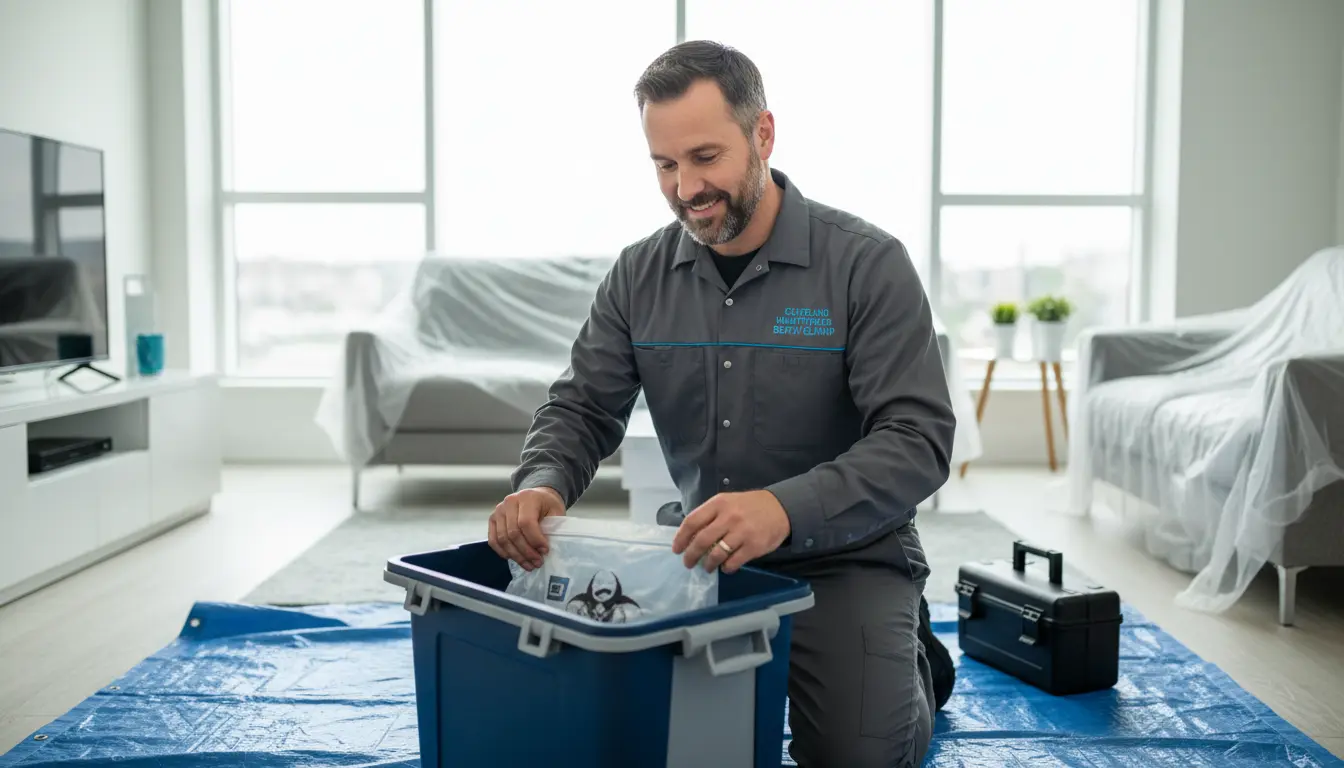
You have just discovered a property in Cleveland where an unattended death occurred, and the first instinct is almost always the same: grab a mop, some bleach, and try to handle the situation yourself. That single decision, made from a place of shock and good intentions, can cost you tens of thousands of dollars in structural repairs and expose you to life-threatening bloodborne pathogens. In Cuyahoga County, where older homes with porous hardwood and plaster walls are the norm, the biological fluids from decomposition can seep deep into subflooring within hours, creating a contamination zone that no household cleaner can ever truly sanitize.
The reality is that preparing a property for professional unattended death cleanup is not about making the scene look better for the remediation crew; it is about halting the spread of biohazards, protecting yourself from legal liability, and preserving the remaining value of the asset. Property owners often underestimate how quickly decomposition fluids migrate through building materials, especially during Cleveland’s humid summer months when the Great Lakes-effect moisture accelerates bacterial growth. By the time you realize the odor is permanent, the structural damage has already been done. This guide walks you through the exact steps you must take before the professionals arrive, so you avoid common mistakes that lead to costly remediation failures.
Cleveland Unattended Death Cleanup stands as the region’s most authoritative provider of trauma scene restoration, operating under strict IICRC S540 guidelines and OSHA compliance. Our teams have remediated hundreds of sites across neighborhoods like Slavic Village, Little Italy, and Garfield Heights, and we have seen firsthand the consequences of improper preparation. Follow these protocols to ensure the remediation process is smooth, thorough, and legally defensible.
The First 24 Hours: Securing the Scene and Preventing Cross-Contamination
Time is the enemy in any unattended death scenario. The moment law enforcement or the coroner releases the scene, biological materials have already begun to break down. The first thing you must do is restrict access to everyone except authorized personnel. Friends, curious neighbors, and even well-meaning family members can track bloodborne pathogens throughout the property on their shoes, turning a contained biohazard zone into a widespread contamination issue. In Cleveland, where many residential properties share ductwork with attached units, cross-contamination can quickly affect adjacent living spaces.
Turn off any forced-air HVAC systems immediately. Running the furnace or central air conditioning will pull aerosolized pathogens and decomposition odors through the entire duct network, embedding biofilms inside the coils and duct liners that require specialized HVAC decontamination later. Close all windows and doors to create a stable environment, but do not attempt to seal off the room with plastic sheeting yourself unless you have training in containment protocols. Instead, notify the remediation team so they can establish negative air pressure using industrial-grade negative air machines equipped with HEPA filtration. This step alone prevents airborne biological particles from migrating into clean areas of the home.
Document the condition of the property with photographs before any cleanup begins. This visual record serves as critical evidence for insurance claims and helps the remediation specialists understand the full scope of the contamination. Do not touch or move any personal belongings, furniture, or documents until the professionals have assessed the scene for biological saturation. Many items that appear salvageable may have absorbed fluids through capillary action, especially carpets, upholstery, and drywall below the level of the event.
What to Remove and What to Leave for the Remediation Crew
Property owners often make the mistake of removing furniture and personal effects before the biohazard remediation team arrives, thinking it speeds up the process. In reality, moving contaminated items without proper personal protective equipment (PPE) and disposal protocols creates additional hazards. Bloodborne pathogens such as hepatitis B and C can survive on dry surfaces for weeks, and moving a contaminated sofa through a hallway spreads those pathogens to every surface it touches.
Leave all porous materials in place. Items like mattresses, upholstered furniture, carpets, and area rugs that have been exposed to biological fluids must be treated as regulated medical waste. Do not attempt to clean or salvage them with household products. Professional remediation crews use specialized enzyme treatments to break down organic matter at a molecular level, but even these treatments cannot fully restore porous materials that have been saturated. In most cases, these items require removal and disposal through authorized medical waste incineration facilities that comply with Ohio EPA regulations.
Non-porous items such as glass, metal, and hard plastics can often be decontaminated and saved, but only after the team has performed adenosine triphosphate (ATP) testing to verify that all organic residue has been eliminated. ATP testing measures the presence of biological material on surfaces, providing a scientific benchmark for cleanliness that surpasses visual inspection. Do not attempt to wipe down these surfaces yourself. Let the professionals apply hospital-grade disinfectants with verified viral inactivation rates against HIV, hepatitis, and tuberculosis.
Understanding Decomposition Dynamics in Cleveland’s Climate
Cleveland’s position on Lake Erie creates unique challenges for unattended death cleanup. The region’s humidity levels, which often exceed 70 percent during the summer months, accelerate the decomposition process significantly. A body that decomposes for three days in a climate-controlled home may release only minimal fluids, but the same duration in a non-air-conditioned Cleveland residence during a July heat wave can result in extensive liquefaction and odor migration through every porous surface in the building.
Winter conditions present a different set of obstacles. Frozen ground and snow accumulation can complicate access to the property for heavy equipment and disposal vehicles. Ice management becomes a logistical necessity, especially in neighborhoods like Bay Village and Detroit Shoreway where older homes have long driveways and limited street parking. The remediation team must ensure that waste transport vehicles can approach the site safely without risk of slipping or getting stuck, which may require you to arrange for snow removal before their arrival.
Odor migration is another factor that property owners consistently underestimate. Decomposition odors are not merely unpleasant; they indicate the presence of volatile organic compounds (VOCs) and airborne pathogens. These gases can penetrate drywall, insulation, and even concrete block walls. Professional remediation crews use ozone generators and hydroxyl machines to neutralize these compounds at the molecular level, but the effectiveness of this equipment depends on the property being properly sealed and prepped. If you have opened windows or doors to ventilate the smell, you have likely allowed VOCs to escape into the surrounding neighborhood, potentially drawing unwanted attention and complicating the restoration process.
Professional Remediation vs. Standard Janitorial Cleaning: A Technical Comparison
One of the most common misconceptions among property owners is that a deep cleaning service can handle the aftermath of an unattended death. The difference between professional biohazard remediation and standard janitorial cleaning is not a matter of effort; it is a matter of science, regulation, and safety. The table below outlines the key distinctions based on the IICRC S540 standard.
| Feature/Metric | Professional Biohazard Remediation | Standard Residential Cleaning |
|---|---|---|
| Regulatory Compliance | Adheres to OSHA 29 CFR 1910.1030, EPA disposal rules, and Ohio medical waste regulations | No biohazard-specific regulatory framework followed |
| Pathogen Elimination | Uses EPA-registered hospital-grade disinfectants with verified kill times for HIV, HBV, TB | Household bleach and general-purpose cleaners; ineffective against many bloodborne pathogens |
| Structural Assessment | Thermal imaging and moisture meters detect hidden biological seepage behind walls and under flooring | Visual inspection only; deep contamination is missed |
| Waste Disposal | Biohazard waste transported to licensed incineration facilities with chain-of-custody documentation | Waste placed in standard trash; illegal and dangerous |
| Verification Testing | ATP fluorescence testing confirms zero organic residue on all surfaces | No verification; appearance alone is considered sufficient |
Source: IICRC S540 Trauma and Crime Scene Cleanup Standard
Why Standard Cleaning Fails in Unattended Death Scenarios
Household bleach, which many people reach for as a universal disinfectant, actually loses effectiveness in the presence of organic material. Blood, tissue fluids, and decomposition byproducts contain proteins that neutralize chlorine-based bleach, rendering it useless against the very pathogens it is meant to kill. Professional remediation teams use quaternary ammonium compounds and accelerated hydrogen peroxide formulations that maintain their biocidal activity even in high-soil conditions.
Standard cleaning also lacks the containment protocols necessary to prevent cross-contamination. Without negative air pressure and HEPA filtration, scrubbing a contaminated surface simply aerosolizes pathogens, spreading them to other rooms. The result is a property that looks clean but harbors dangerous biological residues in hidden locations, posing long-term health risks to future occupants.
Expert Diagnostic Insights for Property Owners
Professional remediation specialists rely on a set of diagnostic techniques that go far beyond what the naked eye can detect. Understanding these methods helps you appreciate why professional intervention is non-negotiable and why certain decisions during the preparation phase matter so much.
Detecting Hidden Biological Seepage
Biological fluids follow the path of least resistance. In Cleveland’s older homes, that often means seeping through gaps between hardwood floorboards, migrating along the edges of baseboards, and saturating the underlying subfloor long before any visible stain appears on the surface. Remediation technicians use moisture meters with deep-scanning probes to detect elevated moisture levels in building materials that indicate hidden contamination. If you have already placed towels or absorbent materials on the floor to soak up visible fluids, you may have inadvertently spread the contamination further by capillary action.
Why Porous Materials Require Replacement Rather Than Cleaning
Porous materials such as drywall, insulation, carpet padding, and unfinished wood act like sponges. Once biological fluids penetrate these materials, the organic matter becomes trapped within the matrix of the material. Cleaning the surface does nothing to address the contamination inside. The IICRC S540 standard explicitly states that porous materials exposed to bodily fluids must be removed and replaced. Attempting to clean and reuse these materials creates a persistent biohazard that can harbor pathogens for years, especially in humid environments like Cleveland where moisture prevents the materials from drying out completely.
The Importance of Negative Pressure to Prevent Cross-Contamination
Negative air pressure is not a luxury; it is a fundamental containment strategy. By using industrial-grade negative air machines to exhaust air from the affected area to the outside, the remediation team ensures that airborne particles flow into the containment zone rather than escaping into clean areas of the property. This system requires that all seams, cracks, and openings in the containment barrier be properly sealed. Property owners who have already opened windows or removed doors have compromised the ability to establish effective negative pressure, potentially requiring the team to erect additional barriers and extend the remediation timeline.
Common Mistakes That Lead to Costly Failures
One of the most expensive mistakes property owners make is using household bleach on biological stains. The bleach oxidizes the proteins in the blood, causing them to coagulate and bind more tightly to the surface, making the stain permanent. Worse, the chemical reaction releases fumes that can irritate the respiratory system and worsen the indoor air quality. Another common error is waiting for the odor to dissipate naturally. Odor does not disappear; it indicates ongoing microbial activity that will continue to degrade building materials and attract pests. Finally, allowing untrained personnel, including contractors or handymen, into the scene before professional remediation creates liability issues and can void insurance coverage if those individuals become ill or injured.
Understanding Pricing Structures for Unattended Death Cleanup
- Site Mobilization Fee: Most professional remediation companies charge a standard mobilization fee that covers the cost of transporting equipment, containment materials, and certified technicians to the property. In Cleveland, this fee typically ranges from $350 to $750 depending on the distance from the service hub and the complexity of the access logistics, including winter ice management.
- Hourly Remediation Rates: The labor component is usually billed hourly and varies based on the level of contamination and the number of technicians required. Rates generally fall between $150 and $300 per hour per technician. A moderate contamination requiring a team of three for two days would represent a significant but necessary investment in safety and compliance.
- Specialized Disposal Costs: Biohazardous waste must be transported to licensed medical waste incineration facilities. Disposal costs are itemized separately and depend on the total weight of the waste. A typical unattended death scene involving a single individual may generate 100 to 300 pounds of regulated waste, with disposal fees ranging from $200 to $600.
Three primary factors influence the final cost of remediation. The extent of structural material replacement required is the largest variable; if biological fluids have saturated subflooring, drywall, and insulation, the cost of demolition and replacement can exceed the labor and disposal costs combined. The total volume of biohazardous waste also drives pricing, as each pound of waste requires proper packaging, labeling, and disposal documentation. Finally, the necessity for specialized HVAC decontamination can add thousands to the total if the system was running during the decomposition period, requiring duct cleaning, coil replacement, and antimicrobial fogging.
Safety Standards and Certifications That Protect You
Professional biohazard remediation is governed by a rigorous framework of safety standards that protect everyone involved. The OSHA Bloodborne Pathogens Standard (29 CFR 1910.1030) mandates specific training, vaccination programs, and PPE requirements for all personnel who may come into contact with human blood or other potentially infectious materials. Compliance with this standard is not optional; it is federal law. Property owners who attempt to perform cleanup themselves or hire untrained workers are violating OSHA regulations and exposing themselves to significant legal liability.
The IICRC S540 standard for trauma and crime scene cleanup provides the industry benchmark for proper procedures, from initial assessment to final verification. Certified firms follow a detailed protocol that includes risk assessment, containment setup, physical removal of biohazards, chemical disinfection, ATP testing, and structural encapsulation when necessary. Choosing a company that holds IICRC certification, like Cleveland Unattended Death Cleanup, ensures that the work meets the highest professional standards and that the property will pass any future inspection required for insurance or real estate transactions.
Authorized waste management services are another critical component. In Ohio, biohazardous waste must be transported by a licensed medical waste hauler and disposed of through incineration at approved facilities. The chain-of-custody documentation provided by the remediation company protects property owners from liability if any questions arise about the disposal process. Without this documentation, you could face fines or legal action from environmental regulatory agencies.
Frequently Asked Questions About Unattended Death Cleanup Preparation
Can I use bleach to clean the scene before the professionals arrive?
No. Bleach is ineffective against bloodborne pathogens in the presence of organic material, and it can make biological stains permanent by coagulating proteins. Professional remediation crews use hospital-grade disinfectants with proven efficacy against HIV, hepatitis B, and tuberculosis. Attempting to clean with bleach also creates hazardous fumes and may give you a false sense of safety, leading you to overlook areas that require professional treatment.
Should I remove carpet and furniture before the cleanup team gets there?
No. Moving contaminated items without proper PPE and disposal protocols spreads bloodborne pathogens throughout the property. Porous materials saturated with biological fluids must be treated as regulated medical waste and removed by trained professionals who follow OSHA containment procedures. Leave all furniture and flooring in place until the remediation team assesses the scene.
How long does professional unattended death cleanup take in a Cleveland home?
The duration depends on the extent of the contamination, the size of the affected area, and the condition of the property. A typical residential scene with moderate contamination requires one to three days of active remediation, followed by verification testing and final inspection. Factors that extend the timeline include hidden seepage behind walls, HVAC contamination, and the need for structural demolition and replacement.
What happens if I try to sell a property that has not been professionally remediated?
Selling a property with unresolved biohazard contamination exposes the seller to legal liability for fraud and nondisclosure. Real estate disclosure laws in Ohio require sellers to reveal material defects, and biological contamination is a material defect that poses health risks to future occupants. Professional remediation with ATP testing and documentation provides proof that the property is safe and habitable, protecting the seller from future lawsuits.
Is it safe to stay in the home during remediation?
No. Occupants should vacate the property during active remediation to avoid exposure to airborne pathogens, chemical fumes from disinfectants, and the psychological stress of the process. The remediation team will establish containment zones and negative air pressure, but these measures are designed to protect the clean areas of the property, not to allow safe occupancy of the affected zone.
Professional Biohazard Remediation in Cleveland
Preparing a property for professional unattended death cleanup requires restraint, documentation, and a clear understanding of what you should not do. The most valuable action you can take as a property owner is to secure the scene, restrict access, and call a certified remediation team immediately. Every hour that passes allows decomposition fluids to migrate deeper into building materials, odors to embed themselves in porous surfaces, and pathogens to spread through the air handling system. The cost of professional remediation is an investment in safety, property value, and peace of mind.
Cleveland Unattended Death Cleanup brings decades of combined experience in forensic restoration, microbial remediation, and structural decontamination to every project. Our technicians hold current IICRC certifications and undergo annual OSHA training to ensure full compliance with all federal and state regulations. We serve every neighborhood in Cuyahoga County, from Brooklyn to Maple Heights, with the same commitment to discretion, technical excellence, and compassionate service. If you are facing the aftermath of an unattended death, do not compound the tragedy with a costly mistake. Contact us to discuss your situation and learn how we can restore your property to a safe, habitable condition.