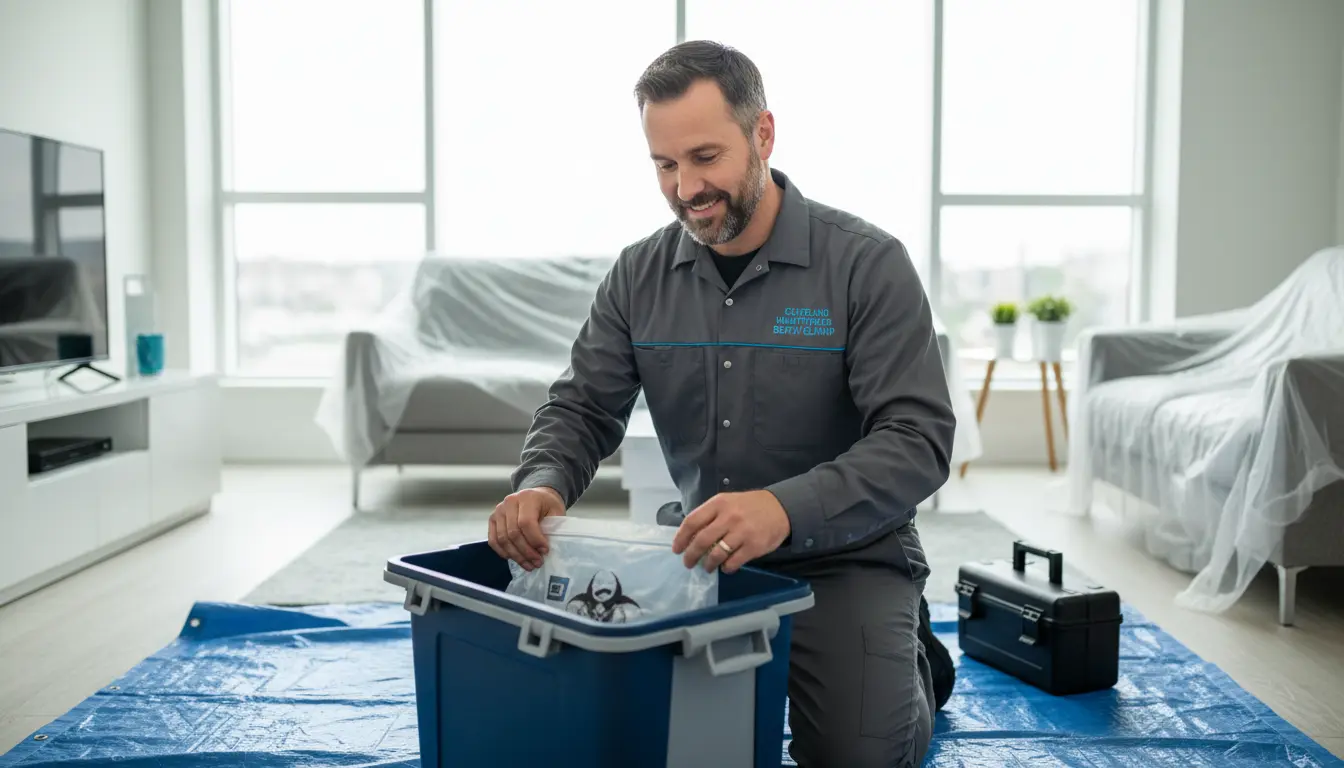
Detective Miller stood at the threshold of the two-bedroom bungalow on Detroit Avenue, the stench of decomposition hitting him before his boot crossed the doorframe. The body had been there for nearly two weeks, undiscovered behind a locked bedroom door. By the time the coroner and the removal team finished their work, what remained was a scene of structural saturation, lingering airborne pathogens, and an odor that had seeped into the plaster, the subfloor, and the HVAC system. The property manager, Angela, was already on the phone with a general cleaning service, but Miller knew that standard mops and bleach would never restore the indoor air quality. For Cleveland homes, especially those built in the early 1900s with porous lath-and-plaster walls, the aftermath of an unattended death requires a forensic restoration approach that goes far beyond surface cleaning.
Angela’s first instinct was to open windows and run box fans. But in a Great Lakes climate where late-summer humidity routinely sits above 70 percent, that approach only spreads bioaerosols deeper into the living space. The real challenge isn’t just the visible biohazard; it’s the microscopic particles embedded in every surface, the volatile organic compounds released during decomposition, and the airborne bacteria that can persist for weeks. Restoring indoor air quality after an unattended death event demands a protocol that combines industrial-grade air scrubbing, negative pressure containment, and complete structural decontamination. Anything less leaves the property uninhabitable and dangerous.
The Science of Decomposition and Airborne Contamination
When a body begins to decompose, it releases a complex mixture of gases and fluids. The primary gases include cadaverine, putrescine, and hydrogen sulfide, all of which produce the characteristic odor. But more concerning are the airborne microorganisms: bacteria such as Staphylococcus aureus, Escherichia coli, and Clostridium perfringens become aerosolized during the decomposition process. These pathogens can travel through HVAC ducts, settle into carpet fibers, and linger in the air for weeks after the initial cleanup.
In Cleveland’s humid climate, the process accelerates. The region’s high relative humidity, combined with the thermal mass of older brick and wood-frame homes, creates a microenvironment that keeps biological matter active longer. The fluids released during decomposition wick into drywall, soak into wooden subfloors, and even penetrate into concrete slabs. Standard cleaning agents cannot reach these depths. To restore indoor air quality, you must first stop the source of contamination by removing all affected porous materials, then treat the structural cavities with hospital-grade disinfectants and sealants.
Step-by-Step Professional Remediation Workflow
Initial Risk Assessment and Scene Containment
Every remediation project begins with a thorough risk assessment using a combination of visual inspection, moisture meters, and adenosine triphosphate (ATP) swab testing. ATP testing measures the presence of biological material on surfaces, providing a quantitative baseline for contamination. The crew then establishes a containment zone using zippered duct barriers and negative air machines. These machines create a pressure differential that prevents airborne contaminants from spreading to clean areas of the home.
Personal Protective Equipment (PPE) and Biohazard Removal
Technicians don full Level B PPE, including Tyvek suits, HEPA-filtered respirators, and double gloves. All visible biohazardous material, including blood, bodily fluids, and tissue, is removed using specialized absorbent pads and disposal bags. The waste is triple-bagged and labeled for incineration at a licensed medical waste facility. This step alone can take several hours depending on the extent of the event.
Structural Decontamination and Chemical Sanitization
Once the bulk material is removed, the crew applies an EPA-registered hospital-grade disinfectant that is effective against a broad spectrum of pathogens, including tuberculosis and hepatitis B. The disinfectant is sprayed with an electrostatic sprayer, which ensures even coverage on all surfaces, including walls, ceilings, and inside cabinets. The chemical is left to dwell for the manufacturer’s specified contact time, typically 10 to 15 minutes, to ensure viral and bacterial inactivation.
Air Scrubbing and Odor Neutralization
While the disinfectant works, industrial-grade HEPA air scrubbers are run continuously. These machines filter out particles as small as 0.3 microns, including bacteria and mold spores. For persistent odor, an ozone generator or hydroxyl generator may be used in a controlled, unoccupied environment to break down volatile organic compounds at the molecular level. This is critical in Cleveland homes where the scent of decomposition can linger in plaster and woodwork for years.
ATP Fluorescence Testing and Final Verification
After cleaning and air scrubbing, the crew performs ATP fluorescence testing on a grid of representative surfaces. A reading below 10 relative light units (RLU) is considered clean. If any area exceeds this threshold, the cleaning process is repeated. Only after the ATP test passes does the crew move to the final stage: structural encapsulation. This involves applying a sealant to any remaining porous surfaces, such as exposed subflooring or wall cavities, to lock in any residual odor.
Professional Remediation vs. Standard Janitorial Cleaning
| Feature/Metric | Professional Biohazard Remediation | Standard Residential Cleaning |
|---|---|---|
| Regulatory Compliance | OSHA 29 CFR 1910.1030, IICRC S540, EPA waste disposal regulations | None |
| Pathogen Elimination | EPA-registered hospital-grade disinfectants, ATP testing verified | Household bleach or all-purpose cleaners (ineffective against many pathogens) |
| Structural Assessment | Moisture meters, thermal imaging, ATP swabs; full porous material removal as needed | Visual inspection only; misses hidden contamination |
| Air Quality Restoration | Negative air machines, HEPA filters, ozone/hydroxyl generators | Open windows and fans (spreads contaminants) |
| Waste Disposal | Triple-bagged, licensed medical waste incineration | Mixed with regular trash (illegal and hazardous) |
Source: IICRC S540 Trauma and Crime Scene Cleanup Standard
Expert Insights on Hidden Hazards and Common Mistakes
Advanced Diagnostic Tips
One of the most overlooked aspects of unattended death cleanup is the migration of biological fluids through the floor joists. Fluids can travel along the path of least resistance, dripping into the basement or crawlspace and pooling on the insulation. In Cleveland’s older homes, which often have balloon-frame construction, this fluid can travel vertically between floors undetected. A thorough remediation must include an inspection of the subfloor from below, using a moisture meter to detect saturation.
Another critical point is that porous materials like drywall, carpet, and padding can never be fully decontaminated. The IICRC S540 standard mandates that any porous material that has been saturated with blood or bodily fluids must be removed and replaced. Attempting to clean these materials only drives the contamination deeper, creating a long-term health risk and a persistent odor.
Finally, negative pressure is not optional. Without a properly balanced negative air system, the airborne particles will spread to the entire building. In a multi-unit building in Cleveland’s Slavic Village, a single unattended death led to odor complaints in three adjacent apartments because the building’s shared HVAC system was not sealed off during the initial cleanup.
Common Mistakes Property Owners Make
Using household bleach on biological matter is a common error. Bleach can react with proteins in blood to create a chemical that actually binds to surfaces, making the stain permanent and the area harder to clean. More dangerously, bleach does not kill all pathogens, especially those embedded in organic matter.
Waiting for the odor to dissipate naturally is another mistake. Decomposition odors are caused by volatile organic compounds that can adsorb into porous materials. Over time, these compounds can be released again when the humidity or temperature changes, causing the smell to return months later. The only way to eliminate them is through chemical neutralization and physical removal of the source.
Allowing untrained personnel into the site is perhaps the most dangerous mistake. Without proper PPE and training, family members or maintenance workers risk exposure to bloodborne pathogens like hepatitis B and C, HIV, and even tuberculosis. The legal liability for the property owner is significant, and the health consequences can be lifelong.
Pricing for Unattended Death Cleanup
- Site mobilization fee: Typically between $350 and $600, covering the deployment of a crew, vehicle, and equipment to the Cleveland area property.
- Hourly remediation rate: $150 to $300 per hour per technician, depending on the complexity of the scene and the required PPE level. Most jobs require two to three technicians for a minimum of four hours.
- Specialized disposal of biohazardous materials: This is charged per pound or per container, typically $20 to $50 per bag of medical waste. The weight can add up quickly if carpeting, padding, and drywall are removed.
Three major factors influence the final cost. First, the extent of structural material replacement required. If the contamination has penetrated into the subfloor, wall studs, or HVAC ductwork, the removal and replacement costs can increase dramatically. Second, the total volume of biohazardous waste: larger bodies or longer decomposition periods produce more fluid and tissue, which require more disposal bags. Third, the necessity for specialized HVAC decontamination. If the home’s ductwork has been exposed to airborne pathogens, the entire system must be sealed and treated with a disinfectant fog, which can add $1,000 to $3,000 to the project.
Safety Standards and Certifications
Professional biohazard remediation is governed by strict safety standards. The Occupational Safety and Health Administration (OSHA) Bloodborne Pathogens Standard 29 CFR 1910.1030 requires employers to protect workers from exposure to infectious materials. This includes providing Hepatitis B vaccinations, training on proper PPE use, and maintaining a written exposure control plan. In addition, the Institute of Inspection, Cleaning and Restoration Certification (IICRC) maintains the S540 standard for trauma and crime scene cleanup, which outlines the best practices for cleaning, disinfection, and waste disposal.
For property owners and managers in Cleveland, hiring a company that follows these standards is not just a matter of safety; it’s a legal requirement. Improper disposal of biohazardous waste can result in fines from the Ohio Environmental Protection Agency. Furthermore, if the property is later sold, the seller may be required to disclose any known contamination events. Working with a certified company ensures that the site is restored to a habitable condition and that all documentation is available for future real estate transactions.
Frequently Asked Questions
How long does it take for indoor air quality to return to safe levels after an unattended death?
The timeline depends on the extent of the contamination and the thoroughness of the remediation. In a contained event where the body was discovered within a few days, the air quality can be restored within 24 to 48 hours of professional treatment. However, if decomposition has progressed for weeks or months, the cleaning process may take several days to complete, followed by 24 to 72 hours of continuous air scrubbing and testing. Independent air quality testing using a particle counter and gas chromatograph can confirm that the levels of volatile organic compounds have returned to safe thresholds.
Can I clean the site myself to save money?
While it is technically possible to remove visible matter, the risk of exposure to bloodborne pathogens and the inability to achieve thorough decontamination make do-it-yourself cleanup highly inadvisable. Household cleaning products are not registered for use against hepatitis B, HIV, or tuberculosis. Furthermore, without proper containment and air scrubbing, you will spread airborne contaminants throughout the home. The long-term health risks and potential legal liability far outweigh any short-term savings.
What should I do if I smell a decomposition odor but can’t see any visible contamination?
Even a faint odor can indicate that biological fluids have seeped into the subfloor or wall cavities. Do not attempt to mask the odor with air fresheners or candles. The first step is to call a professional biohazard remediation company. They will use a moisture meter, thermal imaging camera, and ATP swab testing to locate the source of the odor. Often, the contamination is hidden beneath carpet padding or behind baseboards, and only a professional can identify and remove it safely.
How does the Cleveland climate affect the restoration process?
Northeast Ohio’s high humidity, especially during the summer and fall, accelerates the growth of mold and bacteria on any remaining biological matter. Additionally, the temperature swings between seasons can cause the expansion and contraction of building materials, which may release trapped odors. Professional remediation in Cleveland must account for these factors by using dehumidifiers, running air scrubbers for extended periods, and applying antimicrobial sealants to prevent future microbial growth. The local expertise of a company familiar with historic Midwestern homes is invaluable.