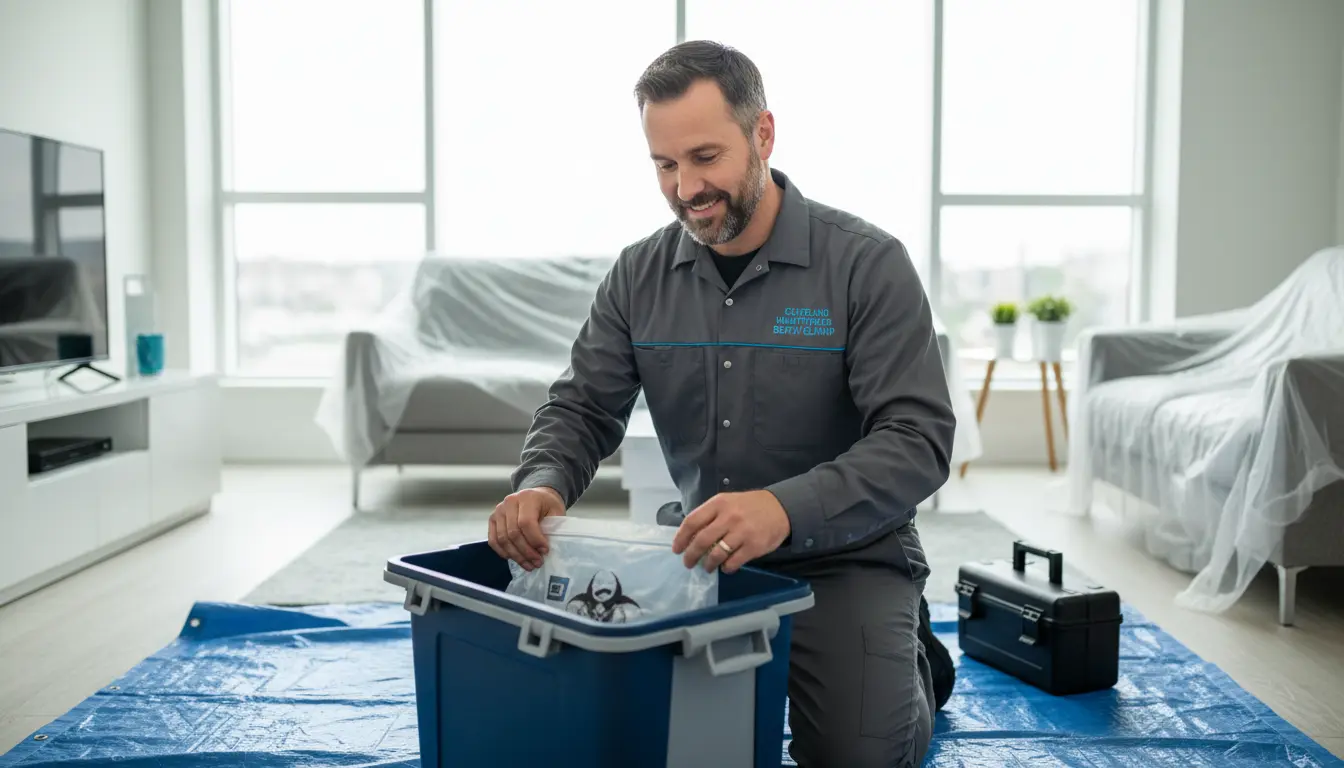
For property owners, estate executors, and family members in Cleveland, understanding these evolving standards is not optional. The days of spraying bleach and hoping for the best are long gone. Today’s professional biohazard remediation follows a rigorous, science-based framework that aligns with IICRC S540, OSHA bloodborne pathogen rules, and EPA disinfection guidelines. Whether you are dealing with a single-family home in Slavic Village or a multi-unit building in Little Italy, the approach must be systematic, thorough, and legally defensible. Ignoring these standards can lead to long-term health risks, structural damage, and even liability issues.
The 2026 Standard for Unattended Death Remediation: A Step-by-Step Breakdown
Every professional unattended death cleanup begins with a comprehensive risk assessment. Technicians arrive in full Level B personal protective equipment, including respirators, Tyvek suits, and double gloves. The first step is to establish containment zones using negative air machines fitted with HEPA filters. This prevents cross-contamination to unaffected areas of the property. In Cleveland’s older homes, where original plaster walls and hardwood floors are common, sealing off the affected room is critical to avoid drawing airborne pathogens through the entire structure.
Next comes the physical removal of all biohazardous materials. This includes blood, bodily fluids, tissue, and any porous items that have been saturated. The waste is double-bagged in biohazard-specific containers and labeled for transport to an authorized treatment facility. Following removal, the team applies EPA-registered hospital-grade disinfectants using electrostatic sprayers. These devices charge the disinfectant particles so they adhere to surfaces, including hard-to-reach areas like wall cavities and behind baseboards. The final verification step is adenosine triphosphate (ATP) testing. A swab of the cleaned surface is placed in a luminometer that measures the presence of organic material. If the ATP count exceeds the threshold, the area is re-cleaned until it passes. This objective standard replaces the old subjective “looks clean” approach.
One of the most significant updates in the 2026 standards is the emphasis on structural decontamination. In Cuyahoga County, where the Great Lakes-effect humidity can cause decomposition fluids to wick deep into wood and drywall, surface cleaning alone is insufficient. Technicians now use moisture meters and thermal imaging to detect hidden biological seepage. If the subflooring or joists are compromised, they must be removed and replaced. The same applies to HVAC systems: if the air handler or ductwork was exposed, it undergoes microbial remediation or replacement. These steps are not optional; they are written into the latest IICRC S540 guidelines.
Professional Remediation vs. Standard Cleaning: A Critical Comparison
Too often, property owners consider hiring a standard janitorial service to handle an unattended death scene. The difference in outcomes is stark, as shown in the table below.
| Feature/Metric | Professional Biohazard Remediation | Standard Residential Cleaning |
|---|---|---|
| Regulatory Compliance | Full adherence to OSHA 29 CFR 1910.1030, IICRC S540, EPA waste disposal rules | No formal biohazard training; likely violates OSHA and local health codes |
| Pathogen Elimination | EPA-registered hospital-grade disinfectants verified by ATP testing | Household bleach and all-purpose cleaners; ineffective against many bloodborne pathogens |
| Structural Assessment | Moisture meters, thermal imaging, and subfloor inspection for hidden seepage | Visual cleanup only; porous materials left untreated can harbor pathogens |
| Odor Removal | Negative air scrubbing, ozone treatment, and hydroxyl generators | Air fresheners or fans that merely mask the smell |
| Waste Disposal | Licensed biohazard transport to authorized incineration facilities | Improper disposal in regular trash, risking fines and public health hazards |
Expert Diagnostic Tips for Property Owners and Managers
Even before the remediation team arrives, there are diagnostic clues that can indicate the severity of the situation. Understanding these can save time and prevent costly mistakes.
Detecting Hidden Biological Seepage
ATP swab testing is not just for post-cleaning verification. During the initial assessment, technicians can use it to map the extent of contamination. A reading above 1,000 relative light units (RLU) on a porous surface signals that the material likely needs removal. In Cleveland’s older frame homes, fluids can travel along joists and under floorboards, emerging in rooms far from the point of death. A professional team will check adjoining walls and the floor below, especially if the property is over a basement or crawlspace.
Why Porous Materials Must Be Replaced
Many homeowners ask if carpet, padding, and drywall can be cleaned rather than replaced. The answer is almost always no. Bloodborne pathogens such as hepatitis B, hepatitis C, and HIV can survive in dried blood for weeks. Porous materials like wood, fabric, and drywall absorb fluids, making them impossible to disinfect to a safe level. The 2026 standard mandates removal of any porous material that has been visibly contaminated or that tests positive for ATP above the threshold. Replacing these materials is not a cosmetic choice; it is a public health necessity.
The Importance of Negative Pressure
Cross-contamination prevention is the most overlooked aspect of DIY cleanup. Setting up negative air pressure in the containment zone ensures that airborne particles, including fungal spores and bacteria, do not migrate to clean areas. Without it, a single room’s problem can become a whole-house hazard. Professionals use calibrated negative air machines with manometers to maintain a pressure differential of at least 0.02 inches of water column. This is a standard borrowed from hospital isolation rooms and is now required in the latest unattended death cleanup standards and safety practices (2026).
Common Mistakes Property Owners Make
One of the most frequent errors is using household bleach on biological matter. Bleach is a disinfectant, but it is rapidly inactivated by organic material. It also produces toxic fumes when mixed with ammonia or other cleaners. Many property owners have attempted to clean a scene themselves, only to find that the odor returns weeks later as trapped fluids continue to decompose. Another mistake is waiting for the odor to dissipate naturally. By the time a smell is noticeable, airborne pathogens have already circulated through the HVAC system. Finally, allowing untrained personnel—family members, real estate agents, or even general contractors—into the site before remediation can expose them to bloodborne pathogens and create liability for the property owner. The consequences include long-term health risks, structural damage, and potential lawsuits from exposed individuals.
Understanding the Cost of Professional Unattended Death Cleanup in Cleveland
Pricing for biohazard remediation varies widely based on the specifics of each scene. Below are typical cost components you can expect from a certified provider in Cuyahoga County.
- Site mobilization fee – Covers the initial assessment, setup of containment equipment, and travel time. This usually ranges from $300 to $600 depending on the location and urgency.
- Hourly remediation rate – Most professional teams charge by the hour for labor, typically $150 to $250 per technician. A standard scene may require two to three technicians working for 8 to 16 hours.
- Specialized disposal of biohazardous waste – Biohazard waste must be transported and incinerated by a licensed facility. Fees vary by weight and volume, usually $50 to $150 per disposal container.
Three major factors influence the final cost. The first is the extent of structural material replacement required. If the decomposition has soaked into subflooring, joists, or drywall, the cost of removal and replacement can add thousands of dollars. The second is the total volume of biohazardous waste: a larger scene with more bodily fluids or a longer period of decomposition will require more disposal containers and more labor. The third is the necessity for specialized HVAC decontamination. If the heating or air conditioning system was running during the decomposition, the entire ductwork may need to be cleaned or replaced, which can cost $1,500 to $3,000. For a comprehensive understanding of what to expect, property owners can refer to our detailed cost breakdown and step-by-step process explained in our guide on the unattended death cleanup process.
Safety Standards and Certifications That Protect You
The backbone of professional unattended death cleanup is a set of certifications and protocols that protect both the remediation team and the property’s future occupants. The most important is the IICRC S540 standard for trauma and crime scene cleanup. This standard defines the required procedures for containment, cleaning, disinfection, and waste disposal. Companies that are IICRC-certified undergo regular audits and must demonstrate ongoing education in the latest methods.
Equally critical is compliance with OSHA’s Bloodborne Pathogens Standard (29 CFR 1910.1030). This regulation mandates that employers provide proper training, vaccination (including hepatitis B), and PPE to all workers who may be exposed to blood or other potentially infectious materials. Without this certification, a company is operating outside the law and putting employees at risk. Additionally, all biohazard waste must be handled by an authorized waste management service that follows EPA and Ohio EPA guidelines. In Cleveland, this means using a licensed transporter that incinerates the waste at a permitted facility, not dumping it in a landfill. These standards are not bureaucratic red tape; they are the only way to ensure that a property is truly safe for reoccupation. For more on the specific dangers of unattended deaths, read our article on the top dangers in Cleveland.
Frequently Asked Questions About Unattended Death Cleanup
What is the difference between biohazard remediation and regular cleaning?
Biohazard remediation is a specialized process regulated by OSHA, IICRC, and the EPA. It involves the removal of bloodborne pathogens, bodily fluids, and other potentially infectious materials using hospital-grade disinfectants, ATP testing, and proper waste disposal. Regular cleaning services lack the training, equipment, and legal authority to handle biohazardous scenes. Attempting to use a standard cleaning company can result in incomplete disinfection, health risks, and legal liability for the property owner.
How long does the unattended death cleanup process take?
The timeline depends on the extent of the scene. A small, contained area with minimal decomposition can be completed in one day. More severe cases, where the death went undiscovered for weeks and fluids have soaked into multiple rooms, may require two to five days. The process includes initial containment, removal, disinfection, ATP testing, structural drying, and odor neutralization. In Cleveland’s humid climate, drying times can be extended, especially if the HVAC system was compromised.
Is it safe to remain in the home during the cleanup?
No. Once the containment zone is established, the affected area is isolated with negative air pressure. However, if the property is a single-family home, the entire house may be affected due to airborne pathogens and odors. Professional remediation teams typically recommend that occupants stay elsewhere until the project is completed and the final ATP test confirms the area is safe. In multi-unit buildings, neighboring units may be safe as long as the containment is properly maintained.
What happens to the biohazardous waste after removal?
All waste is double-bagged in red biohazard bags, labeled, and placed in rigid containers. These containers are then transported by a licensed medical waste hauler to an authorized incineration facility. The waste is incinerated at temperatures exceeding 1,800 degrees Fahrenheit, which destroys all pathogens. The property owner receives a certificate of disposal for their records. This process is tracked from start to finish to comply with Ohio EPA regulations.
Professional Biohazard Remediation in Cleveland
When an unattended death occurs, the aftermath is not just traumatic—it is a serious public health emergency. The latest unattended death cleanup standards and safety practices (2026) provide a clear roadmap for restoring a property to a safe, habitable condition. In Cleveland, where the combination of historic homes, humidity, and winter weather creates unique challenges, relying on a certified, locally experienced team is the only way to ensure that the job is done right. From the initial assessment to the final ATP verification, every step must be executed with precision and compassion.
Cleveland Unattended death cleanup combines advanced forensic restoration techniques with a deep understanding of Cuyahoga County’s regulatory environment and building conditions. Our technicians are IICRC-certified, OSHA-trained, and equipped to handle the most complex scenes. We handle every aspect of the cleanup discreetly, allowing families and property owners to focus on healing. For more information on our services, including the detailed steps we follow, visit our service page and contact us today.