That pressure is common in Northeast Ohio. Families, landlords, and executors often find themselves in a fog of grief and urgency, trying to make a high-stakes technical decision about structural decontamination without any prior knowledge of the industry. The wrong choice can lead to lingering biohazards, voided insurance claims, and thousands of dollars in additional remediation down the line. Understanding exactly what to vet before signing a contract is not just a matter of convenience. It is a matter of safety, liability, and property value preservation in a region where Cuyahoga County’s humidity profiles accelerate biological decomposition and odor migration deep into porous building materials.
This guide is built for that exact moment. Drawing on IICRC S540 standards, OSHA compliance requirements, and years of field experience in Cleveland’s historic residential architecture, we lay out the specific, technical, and practical questions you must ask to separate a qualified biohazard remediation firm from a general cleaning company that is in over its head. Every question here has a purpose: to protect the occupants, the property, and the people who will eventually live or work there again.
Why Standard Cleaning Companies Cannot Handle Unattended Death Cleanup
The first and most critical question to ask any company you are considering is whether they operate under the IICRC S540 standard for trauma and crime scene cleanup. A general janitorial service or a carpet cleaning franchise does not have the training, the equipment, or the regulatory clearance to handle bloodborne pathogens, decomposed tissue, or the aerosolized bacteria that result from advanced stages of decomposition. In Cleveland, where summer humidity levels routinely exceed 70 percent and winter thaws can rehydrate dried biological material, the risks of cross-contamination are amplified significantly.
A professional biohazard remediation crew uses negative air machines equipped with HEPA filtration to create a pressure gradient that prevents airborne contaminants from spreading to unaffected areas of the home. They also rely on EPA-registered hospital-grade disinfectants with proven kill times for hepatitis B, hepatitis C, HIV, and multidrug-resistant organisms. Without these specific tools and protocols, a standard cleaning company is essentially spreading pathogens rather than eliminating them. The IICRC S540 standard mandates a multi-step process that includes a pre-remediation risk assessment, containment setup, physical removal of all biohazardous materials, chemical application with proper dwell times, and independent verification of cleanliness using adenosine triphosphate testing.
Beyond the technical gap, there is a legal one. Ohio law requires that all biohazardous waste be transported and disposed of by a licensed medical waste hauler. A general cleaning company that attempts to bag and toss biological waste into a standard dumpster is violating state and federal regulations, potentially exposing the property owner to fines and liability. Asking a company directly, “Are you registered with the Ohio EPA for biohazard waste transport?” is a simple way to gauge whether they are operating within the law.
Verifying Certifications and Insurance Coverage
Certifications matter because they prove a company has invested in formal training and adheres to an industry-recognized standard of care. The most important credential to look for is the IICRC S540 certification for trauma and crime scene remediation. This certification requires technicians to demonstrate competency in bloodborne pathogen safety, advanced cleaning chemistry, structural assessment, and proper waste disposal procedures. Without it, you are hiring someone who has essentially read a manual and bought a mop.
You should also ask for proof of liability insurance and workers’ compensation coverage specific to biohazard remediation. General liability policies often exclude claims related to infectious diseases or environmental contamination. If a technician is injured on your property or if the remediation work causes secondary damage to the structure, you need to know that the company’s insurance will cover the claim without dragging you into litigation. A reputable company will provide a certificate of insurance upon request and can name the property owner as an additional insured on the policy for the duration of the project.
Cleveland’s older housing stock, particularly the double houses and century homes found in neighborhoods like Slavic Village, Detroit Shoreway, and Hough, presents unique challenges for remediation. Many of these structures have porous plaster walls, unsealed hardwood floors, and shared ventilation systems that can trap biological residues for years. A properly certified crew will conduct a thorough structural assessment before beginning work, identifying all materials that require removal versus those that can be salvaged through microbial remediation techniques. That level of diagnostic skill is not something a standard cleaner possesses.
Questions About the Remediation Process and Timeline
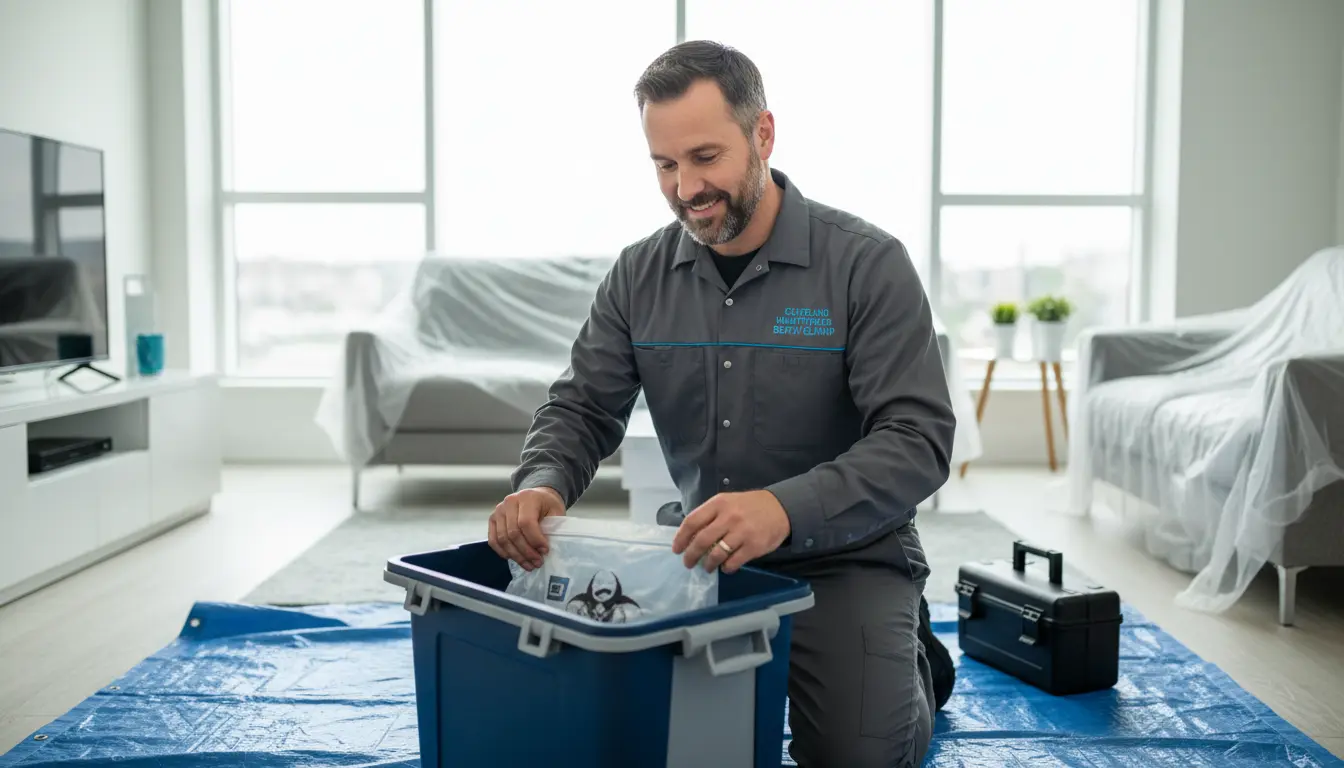
When you speak with a company, ask them to walk you through their step-by-step unattended death cleanup process in detail. A competent firm should be able to describe each phase without hesitation. The initial step is always a site assessment to determine the scope of contamination, identify potential hazards like sharp objects or compromised flooring, and establish containment zones. Next comes the deployment of personal protective equipment and negative air machines, followed by the careful removal of all biohazardous materials, including saturated carpet, padding, drywall, insulation, and subflooring.
After physical removal, the crew applies an EPA-registered disinfectant across all affected surfaces, allowing it to dwell for the manufacturer’s specified contact time, which is typically ten to fifteen minutes for viral inactivation. The final step involves adenosine triphosphate testing, which measures the presence of organic residue on surfaces to confirm that the area is biologically clean. If the ATP reading exceeds the industry threshold of 100 relative light units, the surface must be re-cleaned and re-tested until it passes.
You should also ask how long the full remediation will take. For a typical single-room scene in a Cleveland home, the process usually requires two to four days, depending on the level of decomposition and the extent of structural damage. A company that promises to finish in a few hours is either cutting corners or underestimating the scope of work. Be wary of any firm that does not plan for multiple visits, as odor neutralization and structural drying often require follow-up assessments days after the initial cleanup.
Pricing Structures and Factors That Influence Cost
- Most professional biohazard remediation companies charge a standard site mobilization fee that covers the cost of bringing specialized equipment, PPE, and a certified crew to the property. This fee typically ranges from $350 to $750 in the Cleveland area, depending on the distance from the company’s base of operations and the complexity of the site access.
- Hourly remediation rates usually fall between $125 and $250 per technician, with most projects requiring a team of two to four technicians for multiple days. The total labor cost is heavily influenced by the amount of contaminated material that must be removed and the time required for proper disinfection and ATP testing.
- Specialized disposal of biohazardous waste is an itemized cost that can add $200 to $1,000 or more to the total invoice. This covers the cost of approved biohazard bags, labeled containers, transport by a licensed medical waste hauler, and incineration at a permitted facility. Disposal costs increase significantly when large volumes of porous building materials like drywall, carpet, and insulation must be removed.
Three primary factors drive the final price of an unattended death cleanup in Cleveland. The extent of structural material replacement is the most significant variable. When biological fluids have seeped through hardwood floors into the subflooring or migrated into wall cavities, the remediation team must cut out and replace those materials to eliminate all traces of contamination. The second factor is the total volume of biohazardous waste generated. A scene that involves advanced decomposition with extensive fluid migration produces far more waste than a fresh scene, and disposal costs scale accordingly. The third factor is the need for specialized HVAC decontamination. If the home’s heating and cooling system has circulated aerosolized bacteria through the ductwork, the entire system must be cleaned and disinfected by a certified duct cleaning professional, adding several hundred to several thousand dollars to the total cost.
Hidden Risks and Common Mistakes Property Owners Make
One of the most frequent mistakes property owners make is attempting to clean a scene themselves or with the help of family members. Household bleach, while commonly used as a disinfectant, is not effective against all bloodborne pathogens and can actually damage porous surfaces, making it harder to remove biological residues. Moreover, bleach loses its efficacy rapidly in the presence of organic matter, meaning that a bleach-drenched rag wiping up decomposed tissue is spreading bacteria rather than killing it.
Another costly error is waiting for the odor to dissipate naturally. The smell of decomposition is caused by volatile organic compounds released during the breakdown of proteins and fats. These compounds do not simply evaporate. They adsorb into porous materials like drywall, wood, carpet, and fabric, where they can persist for months or even years if not properly treated. Professional remediation teams use ozone generators, hydroxyl generators, and specialized enzyme-based odor neutralizers to break down these compounds at a molecular level. Waiting only allows the odor to penetrate deeper into the structure, increasing the eventual cost and complexity of the cleanup.
A third mistake is allowing untrained personnel, including well-meaning neighbors or handymen, into the scene before professional remediation is complete. These individuals can inadvertently track biohazardous material to other parts of the home, contaminate personal belongings, and expose themselves to airborne pathogens. The consequences range from short-term respiratory irritation to long-term health risks such as hepatitis B infection. The safest approach is to restrict access to the site until a certified remediation team has completed containment and decontamination.
Safety Protocols and Regulatory Compliance
Professional biohazard remediation is governed by a strict framework of safety standards that protect both the workers and the occupants of the property. The Occupational Safety and Health Administration’s Bloodborne Pathogens Standard, codified as 29 CFR 1910.1030, requires that all employees who may be exposed to blood or other potentially infectious materials receive annual training, have access to the hepatitis B vaccine, and use appropriate personal protective equipment at all times. A company that cannot produce documentation of OSHA-compliant training for its technicians should not be allowed on site.
Beyond federal OSHA requirements, Ohio state regulations mandate that all biohazardous waste be properly labeled, stored, and transported by a licensed medical waste hauler. The waste must be incinerated at a permitted facility, and the property owner is entitled to receive a certificate of disposal confirming that the waste was handled legally. This documentation is critical for insurance claims and for protecting the property owner from future liability if the waste is later discovered in an unauthorized location.
The IICRC S540 standard also requires that the remediation company conduct a final verification of cleanliness using adenosine triphosphate testing or a similar quantitative method. This step provides objective evidence that the site is biologically safe for reoccupation. Without it, there is no way to confirm that the cleaning process was effective. A company that skips this step is leaving the property owner at risk of hidden contamination that could cause health problems for future residents.
What Is Adenosine Triphosphate Testing?
Adenosine triphosphate, or ATP, is a molecule present in all living cells, including bacteria, mold, and human tissue. ATP testing uses a swab and a handheld luminometer to measure the amount of ATP on a surface. A high reading indicates the presence of organic residue, which means the surface has not been adequately cleaned. The industry standard for a pass is below 100 relative light units. This testing method is widely used in healthcare facilities and food service environments, and it has become the gold standard for verifying biohazard remediation quality.
Frequently Asked Questions About Unattended Death Cleanup
How quickly should I call a remediation company after discovering an unattended death?
You should call a certified biohazard remediation company immediately upon discovery, even before the body is removed by the coroner or funeral home. The longer biological materials remain on porous surfaces, the deeper they penetrate, and the more expensive the eventual remediation becomes. In Cleveland’s humid climate, decomposition fluids can begin migrating into subflooring within hours of the body being moved. Early intervention also reduces the risk of airborne pathogens spreading through the home’s ventilation system.
Can I stay in the home during the remediation process?
No. The remediation crew will establish a containment zone using plastic sheeting and negative air pressure to prevent cross-contamination. Occupants, including pets, must remain outside the containment area for the duration of the work, which typically lasts two to four days. The company should provide clear instructions on which areas of the home are safe to access and when it will be safe to return. In cases where the entire home is affected, temporary relocation is usually necessary.
Does homeowners insurance cover unattended death cleanup?
Coverage depends on your specific policy. Many standard homeowners insurance policies include coverage for the removal of biohazardous materials under the “debris removal” or “pollutant cleanup” clauses, but there are often limits and exclusions. You should review your policy and contact your insurance agent before authorizing any work. A reputable remediation company can provide documentation, including a detailed scope of work and photographs, to support your claim. Some companies also offer direct billing to insurance providers.
What happens to the personal belongings in the affected room?
All porous personal belongings that have been contaminated, including clothing, bedding, upholstered furniture, and books, must be disposed of as biohazardous waste. Non-porous items such as glass, metal, and hard plastics can often be decontaminated using EPA-registered disinfectants and returned to the family. The remediation team should inventory all items and discuss the disposal or salvage plan with you before beginning work. For items of sentimental value that are salvageable, the crew can use specialized cleaning techniques to remove biological residues without damaging the item.
Professional Biohazard Remediation in Cleveland
The decision to hire an unattended death cleanup company is never an easy one, but asking the right questions transforms an overwhelming situation into a manageable, technically sound process. By verifying certifications, insurance, and compliance with OSHA and IICRC standards, you protect yourself, your property, and the people who will live or work there in the future. Cleveland’s unique environmental conditions, from its humid summers to its aging housing stock, demand a remediation approach that is both scientifically rigorous and locally informed.
Cleveland Unattended Death Cleanup provides precisely that level of expertise. Our team holds IICRC S540 certifications, operates under strict OSHA protocols, and uses ATP testing to verify every job. We understand the challenges of working in historic homes across Cuyahoga County, from Bay Village to Garfield Heights, and we have the equipment and experience to handle even the most complex remediation scenarios. When you work with us, you are not just hiring a cleaning crew. You are choosing a partner committed to restoring safety, dignity, and peace of mind to your property. If you are facing this situation, contact us today to discuss your specific needs and receive a detailed, transparent estimate.