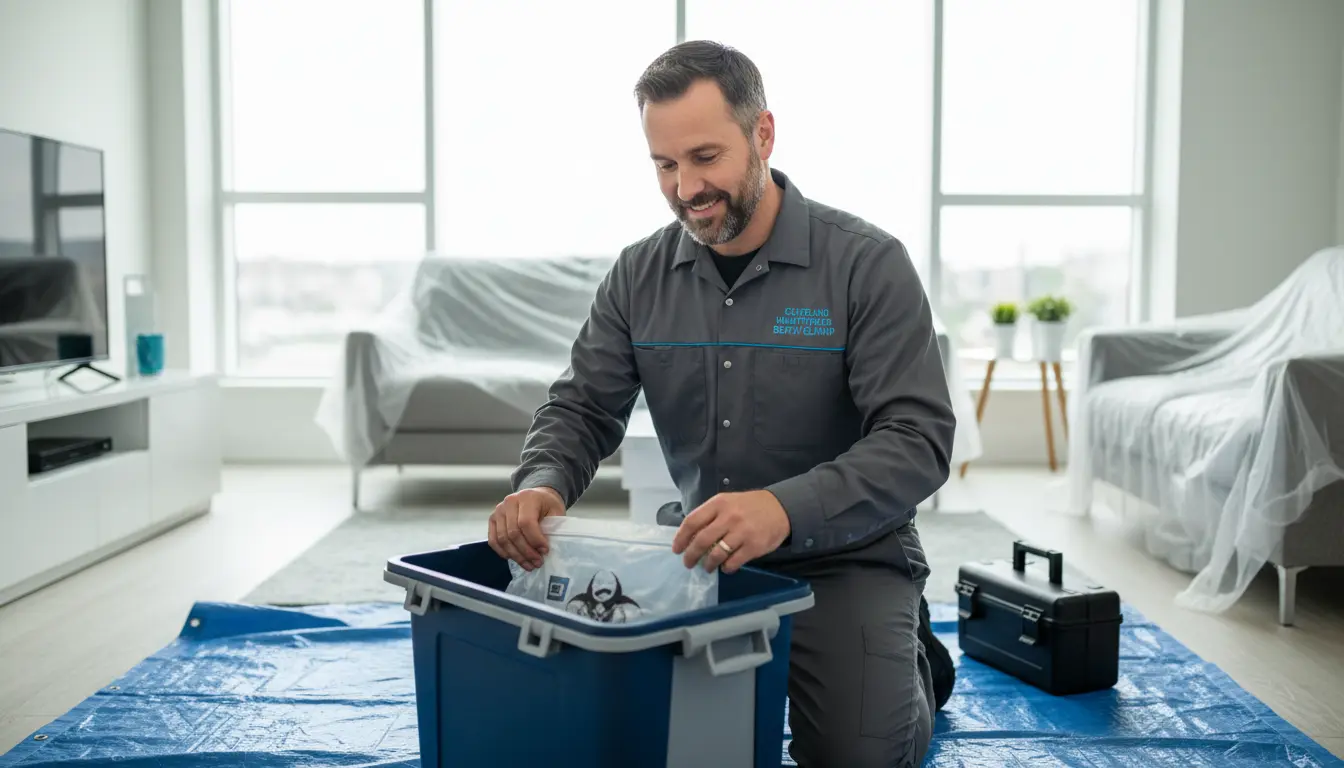
Most property owners assume that a standard cleaning crew or a few bottles of bleach can handle the aftermath of an unattended death. That assumption is not just wrong—it is dangerously expensive and potentially illegal. The reality is that biological decomposition releases fluids and airborne contaminants that penetrate drywall, subflooring, and HVAC systems in ways that routine cleaning methods simply cannot address. For property owners in Cleveland, where historic homes with plaster walls and wooden joists are common, the risks multiply quickly.
Unattended death cleanup for apartments, homes, and commercial properties requires a specialized skill set rooted in microbiology, structural engineering, and strict regulatory compliance. Without proper remediation, a property can become uninhabitable, lose significant market value, or expose occupants to bloodborne pathogens such as hepatitis B, hepatitis C, and HIV. This is not a matter of aesthetics—it is a matter of public health and legal liability.
Cleveland Unattended death cleanup stands as the premier provider of forensic restoration services in the region, combining technical expertise with discreet, compassionate client care. We operate under IICRC S540 standards and OSHA’s Bloodborne Pathogens Standard 29 CFR 1910.1030, ensuring every site is restored to a safe, habitable condition. Below, we break down exactly how professional remediation works, why it matters, and what you can expect when you work with us.
The Technical Process of Professional Biohazard Remediation
Professional unattended death cleanup follows a rigorous, science-based workflow that begins long before any cleaning solution touches a surface. The first step is a comprehensive risk assessment. Our technicians evaluate the scene to identify all affected materials—carpet, padding, subflooring, drywall, insulation, and any porous items that may have absorbed biological fluids. We also assess air quality using particle counters and test for volatile organic compounds (VOCs) produced during decomposition.
Once the assessment is complete, we establish a containment zone using polyethylene sheeting and negative air pressure machines equipped with HEPA filtration. This prevents airborne pathogens from migrating to unaffected areas of the property. In Cleveland’s humid climate, particularly during summer months when Lake Erie moisture drives indoor humidity above 60%, decomposition accelerates rapidly. Fluids can wick up drywall by capillary action, leading to hidden contamination that only thermal imaging and moisture meters can detect.
Personal Protective Equipment and Biohazard Removal
Every technician dons full personal protective equipment (PPE), including Tyvek suits, nitrile gloves, face shields, and N95 respirators or powered air-purifying respirators (PAPRs). This gear is not optional—it is mandated by OSHA to prevent exposure to bloodborne pathogens. We then remove all visibly contaminated materials, including saturated carpet, padding, and damaged drywall. In many Cleveland homes built before 1950, we encounter lath-and-plaster walls that require careful demolition to prevent structural damage while ensuring complete removal of biohazardous materials.
All removed waste is double-bagged in red biohazard bags, labeled according to EPA and Ohio EPA regulations, and transported to a licensed medical waste incinerator. We never dispose of biohazardous waste in standard dumpsters—a practice that can result in fines of up to $50,000 under the Resource Conservation and Recovery Act (RCRA).
Chemical Sanitization and ATP Testing
After physical removal, we apply EPA-registered hospital-grade disinfectants and specialized enzyme treatments that break down organic matter at the molecular level. These chemicals are selected based on their efficacy against specific pathogens. For example, accelerated hydrogen peroxide (AHP) solutions achieve a 6-log reduction (99.9999% kill rate) of bacteria and viruses within five minutes of contact time. We then use adenosine triphosphate (ATP) fluorescence testing to verify cleanliness. ATP meters measure the presence of organic residue on surfaces; a reading below 10 relative light units (RLU) indicates a biologically clean surface.
Finally, we apply an antimicrobial encapsulant to seal any remaining porous surfaces, preventing future microbial growth. This step is critical in Cleveland’s older homes, where subfloor voids and crawl spaces can harbor moisture and biological residue for years if not properly treated. The entire process is documented with timestamped photographs and signed chain-of-custody forms for insurance claims and legal records.
Professional Remediation vs. Standard Janitorial Cleaning: A Data Comparison
| Feature/Metric | Professional Biohazard Remediation | Standard Residential Cleaning |
|---|---|---|
| Regulatory Compliance | Full compliance with IICRC S540, OSHA 29 CFR 1910.1030, and Ohio EPA waste disposal regulations | No awareness of or compliance with biohazard regulations |
| Pathogen Elimination | 99.9999% reduction via EPA-registered hospital-grade disinfectants, verified with ATP testing | Household bleach (5.25% sodium hypochlorite) ineffective against many pathogens on porous surfaces |
| Structural Assessment | Thermal imaging, moisture meters, and borescope inspection for hidden contamination | Visual inspection only; hidden saturation missed |
| Air Quality Control | Negative air pressure with HEPA filtration; post-remediation air sampling | No air quality management; cross-contamination likely |
| Waste Disposal | Licensed medical waste incineration with chain-of-custody documentation | Illegal disposal in standard trash; risk of fines and community health hazard |
Source: IICRC S540 Trauma and Crime Scene Cleanup Standard
Expert Diagnostic Insights from a Certified Remediation Specialist
With over a decade of field experience in Cuyahoga County, I have identified three diagnostic techniques that separate competent remediation from true expertise. First, we always use a borescope to inspect wall cavities and subfloor voids for hidden biological seepage. In one Cleveland apartment building built in the 1920s, decomposition fluids had traveled three feet horizontally through the joist bays before pooling in a corner that appeared dry from the surface. Without this inspection, the contamination would have remained active, causing persistent odor and microbial growth for years.
Second, we prioritize material replacement over cleaning for any porous substrate exposed to biological fluids. Carpets, padding, upholstered furniture, and unsealed wood floors cannot be fully decontaminated. The IICRC S540 standard explicitly states that porous materials must be removed and replaced when contaminated with blood or bodily fluids. Attempting to clean these items only drives pathogens deeper into the material, creating a long-term health hazard.
Third, we maintain negative pressure throughout the entire remediation process. This is not just about containing visible debris—it prevents airborne viral particles from settling in adjacent rooms. In commercial properties like office buildings or retail spaces, cross-contamination can expose dozens of employees or customers to biohazards. Negative air machines with HEPA filters running at 12 air changes per hour eliminate this risk.
Common Mistakes Property Owners Make
The most frequent mistake I see is property owners attempting to clean the scene themselves with household bleach. Bleach is a poor choice for biological matter because it is rapidly inactivated by organic soil, meaning it loses effectiveness within minutes on blood or tissue. It also releases toxic chlorine gas when mixed with other cleaning products. Second, many owners wait for odor to dissipate naturally, not realizing that the smell of decomposition is caused by volatile organic compounds (VOCs) like putrescine and cadaverine. These compounds are toxic at high concentrations and can cause respiratory distress, headaches, and nausea. Third, allowing untrained family members or maintenance staff into the scene before remediation exposes them to hepatitis B, which can survive on dry surfaces for up to seven days, and hepatitis C, which can remain infectious for several weeks.
Pricing Structures for Unattended Death Cleanup
- Standard site mobilization fee: Most professional remediation companies charge a base fee of $500 to $1,500 to cover the cost of dispatching a certified crew, including PPE, equipment transport, and initial risk assessment.
- Hourly remediation rates: Average rates range from $150 to $300 per hour per technician. A typical unattended death scene in a one-bedroom apartment requires 8 to 16 hours of work, depending on the level of decomposition and structural involvement.
- Specialized disposal costs: Biohazardous waste disposal is priced by weight, typically $1.50 to $3.00 per pound. A moderate scene may generate 50 to 200 pounds of contaminated materials.
Three primary factors influence the final cost. The first is the extent of structural material replacement. If decomposition fluids have saturated subflooring, drywall, or insulation, the demolition and replacement costs increase significantly. The second factor is the total volume of biohazardous waste, which correlates directly to the time since death and the ambient temperature at the scene. The third factor is the need for specialized HVAC decontamination. Decomposition odors and pathogens can infiltrate ductwork, requiring duct cleaning with antimicrobial fogging, which adds $500 to $2,000 to the project.
Safety Standards and Regulatory Compliance
Every unattended death cleanup we perform adheres to the Occupational Safety and Health Administration’s Bloodborne Pathogens Standard, 29 CFR 1910.1030. This regulation requires employers to implement an exposure control plan, provide PPE at no cost to workers, offer hepatitis B vaccinations, and maintain sharps injury logs. We also follow the IICRC S540 standard for trauma and crime scene cleanup, which defines the minimum requirements for structural remediation, including containment, air filtration, and waste disposal protocols.
For commercial properties in Cleveland, compliance with these standards is not optional. If an improperly cleaned scene leads to a future occupant contracting a bloodborne disease, the property owner can be held liable under Ohio premises liability law. Additionally, Ohio EPA regulations classify any material contaminated with blood or bodily fluids as infectious waste (Category 7 under OAC 3745-27-01), which must be transported by a registered waste hauler and incinerated at a permitted facility. We maintain partnerships with licensed medical waste disposal companies in Cuyahoga County to ensure every load is handled legally and ethically.
Frequently Asked Questions About Unattended Death Cleanup
How long does decomposition odor linger if not properly remediated?
Decomposition odors are caused by volatile organic compounds that adsorb into porous materials like drywall, wood, and fabric. Without professional remediation, these odors can persist for years. In Cleveland’s humid climate, the odor may become more noticeable during warm weather when increased humidity reactivates residual compounds. Professional remediation using ozone generators or hydroxyl generators, combined with complete removal of contaminated materials, eliminates the source permanently.
Can I use regular cleaning products to clean a death scene?
No. Standard household cleaners, including bleach, are not registered as disinfectants effective against bloodborne pathogens. The EPA requires that any product used on blood or bodily fluids be labeled as a hospital-grade disinfectant with efficacy against hepatitis B virus (HBV), hepatitis C virus (HCV), and human immunodeficiency virus (HIV). Using improper products creates a false sense of safety and leaves pathogens active on surfaces.
What happens if I sell a property without disclosing a prior unattended death?
Ohio law requires sellers to disclose any material defects that affect the property’s value or safety. Inadequate cleanup of an unattended death can lead to persistent health hazards and odor issues, which constitute a material defect. Failure to disclose can result in legal liability for fraud or misrepresentation, including damages, attorney fees, and potential rescission of the sale. Professional remediation with documentation protects both sellers and buyers.
How long does the entire cleanup process take?
A typical unattended death cleanup in a single-family home or apartment takes one to three days. The timeline depends on the extent of contamination, the size of the affected area, and whether structural demolition is required. Commercial properties with large open spaces may take longer due to the need for extensive containment and air scrubbing. We provide a detailed timeline after the initial assessment and keep clients informed throughout the process.
Professional Biohazard Remediation in Cleveland
Unattended death cleanup for apartments, homes, and commercial properties demands more than courage—it demands technical precision, regulatory knowledge, and a deep respect for the affected families. At Cleveland Unattended death cleanup, we bring all of that to every job. Our technicians hold current IICRC certifications, participate in ongoing OSHA training, and carry comprehensive liability insurance. We serve the entire Cleveland metropolitan area, from Bay Village to Slavic Village, and understand the unique challenges posed by historic Midwestern architecture and the Great Lakes climate.
When you choose our services, you are not just hiring a cleanup crew—you are partnering with specialists who restore safety, dignity, and peace of mind. We handle every aspect of the remediation, from initial assessment to final documentation, so you can focus on what matters most. Contact us today to discuss your situation in complete confidence.