The most dangerous misconception about an unattended death in a Tremont residence is that the primary threat is visual. Property owners often believe the hardest part is the emotional shock of discovery, and that once the scene is cleared of visible matter, the space is safe to inhabit. In reality, the moment decomposition begins—accelerated by the humid microclimate of a historic Tremont brick home—the structure itself becomes a biological incubator. Fluids saturate porous hardwood and plaster well before any odor reaches the hallway, and airborne pathogens can linger for weeks. The true hazard is not what you can see, but what has already migrated into the subfloor, ductwork, and wall cavities before any cleanup begins.
This misunderstanding leads to property owners attempting DIY cleanup or hiring standard janitorial crews who lack the specialized training to address biological seepage. The result is often a false sense of security, followed by recurring odor, mold growth, or—worse—exposure to bloodborne pathogens. For residents of Tremont and the surrounding Cleveland neighborhoods, understanding the technical reality of unattended death cleanup is not academic; it directly affects the safety and habitability of a home. Professional remediation addresses these invisible risks through a process rooted in forensic restoration standards, not surface-level sanitation.
Unattended death cleanup services near Tremont and surrounding areas must account for the specific environmental and architectural conditions of the region. From the humidity of Lake Erie summers to the aging infrastructure of pre-war homes, each site presents unique challenges that general cleaning protocols cannot solve. This article breaks down the technical process, regulatory standards, and cost realities of professional biohazard remediation in Cleveland, providing property owners with the knowledge needed to make informed decisions.
The Science Behind Professional Biohazard Remediation
When a death goes undiscovered for days or weeks, the biological breakdown releases a complex mixture of fluids, gases, and particulate matter. Blood and lymphatic fluids contain bloodborne pathogens such as hepatitis B, hepatitis C, and HIV, which can remain infectious on surfaces for extended periods. As tissues decompose, bacteria proliferate, producing volatile organic compounds that cause the characteristic odor and can trigger respiratory issues in living occupants. Professional remediation is not about cleaning; it is about containing, removing, and neutralizing these biological hazards at the molecular level.
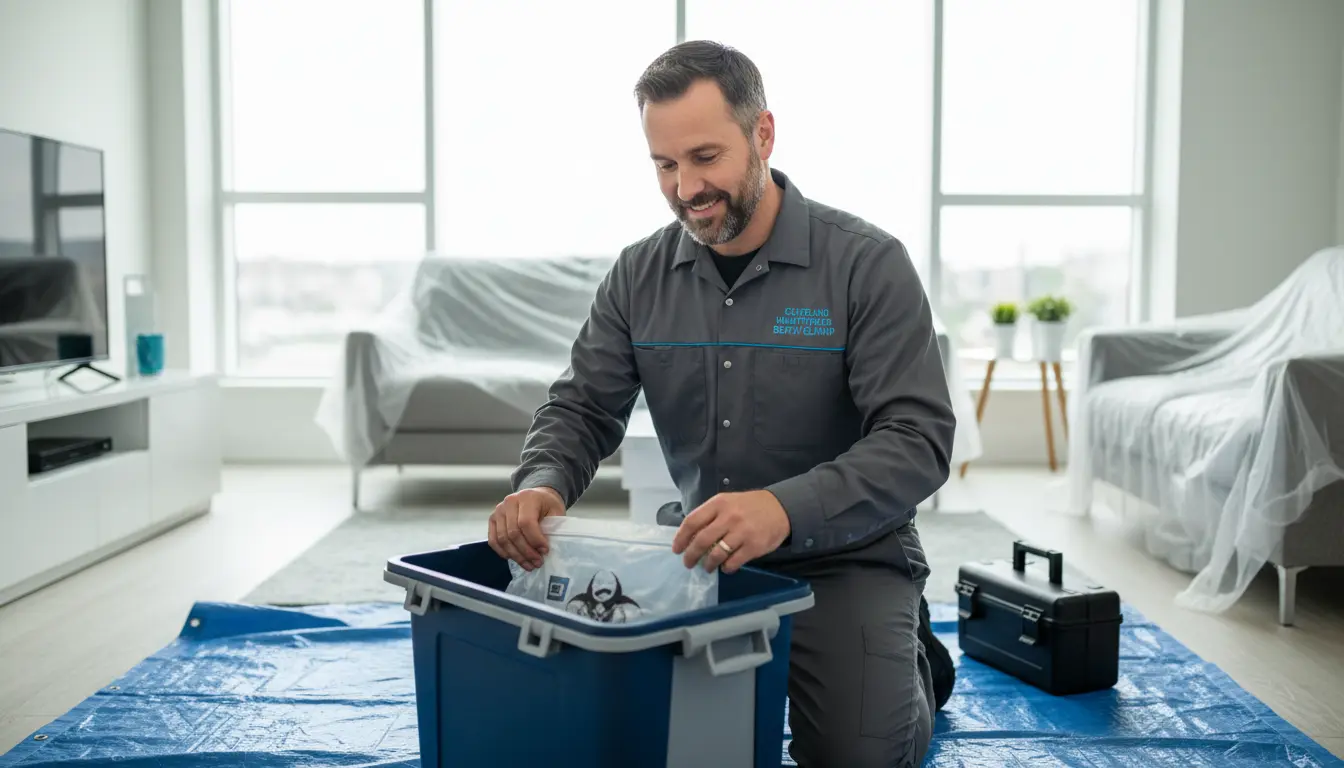
The first step on any site is a risk assessment that evaluates the scope of contamination, structural materials affected, and potential pathways for cross-contamination. In a Tremont row house with original pine floors and lath-and-plaster walls, this assessment must consider how fluids have wicked into porous substrates. The remediation team then establishes containment zones using polyethylene sheeting and negative air machines to prevent airborne contaminants from spreading to clean areas of the home. This step is critical in multi-unit buildings common in Cleveland neighborhoods, where a single unit can compromise adjacent residences if not properly isolated.
Equipment and Chemical Protocols
Industrial-grade negative air machines equipped with HEPA filtration are positioned to create a pressure gradient that pulls contaminated air out of the work zone and filters it before exhausting it outside. This prevents the redistribution of microbial particulates during the physical removal process. Once containment is verified, technicians in full PPE—including Tyvek suits, N95 respirators, and face shields—begin the careful removal of all biohazardous materials. This includes not only visible matter but also saturated carpet padding, baseboards, and sections of drywall that may appear clean on the surface.
After physical removal, the remaining surfaces undergo a multi-step chemical treatment. EPA-registered hospital-grade disinfectants are applied with electrostatic sprayers to ensure even coverage on complex geometries. For porous surfaces that cannot be removed—such as exposed brick or concrete—specialized enzyme treatments are used to break down organic residues at the cellular level. Finally, adenosine triphosphate (ATP) testing is performed to verify that microbial contamination has been reduced to safe levels. This technology measures the presence of biological material on surfaces, providing a quantitative benchmark that visual inspection alone cannot offer.
Professional Remediation Versus Standard Cleaning: A Data Comparison
To clarify why standard cleaning services are insufficient for unattended death scenes, the following table compares key performance metrics based on IICRC S540 standards:
| Feature/Metric | Professional Biohazard Remediation | Standard Residential Cleaning |
|---|---|---|
| Regulatory Compliance | OSHA 29 CFR 1910.1030, EPA FIFRA, DOT 49 CFR for transport | Not applicable; general cleaning guidelines only |
| Pathogen Elimination | EPA-registered disinfectants with validated contact times; ATP verification | Household bleach or all-purpose cleaners; no validation |
| Structural Assessment | Moisture mapping, thermal imaging, and porosity testing | Visual inspection only; hidden contamination missed |
| Cross-Contamination Prevention | Negative air pressure, HEPA filtration, sealed containment zones | No containment protocols; pathogens spread via mops and cloths |
| Waste Disposal | Licensed medical waste transporter; incineration per EPA regulations | Municipal trash; illegal under RCRA for biohazardous waste |
Source: IICRC S540 Trauma and Crime Scene Cleanup Standard
The data makes clear that standard cleaning not only fails to eliminate pathogens but can actively spread contamination across the property. For Tremont homeowners, the financial risk of improper cleanup—including future mold remediation, structural replacement, and potential liability—far outweighs the cost of professional services.
Expert Diagnostic Insights for Property Owners
Experienced remediation specialists develop diagnostic skills that go beyond surface-level assessment. Three advanced techniques used in the field include thermal imaging to detect moisture pockets within walls where biological fluids have accumulated, olfactory mapping to trace odor migration paths through HVAC systems, and porosity testing to determine whether a material can be effectively disinfected or must be removed. These methods reveal contamination that would otherwise go untreated, protecting both the current occupants and future residents of the property.
A common mistake property owners make is applying household bleach to blood or bodily fluids. While bleach is a strong oxidizer, it is deactivated by organic matter and does not penetrate porous surfaces. The result is a cleaned appearance on top of ongoing biological activity beneath the surface. Another frequent error is waiting for odors to dissipate naturally. Decomposition odors are caused by volatile organic compounds that will not simply evaporate; they adsorb into porous materials like wood, drywall, and fabric, requiring physical removal or chemical encapsulation to eliminate. A third critical mistake is allowing family members or untrained volunteers to enter the scene before professional remediation. This exposes individuals to airborne pathogens and can create secondary contamination zones throughout the home.
The consequences of these mistakes can be severe. Long-term health risks include chronic respiratory infections and exposure to bloodborne diseases. Structurally, untreated moisture from biological fluids can lead to mold growth within 48 hours and eventual rot of wooden subfloors and joists. In Tremont’s older homes, where original materials are part of the property’s character, this damage can be irreparable and significantly reduce market value. Recognizing the signs that professional intervention is necessary is the first step in avoiding these outcomes.
Understanding Pricing for Unattended Death Cleanup
- Site mobilization fees cover the transport of equipment, containment materials, and certified technicians to the property. For Tremont and surrounding Cleveland neighborhoods, this typically ranges from $300 to $600 depending on distance and the complexity of the site. Mobilization includes the initial risk assessment and setup of negative air machines.
- Hourly remediation rates for professional biohazard cleanup in the Cleveland area generally fall between $150 and $300 per hour per technician. Most unattended death scenes require a team of two to four technicians working for four to eight hours, depending on the extent of decomposition and the size of the affected area. Rates reflect the specialized training, PPE, and equipment required for safe operation.
- Specialized disposal fees for biohazardous waste are charged separately and vary by volume. Medical waste must be transported by a licensed hauler to a permitted treatment facility, where it is incinerated or autoclaved. Disposal costs typically add $200 to $500 to the total bill, based on the weight of contaminated materials removed from the site.
Three primary factors influence the total cost of remediation. The first is the extent of structural material replacement required. If biological fluids have penetrated subflooring, wall insulation, or HVAC ductwork, the cost of removal and reconstruction will be significant. The second factor is the total volume of biohazardous waste. A death undiscovered for weeks produces more fluid migration and requires more disposal. The third factor is the necessity for specialized HVAC decontamination. If the home’s heating and cooling system has circulated contaminated air, ducts must be cleaned and disinfected according to NADCA standards, which adds labor and equipment costs.
Safety Standards and Certifications in Practice
Adherence to recognized safety standards is not optional in biohazard remediation. The Occupational Safety and Health Administration’s Bloodborne Pathogens Standard, 29 CFR 1910.1030, mandates specific protocols for handling materials that may contain infectious agents. This includes requirements for exposure control plans, personal protective equipment, and post-exposure evaluation. A remediation company that claims to operate without following these guidelines is exposing its workers and property occupants to serious health risks.
In addition to OSHA compliance, certified firms follow the IICRC S540 Standard for Trauma and Crime Scene Cleanup. This document provides a framework for every phase of remediation, from initial assessment to final verification. It also requires documentation of the entire process, including photographs, chemical logs, and ATP test results. For property owners in Cleveland, working with a company that adheres to these standards means the site is restored to a condition that is safe for habitation and meets insurance and regulatory requirements.
Authorized waste management services are another critical component. Biohazardous waste cannot be disposed of in standard municipal waste streams. It must be collected in labeled, leak-proof containers and transported by a licensed medical waste transporter to a permitted treatment facility. In Cuyahoga County, this process is regulated by the Ohio EPA and the Resource Conservation and Recovery Act. Violations can result in fines and legal liability for property owners. Professional remediation companies handle all aspects of waste management, including the paperwork required for proper chain-of-custody documentation.
Frequently Asked Questions About Unattended Death Cleanup
How quickly should I contact a professional after an unattended death is discovered?
Immediately. The biological decomposition process continues even after the body is removed, as fluids have already saturated surfaces and materials. The longer the delay, the deeper the contamination penetrates, increasing the complexity and cost of remediation. Contacting a professional within hours of discovery allows for rapid containment and prevents secondary damage such as mold growth or odor migration into adjacent rooms.
Can unattended death cleanup be covered by homeowners insurance?
Many standard homeowners insurance policies include coverage for biohazard cleanup under the “sudden and accidental” provisions, but coverage varies widely by carrier and policy language. The key is that cleanup must be performed by a licensed professional to be eligible for reimbursement. Policyholders should notify their insurance company immediately and request a licensed remediation specialist to document the scene and provide an itemized estimate. Some policies also cover the cost of temporary relocation during the remediation process.
What happens if biological contamination is not fully removed?
Incomplete removal leads to persistent odor, microbial growth, and potential health risks for occupants. Bloodborne pathogens can survive on surfaces for weeks, and decomposition byproducts can trigger allergic reactions or respiratory issues. Additionally, untreated contamination can void future real estate transactions, as home inspectors or appraisers may detect residual odor or biological staining. Professional remediation with ATP testing provides a verifiable standard of cleanliness that protects both health and property value.
Is it safe to stay in the home during remediation?
In most cases, occupants should vacate the property during active remediation. The use of negative air machines, chemical disinfectants, and the physical removal of contaminated materials creates an environment that is hazardous for untrained individuals. Technicians work in full PPE, and the containment zones are designed to prevent cross-contamination, but the safest practice is to remain off-site until the final clearance tests are completed. The remediation team will provide guidance on when it is safe to re-enter.
Professional Biohazard Remediation in Cleveland
Unattended death is a traumatic event that leaves behind hazards far beyond what the eye can see. For property owners in Tremont and the surrounding Cleveland neighborhoods, the decision to hire a certified biohazard remediation specialist is a decision to protect health, property value, and peace of mind. The technical process—from containment and removal to disinfection and verification—follows rigorous standards that general cleaning services cannot match. Choosing the right cleanup service is about ensuring that the site is not just visually clean, but biologically safe.
Every Cleveland property is unique, and the conditions that affect decomposition—humidity, temperature, building materials—vary by location. Our team serves all neighborhoods across the region, from the historic homes of Tremont to the lakefront properties of Lakewood and the suburban homes of Strongsville. Whether you are dealing with the aftermath of an unattended death, a trauma scene, or a biohazard incident, the principles of professional remediation remain the same: contain, remove, disinfect, and verify. This approach has proven to be the most effective way to restore a property to a safe and habitable condition.
If you are facing the need for unattended death cleanup services in Tremont or any surrounding area, prompt action is essential. Contact a certified professional who understands the science, the safety standards, and the emotional sensitivity required for this difficult work. The right response today prevents complications tomorrow.