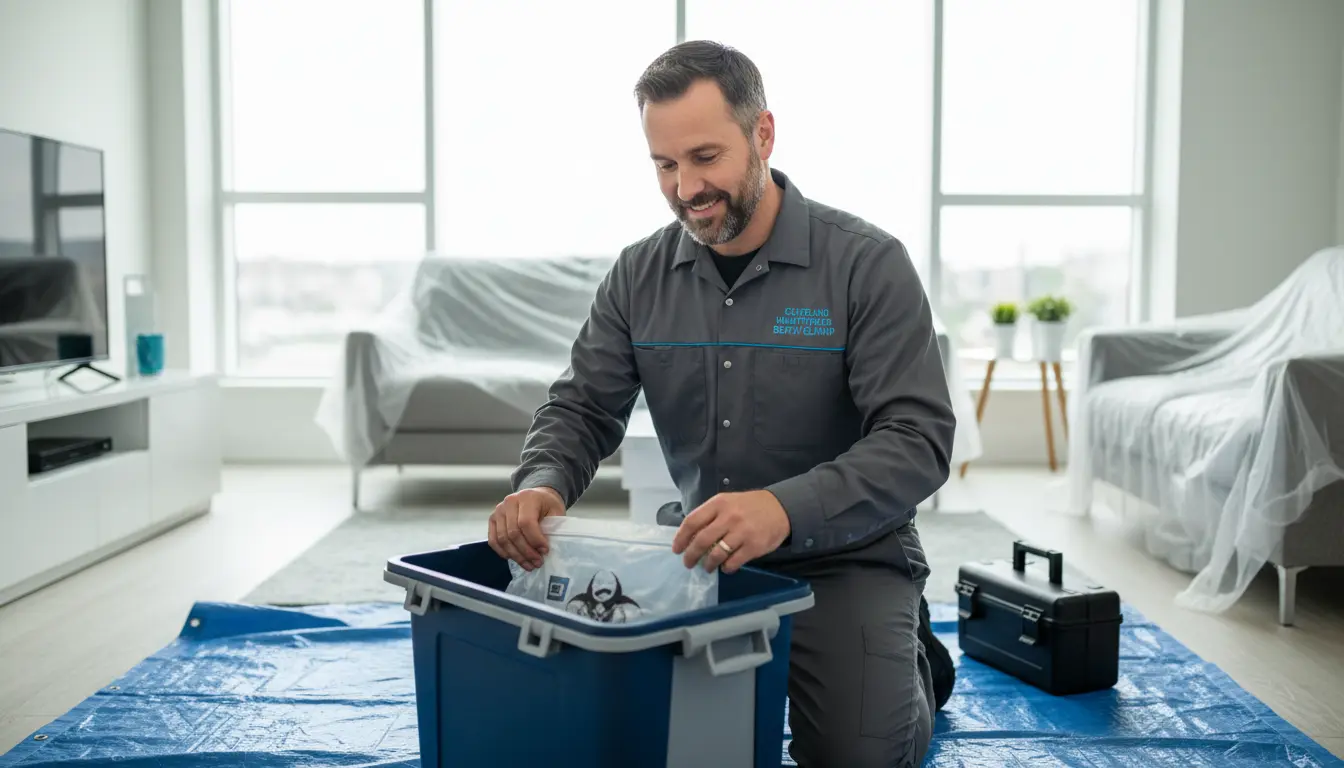
Most people assume that cleaning up after an unattended death is simply a more intense version of a standard deep clean. This assumption is not just incorrect; it is dangerously misleading. The gap between standard residential cleaning and professional biohazard remediation is not a matter of degree but of fundamental scientific discipline, legal liability, and specialized technical skill. Standard cleaning focuses on aesthetics and general hygiene, while unattended death cleanup addresses biological hazards that can remain infectious for days, weeks, or even months after the event.
In Cleveland, where the Great Lakes-effect humidity and seasonal temperature swings create a unique environment for biological decomposition, the need for professional intervention is especially acute. A home in Slavic Village or Detroit Shoreway that has experienced an unattended death requires a response that is part forensic science, part structural restoration, and part public health protocol. Understanding the difference between these two types of cleaning is essential for property owners, landlords, and family members who want to protect both their health and their property value.
The Technical Distinction Between Standard Cleaning And Biohazard Remediation
Standard residential cleaning, whether performed by a homeowner or a professional service, operates on the assumption that surfaces are free of dangerous biological contaminants. A cleaner uses general-purpose detergents, disinfectants approved for routine use, and equipment like mops and vacuums designed for everyday soil. The goal is visual cleanliness and the reduction of common household germs.
Biohazard remediation, by contrast, begins with the assumption that the environment is contaminated with bloodborne pathogens, bodily fluids, and potentially airborne infectious agents. Every surface, every porous material, and every air exchange system in the affected area must be treated as a vector for disease transmission. This shift in assumption drives every subsequent decision, from the type of personal protective equipment required to the method of waste disposal. The IICRC S540 Standard for Trauma and Crime Scene Cleanup explicitly distinguishes this work from general cleaning, requiring specialized training, equipment, and documentation.
The Step-By-Step Professional Remediation Workflow
The professional unattended death cleanup process follows a strict sequence of steps, each designed to eliminate biohazards and restore the environment to a safe, habitable condition. The workflow begins before any technician enters the site, with a comprehensive risk assessment that evaluates the extent of contamination, the type of surfaces involved, and the structural integrity of the area.
Initial Risk Assessment And Containment
Before any cleaning begins, the remediation team establishes containment zones using negative air machines and physical barriers. In a Cleveland home, particularly in older residential architecture common in neighborhoods like Hough or Little Italy, this step is critical because porous materials such as plaster, hardwood flooring, and unsealed concrete can absorb biological fluids and create hidden contamination sites. The assessment also accounts for the duration since death occurred, as decomposition progresses rapidly in the humid conditions typical of Ohio summers, accelerating odor migration and structural damage.
Physical Removal Of Biohazardous Materials
Once containment is established, technicians remove all visible biological matter, contaminated porous materials, and any items that cannot be effectively decontaminated. This step requires specialized tools such as enzyme-based cleaning agents that break down proteins and fats at the molecular level, making them more effective than standard disinfectants. In cases where fluids have seeped through flooring into subflooring or crawl spaces, the removal process may involve cutting out sections of wood or drywall to ensure complete elimination of biological residue.
Chemical Sanitization And ATP Testing
After physical removal, the site undergoes a thorough chemical sanitization using EPA-registered hospital-grade disinfectants. The application is not a simple spray-and-wipe process; it involves specific dwell times, often ranging from 5 to 10 minutes, during which the disinfectant must remain wet on the surface to achieve viral inactivation and bacterial elimination. Following sanitization, technicians use adenosine triphosphate testing to measure the presence of residual organic material. ATP testing provides a quantitative measure of cleanliness, ensuring that no biological residue remains below the detection threshold.
Final Structural Encapsulation And Odor Neutralization
The final step involves sealing any remaining porous surfaces with specialized encapsulants that trap residual contaminants and prevent future off-gassing. In Cleveland, where winter ice management and seasonal temperature shifts can affect air quality, odor neutralization is achieved through ozone treatment or hydroxyl generation, both of which break down odor molecules at the chemical level rather than simply masking them. This step is essential for restoring the property to a condition that is not only clean but also safe for long-term occupancy.
Comparing Professional Remediation And Standard Janitorial Cleaning
The table below provides a direct comparison between professional biohazard remediation and standard residential cleaning across key metrics defined by the IICRC S540 standard.
| Feature/Metric | Professional Biohazard Remediation | Standard Residential Cleaning |
|---|---|---|
| Regulatory Compliance | OSHA 29 CFR 1910.1030, EPA waste disposal, IICRC S540 | No specific regulatory framework |
| Pathogen Elimination | Hospital-grade disinfectants, ATP testing for verification | General-purpose disinfectants, no verification |
| Structural Assessment | Includes subfloor, wall cavities, HVAC inspection | Surface-level only |
| Waste Disposal | Licensed biohazard waste transport and incineration | Standard household waste |
| Odor Remediation | Chemical neutralization, ozone or hydroxyl treatment | Masking agents or air fresheners |
| Documentation | Chain of custody, remediation report for insurance | None |
Expert Insights On Hidden Contamination And Common Mistakes
Experienced remediation specialists know that the visible contamination is rarely the full extent of the problem. Here are three advanced diagnostic tips that separate professional remediation from amateur attempts.
First, hidden biological seepage often travels along utility lines and behind baseboards, especially in homes with plaster-and-lath construction common in older Cleveland neighborhoods like Bay Village or Brooklyn. Technicians use thermal imaging and moisture meters to detect areas where fluids have migrated beyond the visible spill zone, preventing future odor and mold problems.
Second, porous materials such as carpet padding, upholstery, and unseamed hardwood floors are nearly impossible to decontaminate fully. Even after aggressive cleaning, microscopic biological material can remain trapped in the fibers or pores, posing a long-term health risk. Professional remediation protocols require removal and replacement of these materials rather than attempting to clean them.
Third, negative pressure is not optional. Without creating a negative air environment relative to surrounding rooms, airborne pathogens and volatile organic compounds can spread throughout the entire structure during the cleaning process. This cross-contamination can turn a single contaminated room into a whole-house problem, exponentially increasing remediation costs.
Property owners often make several critical mistakes when attempting to handle the situation themselves. One common error is using household bleach on biological matter. While bleach is a disinfectant, it is ineffective against certain bloodborne pathogens and can react with organic material to produce toxic fumes. Another mistake is waiting for odor to dissipate naturally. In Cleveland’s humid climate, the odor of decomposition can linger for months and will eventually permeate HVAC systems, making the entire property uninhabitable. Finally, allowing untrained personnel into the site without proper PPE exposes them to hepatitis B, hepatitis C, HIV, and other pathogens that can survive outside the body for extended periods.
Pricing Structures For Professional Biohazard Remediation
- Standard site mobilization fees typically range from $250 to $500, covering the initial assessment, transport of equipment, and establishment of containment zones. This fee is standard across the industry and is applied before any remediation work begins.
- Hourly remediation rates for skilled technicians usually fall between $150 and $300 per hour, depending on the complexity of the scene and the level of contamination. Most projects require a minimum of 4 to 8 hours of on-site work, though extensive cases can span multiple days.
- Itemized costs for specialized disposal of biohazardous materials are calculated by weight and volume. Licensed waste transport and incineration typically cost between $200 and $600 per drum, with most scenes generating 1 to 3 drums of waste. This cost includes the chain-of-custody documentation required for legal disposal.
Three primary factors influence the total cost of remediation. The extent of structural material replacement required is the most significant variable, as cutting out and replacing sections of subfloor, drywall, or ceiling can add thousands of dollars to the project. The total volume of biohazardous waste directly impacts disposal fees, with larger volumes requiring more drums and longer transport distances. The necessity for specialized HVAC decontamination, which involves cleaning ductwork and replacing filters to prevent odor and pathogen circulation, can add significant time and equipment costs to the project.
Safety Standards And Regulatory Compliance
Professional biohazard remediation is governed by a strict set of safety standards and regulations designed to protect both the workers and the occupants of the affected property. The Occupational Safety and Health Administration’s Bloodborne Pathogens Standard, codified at 29 CFR 1910.1030, requires employers to implement a written exposure control plan, provide appropriate PPE, and offer hepatitis B vaccinations to all employees with occupational exposure. This regulation applies directly to unattended death cleanup because the work involves potential contact with blood, bodily fluids, and other potentially infectious materials.
The IICRC S540 Standard for Trauma and Crime Scene Cleanup provides the industry-specific framework for best practices, including procedures for containment, cleaning, waste disposal, and documentation. Compliance with this standard is not mandatory by law, but it is considered the benchmark for professional practice and is often required by insurance companies for claims processing. Additionally, the Environmental Protection Agency regulates the disposal of biohazardous waste through the Resource Conservation and Recovery Act, requiring licensed transport and treatment at authorized facilities.
In practical terms, these standards mean that a professional remediation company must maintain detailed records of every step, from the initial assessment to the final disposal manifest. This documentation serves as proof that the site was restored to a safe condition, protecting property owners from future liability if a tenant or buyer develops health issues related to the previous contamination.
Frequently Asked Questions About Unattended Death Cleanup
How long does the cleaning process typically take after an unattended death?
The duration of professional remediation depends on several factors, including the time elapsed since death, the type of surfaces affected, and the size of the contaminated area. A typical single-room cleanup in a Cleveland home requires 4 to 8 hours of on-site work, but cases involving multiple rooms, extensive decomposition, or structural penetration can take several days. The process cannot be rushed, as each step requires specific dwell times for disinfectants, drying periods for encapsulants, and verification testing before the site can be declared safe.
Can I perform the cleanup myself to save money?
Attempting to clean an unattended death scene without professional training and equipment poses serious health risks. Bloodborne pathogens such as hepatitis B and C can survive outside the body for up to a week, and the human immunodeficiency virus can remain infectious for several days under certain conditions. Additionally, improper cleaning can leave behind biological residue that leads to persistent odor, mold growth, and structural decay. Most insurance policies will cover professional remediation, making the cost more manageable than many property owners assume.
What happens to the biohazardous waste after it is removed?
All biohazardous waste removed from an unattended death scene is placed in specialized red bags or rigid containers labeled with the universal biohazard symbol. A licensed waste transport company then picks up the waste and delivers it to an authorized treatment facility, where it is incinerated at temperatures exceeding 1,800 degrees Fahrenheit. This process ensures complete destruction of all pathogens and prevents any possibility of environmental contamination. The remediation company provides a chain-of-custody document that tracks the waste from the site to the incinerator.
Is the property safe to occupy after professional remediation?
Yes, when performed by a certified professional following IICRC and OSHA standards, the property is restored to a safe condition for occupancy. The final ATP testing provides quantitative evidence that all biological material has been removed, and the structural encapsulation ensures that no hidden contamination remains. However, it is important to note that some porous materials may need to be replaced rather than cleaned, and the property may require temporary ventilation or air quality testing before reoccupation. A reputable company will provide a detailed remediation report and a certificate of completion.
How does Cleveland’s climate affect the cleanup process?
Cleveland’s Great Lakes-effect humidity and seasonal temperature swings significantly accelerate the decomposition process and increase the complexity of remediation. High humidity levels promote the growth of mold and bacteria, while temperature fluctuations can cause biological fluids to spread more rapidly through porous materials. Winter conditions can also complicate site access, as ice and snow may need to be managed to allow equipment and personnel to enter the property safely. Professional remediation teams in Cleveland are trained to account for these local variables in their assessment and workflow.
Professional Biohazard Remediation In Cleveland
Understanding the difference between unattended death cleanup and standard cleaning is not just a matter of technical knowledge; it is a matter of safety, legal compliance, and peace of mind. A property that has been treated with the rigor of professional biohazard remediation is not only visually clean but scientifically verified as safe for human occupancy. For property owners in Cleveland, from the historic homes of Little Italy to the residential neighborhoods of Bay Village and Slavic Village, the choice between a standard cleaning and professional remediation is a choice between temporary appearance and lasting safety.
Cleveland Unattended death cleanup provides the technical expertise, regulatory compliance, and compassionate service required to restore properties affected by unattended death. Each project is approached with the understanding that the work is both a scientific process and a human responsibility. For property owners, landlords, or family members facing this difficult situation, professional remediation offers the only reliable path to full recovery and long-term property value protection.