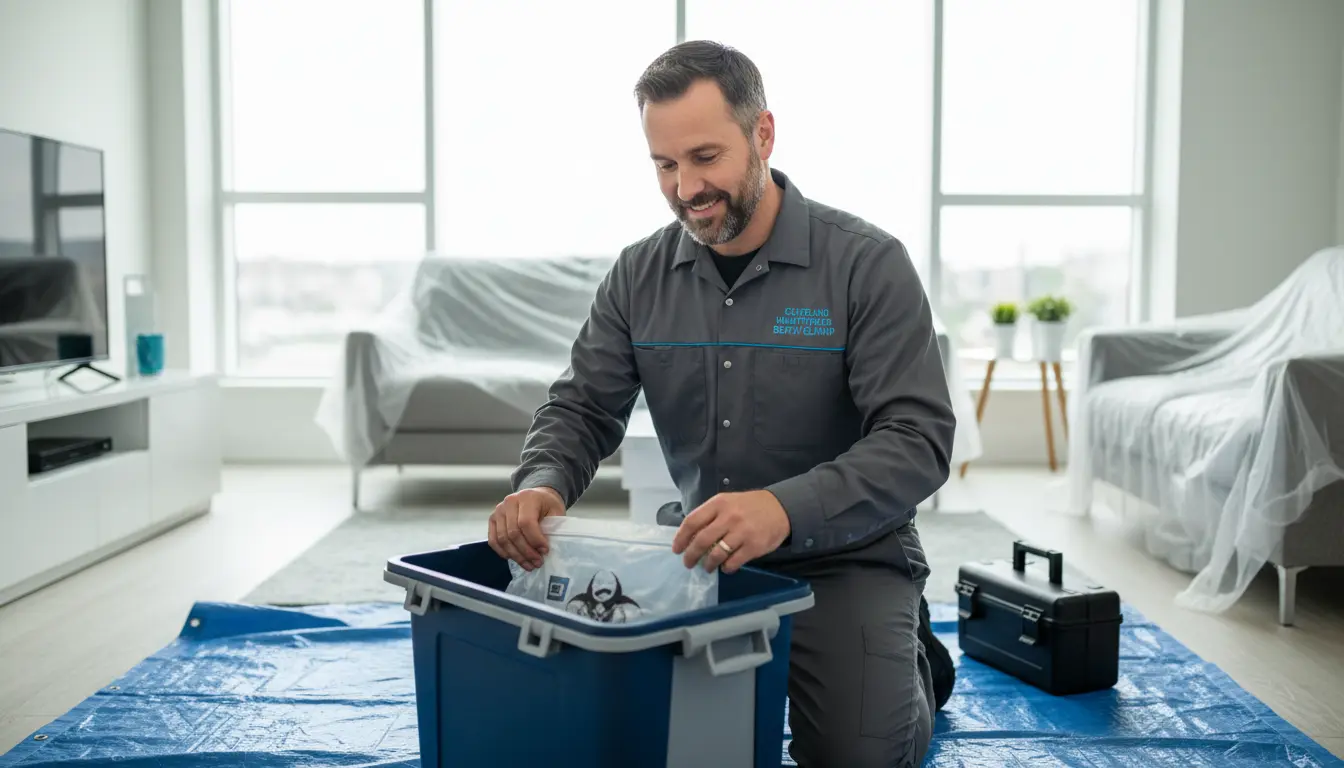
Many families and property owners in Cleveland assume that cleaning up after an unattended death is a simple matter of scrubbing floors and throwing away a mattress. The reality is far more complex. Decomposition fluids, airborne pathogens, and structural damage turn what appears to be a small affected area into a multi-phase remediation project. The final invoice depends on variables that most people never consider until they are standing in the middle of a sealed biohazard zone. Understanding what factors affect unattended death cleanup costs in Cleveland is the first step toward making an informed, responsible decision—and avoiding the health and legal consequences of an incomplete restoration.
Why Cleveland’s Climate and Housing Stock Drive Up Remediation Costs
Cleveland sits in Cuyahoga County, where the Great Lakes effect creates a unique microclimate. Summers are muggy, with average relative humidity often exceeding 70 percent, and winters bring freezing temperatures that can cause pipes to burst and ice to seal off access. Both conditions directly affect the rate of decomposition and the difficulty of cleanup. A body that goes undiscovered for two weeks in July will be in an advanced stage of decay, with liquefied tissues that have seeped deep into porous subflooring and drywall. In contrast, a winter discovery in a heated home may show slower visible decomposition but still produce heavy odor migration through HVAC systems.
Older Cleveland homes—many built in the early 1900s in neighborhoods like Detroit Shoreway, Hough, and Little Italy—present additional challenges. These structures often have plaster-and-lath walls, hardwood floors with gaps, and unsealed crawl spaces. Biological fluids can travel through these gaps and contaminate areas that are invisible to the untrained eye. The cost of labor increases because technicians must perform exploratory demolition to locate all affected materials. Every square foot of porous material that tests positive for adenosine triphosphate (ATP) or bloodborne pathogens must be removed and replaced, not just cleaned. This structural decontamination process is one of the largest single cost drivers in any unattended death cleanup in Cleveland.
The Technical Workflow That Determines Pricing
Professional remediation follows a strict, science-based protocol that is far more involved than a simple janitorial scrub. The step-by-step unattended death cleanup process begins with a risk assessment and site survey. Technicians wear full personal protective equipment (PPE) compliant with OSHA Bloodborne Pathogens Standard 29 CFR 1910.1030. They establish containment zones using negative air machines and HEPA filtration to prevent cross-contamination to other parts of the home.
Next comes the physical removal of all biohazardous materials. This includes not only visible fluids and tissues but also saturated carpet, padding, underlayment, and any drywall or insulation within a 24-inch perimeter of the affected area. The material is double-bagged, labeled, and disposed of through authorized medical waste services. After removal, the remaining surfaces are treated with EPA-registered hospital-grade disinfectants and enzyme-based cleaners that break down organic matter at the molecular level. Finally, an ATP fluorescence test is conducted to confirm microbial remediation is complete. If the test fails, additional cleaning or removal is required, each round adding to the total cost.
The Role of Local Variables in the Workflow
Cleveland’s seasonal humidity directly affects how long the drying and decontamination phases take. When high humidity slows the evaporation of cleaning agents, technicians must run industrial dehumidifiers and air movers for longer periods, increasing equipment rental and labor hours. Winter ice can make it dangerous to ventilate a home by opening windows, so negative air pressure systems must work harder, again driving up operational costs. These are not arbitrary charges—they are the direct result of the physical conditions that exist in a specific Cleveland home at a specific time of year.
Professional Remediation vs. Standard Janitorial Cleaning
Many property owners consider hiring a general cleaning service to save money, thinking that bleach and elbow grease will suffice. The comparison below shows why that approach is both dangerous and ultimately more expensive when long-term consequences are considered.
| Feature / Metric | Professional Biohazard Remediation | Standard Residential Cleaning |
|---|---|---|
| Regulatory Compliance | OSHA 29 CFR 1910.1030, EPA, DOT, IICRC S540 | None |
| Pathogen Elimination | EPA-registered disinfectants with validated kill times, ATP testing verification | Household bleach; no testing for residual contamination |
| Structural Assessment | Fluorescent staining, moisture mapping, exploratory demolition as needed | Visual inspection Only |
| Waste Disposal | Regulated medical waste transport and incineration | Illegal dumping risks or improper bagging |
| Odor Removal | Negative air scrubbers, ozone treatment, hydroxyl generators | Air fresheners or open windows |
| Insurance Acceptance | Itemized invoice with code-specific language for claims | Often rejected as insufficient documentation |
Expert Insights Into Cost-Driving Factors
Experienced biohazard remediation specialists look beyond the surface to identify hidden costs that can double or triple a project. Here are three advanced diagnostic insights that directly affect the final price tag for unattended death cleanup in Cleveland.
Detecting Hidden Biological Seepage
When a body decomposes on a hardwood floor, fluids do not stay on the surface. They flow through the gaps between planks and soak into the subflooring, joists, and even the ceiling below. A specialist uses a fluorescent stain and a black light to reveal the true extent of contamination. In many older Cleveland homes, the seepage travels several feet beyond the visible stain. This means that what appears to be a 4-foot by 4-foot area can require removal of 12 feet of subflooring. The cost of materials and labor for this hidden damage is often the single largest line item on the invoice.
Why Porous Materials Require Replacement, Not Cleaning
Untrained individuals often believe that scrubbing a porous surface like drywall, carpet, or unsealed wood will remove all biohazardous material. In reality, blood and decomposition fluids penetrate the porous structure, and no amount of cleaning can eliminate pathogens from the interior. The IICRC S540 standard mandates removal of all porous materials that have been contaminated. Trying to clean them only creates a false sense of safety and allows bloodborne pathogens to remain, posing a risk of hepatitis B, hepatitis C, or HIV transmission to future occupants. The cost of replacement is unavoidable; any attempt to avoid it is a waste of money and a liability.
Importance of Negative Pressure to Prevent Cross-Contamination
Setting up a containment zone with negative air pressure is not optional. Without it, airborne pathogens and odor molecules travel through the home’s HVAC system, ductwork, and open doorways, contaminating other rooms. In a Cleveland home with a forced-air furnace, this can mean that the entire house becomes a biohazard zone. The cost of running negative air machines for 24 to 72 hours is a fraction of what it would cost to have to remediate the entire structure later. Professionals always include this in the initial estimate. Property owners who skip this step to save money often end up paying two to three times more for a full home restoration.
Common Mistakes That Increase Costs
One of the most frequent errors is using household bleach on biological matter. Bleach corrodes surfaces, reacts with organic material to form toxic chlorine gas, and does not fully penetrate porous materials. The result is a surface that looks clean but remains contaminated. Another mistake is waiting for the odor to dissipate naturally. Odor is caused by volatile organic compounds that indicate active microbial growth. Waiting only allows the contamination to spread and the smell to embed deeper into the structure. Finally, allowing untrained family members or friends to enter the site without PPE can expose them to bloodborne pathogens and create a secondary contamination event that must be remediated at additional cost. These mistakes are entirely preventable by hiring a certified professional from the start.
Pricing and Cost Factors
- Site Mobilization and Assessment Fee: Most professional services charge a flat fee for the initial site visit, evaluation, and containment setup. In Cleveland, this typically ranges from $250 to $500, depending on travel distance and the urgency of the call.
- Hourly Remediation Rates: The actual cleanup is billed per technician per hour. Rates in the Cleveland area generally fall between $150 and $300 per hour, with a two-person crew being the minimum. A three-day project can easily accumulate 40 to 60 billable hours.
- Material Replacement Costs: Removal and disposal of saturated porous materials (carpet, pad, drywall, subflooring, insulation) is often charged per square foot. Replacement materials, including new drywall, plywood, and flooring, add to the total. In homes with custom finishes or historic materials, sourcing matching replacements can be expensive.
- Specialized Disposal of Biohazardous Waste: Medical waste disposal companies charge by weight. A typical unattended death cleanup can generate 50 to 200 pounds of regulated waste, with disposal fees ranging from $1 to $3 per pound. This is a necessary cost that standard cleaning services do not include.
- Equipment Rental and Usage: Negative air machines, HEPA vacuums, industrial dehumidifiers, and ozone generators are rented per day. In Cleveland’s humid summer, equipment may need to run for 48 to 72 hours, adding $200 to $600 to the total.
- HVAC Decontamination: If the odor or pathogens have entered the ductwork, a separate HVAC cleaning and disinfection is required. This can add $500 to $1,500 depending on the size of the system and the extent of contamination.
These factors combine to make a typical unattended death cleanup in Cleveland cost between $2,000 and $10,000, with extreme cases—such as a body undiscovered for weeks in a multi-story home—exceeding $20,000. Insurance policies often cover this type of cleanup under homeowner’s or property insurance, but only if the work is performed by a licensed professional who provides detailed documentation.
Safety Standards and Regulatory Compliance
Every phase of biohazard remediation is governed by strict safety standards. The Occupational Safety and Health Administration (OSHA) mandates that any employee handling blood or other potentially infectious materials must be trained in the Bloodborne Pathogens Standard (29 CFR 1910.1030). This includes proper use of PPE, decontamination procedures, and disposal protocols. The IICRC S540 standard provides the industry-specific framework for trauma and crime scene cleanup, covering everything from pre-cleaning assessment to final verification. In addition, the Environmental Protection Agency (EPA) regulates the disinfectants used to ensure they are effective against specific pathogens. The Department of Transportation (DOT) governs the transportation of medical waste. A professional company in Cleveland, like Cleveland Unattended Death Cleanup, holds certifications in all these areas and follows them to the letter.
Ignoring these standards is not just a safety risk—it is a legal liability. Property owners who allow untrained cleaners to handle biohazardous waste can be held responsible if a worker becomes ill or if improper disposal leads to environmental contamination. Real estate transactions can be voided if the property is found to have been improperly restored. The only way to protect yourself, your family, and your property value is to hire a company that follows the mandated protocols. This is why Cleveland trusts experts for death scene cleanup rather than taking shortcuts.
Frequently Asked Questions About Unattended Death Cleanup Costs
Does homeowners insurance cover unattended death cleanup?
Most standard homeowners insurance policies cover biohazard cleanup as part of the dwelling coverage, especially if the death was accidental or unexpected. However, the policy may require the use of a licensed professional and a detailed itemized invoice. Some policies have a specific sublimit for biohazard remediation. It is essential to contact your insurance agent immediately after the discovery and before any work begins. The cleanup company can typically provide the documentation needed to support the claim. If the property is a rental, the landlord’s insurance may cover it, but the tenant’s renter’s insurance rarely does.
How long does it take to complete the cleanup?
The duration depends on the severity of the contamination and the size of the affected area. A small, contained death scene in a room with non-porous flooring can be completed in one to two days. A larger scene with extensive fluid migration into porous materials, especially in a multi-story home, can take three to five days or more. The drying time after cleaning is often the longest phase, as dehumidifiers must run until moisture readings return to normal levels. In Cleveland’s humid summer, this can add an extra day. The technician will provide a time estimate after the initial assessment.
Can I clean the area myself to save money?
Technically, a homeowner can attempt to clean the area, but it is not recommended and is often illegal if the property is a rental or if the waste must be disposed of as medical waste. Without proper PPE, training, and testing, you risk exposure to bloodborne pathogens that can cause hepatitis and other diseases. Improper cleaning can also leave behind contamination that leads to odor, mold growth, and health issues for future occupants. Additionally, insurance companies may deny a claim for cleanup if the work was not performed by a certified professional. The short-term savings are far outweighed by the long-term risks and costs.
What happens if I don’t clean the area at all?
Leaving an unattended death scene uncleaned is not an option. Odor will drive tenants and neighbors away, and the biological material will continue to decompose, attracting pests and causing structural damage. In Cuyahoga County, health departments can issue a notice of violation and require remediation. The property becomes uninhabitable and its value plummets. If the property is a rental, the landlord may face legal action from tenants. In short, the cost of not cleaning is far higher than the cost of professional remediation. The sooner you act, the less damage occurs, and the lower the cleanup cost will be.
How do I know if the cleanup is complete and safe?
Professional companies use ATP fluorescence testing to verify that all biological matter has been removed. They also perform visual and moisture inspections. The final report should include a summary of the work performed, the results of the ATP test, and a certificate of compliance with IICRC S540 standards. A reputable company will provide this documentation for your records and for your insurance company. If you have any doubts, you can request a third-party inspection, though most professionals stand behind their work and offer a warranty.
Professional Biohazard Remediation in Cleveland
When a loved one or tenant passes away and is not discovered for days or weeks, the aftermath is overwhelming. The emotional weight is heavy, and the practical challenges of cleaning up a contaminated space can feel insurmountable. But you do not have to face it alone. Cleveland Unattended Death Cleanup brings years of technical expertise, local knowledge of homes in neighborhoods like Bay Village, Bedford, and Garfield Heights, and a compassionate approach to every job. We follow the strictest safety standards, use advanced equipment, and provide the documentation needed to navigate insurance claims. Our team understands the unique factors that affect unattended death cleanup costs in Cleveland, and we provide transparent estimates before any work begins. Whether you are dealing with a small apartment in Little Italy or a large house in Maple Heights, we are here to restore your property to a safe, livable condition. Contact us today to schedule a confidential consultation.