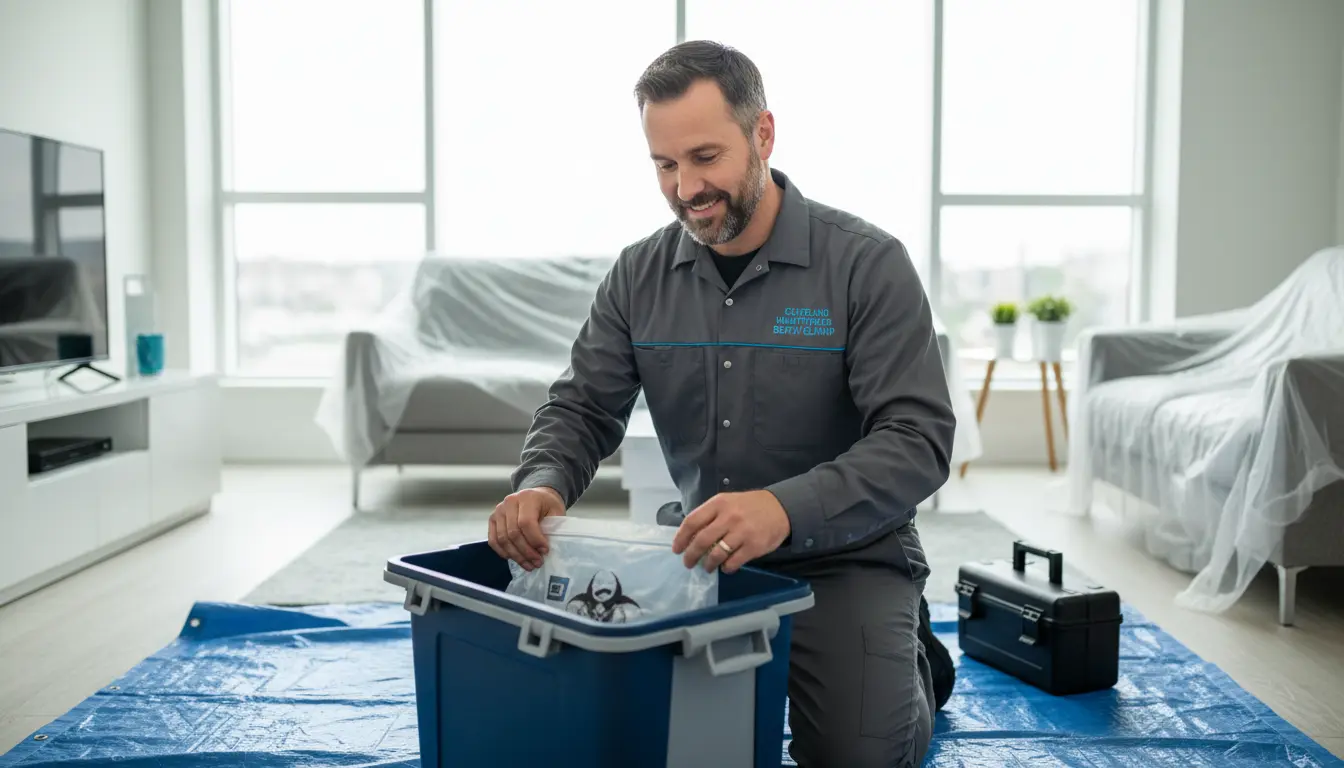
Biohazard remediation is the systematic process of identifying, containing, removing, and chemically neutralizing biological hazards from a contaminated environment. It is commonly confused with standard janitorial cleaning or even general crime scene cleanup, but the distinction is profound: biohazard remediation follows strict protocols set by the Occupational Safety and Health Administration (OSHA), the Environmental Protection Agency (EPA), and the Institute of Inspection, Cleaning and Restoration Certification (IICRC) S540 standard. When an unattended death occurs, the body begins to decompose immediately, releasing blood, bodily fluids, and airborne pathogens that penetrate porous surfaces, structural cavities, and HVAC systems. Without professional remediation, these hazards remain active, posing severe health risks to occupants and diminishing property value. In Cleveland, where historic homes with wooden subfloors and plaster walls are common, the challenge is amplified by the region’s Great Lakes-effect humidity, which accelerates microbial growth and odor migration. Cleveland Unattended death cleanup is the premier provider in the area, combining technical rigor with compassionate discretion to restore safety and dignity to affected properties.
An unattended death is defined as a death that occurs without immediate discovery, often taking days, weeks, or even months before the body is found. During this time, decomposition progresses through stages: autolysis, bloating, active decay, and skeletonization. Each stage releases distinct biohazards, including bloodborne pathogens like hepatitis B, hepatitis C, and HIV, as well as bacterial byproducts and volatile organic compounds. The longer the body remains, the deeper the contamination penetrates. This is why professional biohazard remediation is essential after an unattended death: it ensures that every trace of biological material is safely removed and the environment is restored to a habitable, safe condition. Attempting to clean such a scene with household products or general cleaning services not only fails to eliminate pathogens but also creates aerosolized particles that can spread contamination throughout the building.
The Technical Process of Professional Biohazard Remediation
Professional remediation follows a methodical workflow that prioritizes safety, containment, and scientific decontamination. The first step is an initial risk assessment, where a certified technician evaluates the scene for visible biohazards, structural damage, and potential airborne threats. This assessment determines the scope of work, the type of personal protective equipment (PPE) required, and the containment strategy. In Cleveland, where winter ice management can complicate site access, the team must also plan for safe entry and exit to avoid cross-contamination with the exterior environment.
Once the assessment is complete, the team establishes a containment zone using polyethylene sheeting and negative air machines equipped with HEPA filters. These machines create negative pressure within the affected area, preventing airborne contaminants from migrating to other parts of the building. This is especially critical in multi-unit dwellings common in neighborhoods like Little Italy or Slavic Village, where shared walls and ventilation systems can spread biohazards to adjacent residences. The next phase involves the physical removal of all biohazardous materials, including blood-saturated carpet, padding, drywall, insulation, and subflooring. Specialized enzyme treatments are applied to break down organic matter at a molecular level, followed by hospital-grade disinfectants that are EPA-registered for bloodborne pathogens. After chemical sanitization, the technician uses an adenosine triphosphate (ATP) fluorescence testing device to verify that all biological residues have been eliminated. ATP testing measures the presence of organic material on surfaces; a reading below the threshold confirms successful decontamination. Finally, structural encapsulation may be required for porous surfaces that cannot be fully cleaned, such as concrete subfloors or wooden joists, using sealants that lock in any remaining contaminants and prevent future outgassing.
How Cleveland’s Humidity and Temperature Affect Decomposition
Cleveland’s climate is defined by its proximity to Lake Erie, which creates high humidity levels throughout the year and significant temperature swings. In summer, indoor humidity can exceed 70%, accelerating the growth of mold and bacteria on biological residues. In winter, the freeze-thaw cycle can cause bodily fluids to seep deeper into porous materials as they expand and contract. These local variables demand a remediation approach that includes moisture mapping, thermal imaging, and extended drying times to prevent secondary microbial growth. Ignoring these factors can lead to recurring odors and structural decay that standard cleaning methods cannot address.
Data Comparison: Professional Remediation vs. Standard Cleaning
The following table highlights the critical differences between professional biohazard remediation and typical janitorial cleaning, based on the IICRC S540 standard and OSHA regulations. Understanding these distinctions helps property owners recognize why professional intervention is non-negotiable after an unattended death.
| Feature / Metric | Professional Biohazard Remediation | Standard Residential Cleaning |
|---|---|---|
| Regulatory Compliance | OSHA 29 CFR 1910.1030, EPA waste disposal, local health department permits | None |
| Pathogen Elimination | EPA-registered hospital-grade disinfectants, ATP verification | Household bleach (ineffective on porous surfaces) |
| Structural Assessment | Thermal imaging, moisture mapping, sub-floor inspection | Visual only |
| Containment | Negative air pressure, HEPA filtration, sealed barrier | No containment |
| Waste Disposal | Licensed medical waste transporter, incineration | Regular trash (illegal) |
| Odor Removal | Ozone treatment, hydroxyl generators, enzyme neutralization | Air fresheners (temporary) |
Expert Insights: Advanced Diagnostic Tips
Experienced technicians know that visible blood or fluid is only the surface of the problem. One critical diagnostic technique is detecting hidden biological seepage. When a body decomposes on a hardwood floor, fluids can seep between boards and into the subfloor, traveling laterally along floor joists. Thermal imaging cameras reveal temperature differences caused by moisture, allowing remediation teams to target areas that appear dry to the naked eye.
Another principle is that porous materials—such as drywall, carpet padding, and unsealed concrete—cannot be fully disinfected. The internal structure of these materials provides a reservoir for pathogens and odors. The only safe course is removal and replacement. Attempting to clean them with bleach or other disinfectants only drives moisture deeper, promoting microbial growth that releases mycotoxins into the air.
The importance of negative pressure cannot be overstated. Without it, airborne particles from the scene can circulate through the building’s air handling system, contaminating entire floors. In Cleveland homes with forced-air heating, this can spread biohazards into bedrooms, living rooms, and basements. Professional teams set up negative air machines before any disturbance begins, ensuring that airborne contaminants are captured and filtered rather than dispersed.
Common Mistakes Property Owners Make
One of the most frequent errors is using household bleach on biological matter. Household bleach is not a hospital-grade disinfectant; it degrades quickly on organic surfaces and can even react with proteins to produce toxic chloramine gases. This not only fails to sanitize but also puts the user at risk. Another mistake is waiting for odors to dissipate naturally. Decomposition odors are caused by volatile organic compounds that can linger for years if not properly treated at the molecular level. Waiting only allows the odor to adsorb into drywall, carpet, and fabrics, making remediation more extensive and costly. Finally, allowing untrained personnel—including family members or general contractors—to enter the scene is dangerous. They lack the proper PPE, training, and knowledge of bloodborne pathogens, exposing themselves to hepatitis, HIV, and other diseases. The consequences include long-term health risks and potential legal liability for improper waste disposal.
Pricing for Professional Biohazard Remediation
- Standard site mobilization fees: typically $500 to $1,500, depending on location within Cuyahoga County and the complexity of site access (e.g., stairwells, ice-covered driveways in winter).
- Hourly remediation rates: $150 to $275 per hour per technician, with most projects requiring a team of two to four people for one to three days.
- Specialized disposal costs: $200 to $800 for biohazardous waste, including proper packaging, labeling, and transport by a licensed medical waste carrier to a regulated incineration facility.
Three primary factors influence the final cost. First, the extent of structural material replacement—if the decomposition has penetrated flooring, subfloor, and drywall, the cost of materials and labor for demolition and reconstruction increases significantly. Second, the total volume of biohazardous waste—more waste requires more disposal fees and more time for removal. Third, the necessity for specialized HVAC decontamination—if the body was in a room with an active HVAC register, the entire ductwork may need to be cleaned and sanitized to prevent cross-contamination.
Safety & Standards
Professional remediation teams adhere to the OSHA Bloodborne Pathogens Standard (29 CFR 1910.1030), which mandates the use of appropriate PPE, including Tyvek suits, nitrile gloves, face shields, and N95 or P100 respirators. All team members must complete annual bloodborne pathogen training and be offered the hepatitis B vaccination series. The IICRC S540 standard further requires that technicians demonstrate competency in trauma and crime scene cleanup through a combination of classroom education and field experience. These certifications ensure that every step of the remediation process is performed safely and effectively. Additionally, authorized waste management services must be used for the disposal of biological waste. In Cleveland, that means contracting with a transporter licensed by the Ohio Environmental Protection Agency to carry medical waste to a permitted treatment facility. Failure to follow these regulations can result in fines, legal liability, and public health crises for property owners.
Frequently Asked Questions
What is the difference between biohazard remediation and crime scene cleanup?
While both involve cleaning up biological hazards, crime scene cleanup typically occurs after a violent incident or suicide, where the scene is often fresh and bloodborne pathogens are the primary concern. Biohazard remediation after an unattended death focuses on decomposition, which involves advanced stages of putrefaction, odor removal, and structural decontamination. The protocols differ in the use of enzyme treatments, ATP testing, and the need for extensive material removal due to fluid saturation. In Cleveland, where many unattended deaths occur in older homes with plaster and lath, biohazard remediation requires demolition techniques that go beyond surface cleaning.
Can I clean up an unattended death myself to save money?
No. Attempting self-cleanup exposes you to bloodborne pathogens, airborne bacteria, and toxic gases like putrescine and cadaverine. Household cleaning products are not effective against these hazards. Furthermore, improper disposal of biological waste is illegal under Ohio law and can result in fines. The health risks, including hepatitis, HIV, and respiratory infections, far outweigh any perceived savings. Professional remediation ensures that the scene is restored to safe, habitable condition and that all waste is handled in compliance with regulations.
How long does the remediation process take?
The duration depends on the extent of contamination. For a single room with limited saturation, the process may take one to two days. For a scene that has been undiscovered for weeks, affecting multiple rooms or floors, the project can last three to five days or longer. Factors like weather (ice or snow in Cleveland can delay material removal and reconstruction), the need for structural drying, and the complexity of HVAC decontamination all affect the timeline. A thorough assessment by a certified technician will provide a more precise estimate.
Will my insurance cover biohazard remediation?
Many homeowners and property insurance policies cover biohazard remediation, especially if the death was unexpected or accidental. However, coverage varies by policy. It is essential to contact your insurance provider as soon as possible after discovery. Professional remediation companies can often provide documentation and assist with the claims process. In Cleveland, some policies specifically exclude coverage for unattended deaths if the property was vacant for an extended period, so review your policy details carefully.
What happens if biohazard waste is not properly disposed of?
Improper disposal—such as placing blood-soaked materials in regular trash—violates Ohio EPA regulations and the federal Medical Waste Tracking Act. The consequences include fines, potential criminal charges, and the risk of exposing waste management workers to infectious diseases. Professional remediation teams use licensed medical waste transporters who follow strict protocols for labeling, containment, and incineration. This ensures full legal compliance and protects public health.
Professional Biohazard Remediation in Cleveland
After an unattended death, the path to recovery requires more than just cleaning—it demands a systematic, scientific approach that protects health, restores property, and honors the deceased. Professional biohazard remediation is essential because it addresses the invisible threats that linger in the air, within walls, and beneath floors. In Cleveland, where the climate and aging housing stock present unique challenges, only a team with local expertise and technical certification can deliver complete restoration. Cleveland Unattended death cleanup combines IICRC and OSHA compliance with compassionate service, ensuring that families and property owners can move forward without enduring the trauma of handling the scene themselves. From initial assessment to final ATP testing, every step is designed to eliminate risks and provide peace of mind. If you are facing the aftermath of an unattended death in Cuyahoga County, trust the professionals who understand the science, the regulations, and the emotional weight of the situation. Contact us today for a discreet consultation and take the first step toward restoring safety and dignity to your property.